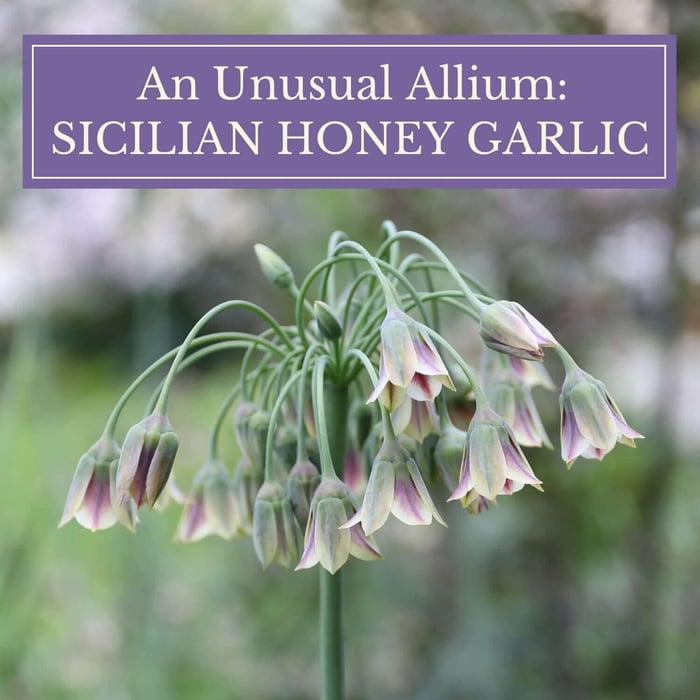
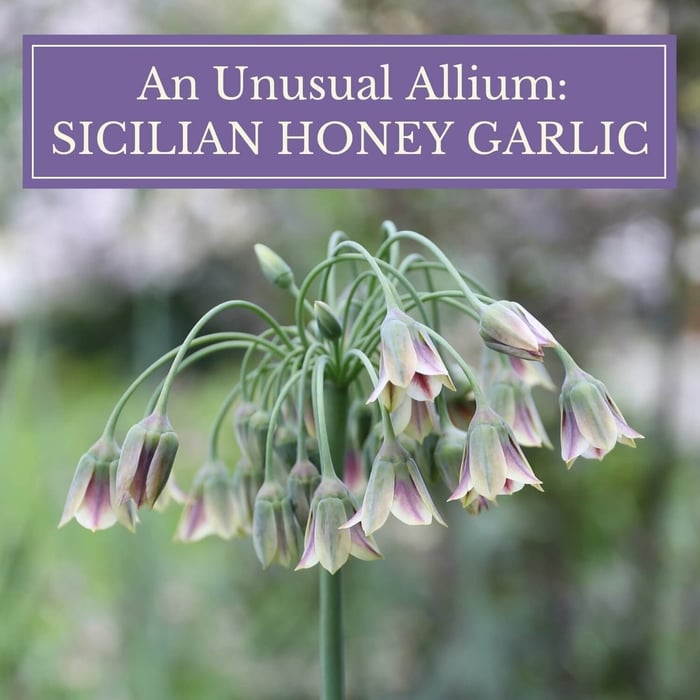
 There are a few plants in my flower garden that people almost always comment on. One of them is an unusual-looking allium that I know as Allium bulgaricum. This spring-blooming bulb has several other equally cumbersome names, including Allium siculum subspecies dioscoridis and Nectaroscordum siculum.
Having a name that's difficult to pronounce and hard to remember is just as much of a liability for plants as it is for people. When visitors to my garden ask about this plant, and I say "Oh, that's Allium bulgaricum," I know it barely registers. So, in an effort to help this plant get the attention it deserves, I started using its common name: Sicilian honey garlic. Now there are far more nods and smiles, and fewer blank looks.
Getting to Know the Plant
This fall-planted, spring-blooming bulb grows wild in areas near the Mediterranean: Turkey, Greece, Bulgaria, and the southern parts of France and Italy. Though many suppliers say the bulbs are only hardy to zone 6, they have proven to be reliably perennial in my zone 4B garden. I now have many good-size clumps in my flower beds and a few others in the meadow.
Wet soil can be as challenging for flower bulbs as cold temperatures. But Sicilian honey garlic seems to be perfectly happy in my relatively heavy and consistently moist soil. Though most of the plants are growing in full sun, the ones in partial shade are always the most robust. According to Wikipedia, damp shade is this allium's native habitat.
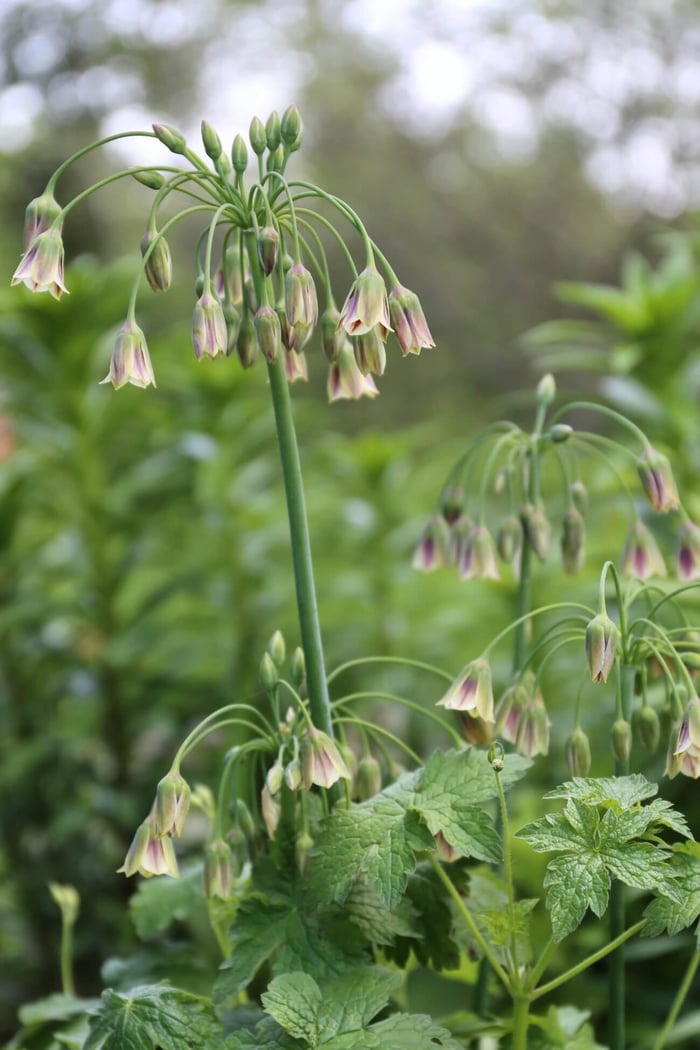
When deciding where to plant the bulbs, be aware this allium does not have the stiff, upright habit of most others. Though some stems will be straight, others will be curiously wonky. The foliage can be just as unruly. So choose a spot where you won't mind allowing this plant to express itself.
Over time, the bulbs in my garden have gradually bulked up. I have never had a problem with reseeding, but if you are concerned about that, simply cut off the flower heads before they release their seeds.
Sicilian honey garlic doesn't bloom until late spring. The flowers are open at about the same time as Alliums christophii and Globemaster, and for me, they continue right through peony season. From bud to bloom to seed head, the show usually lasts 3 weeks or more.
What to Love About This Plant
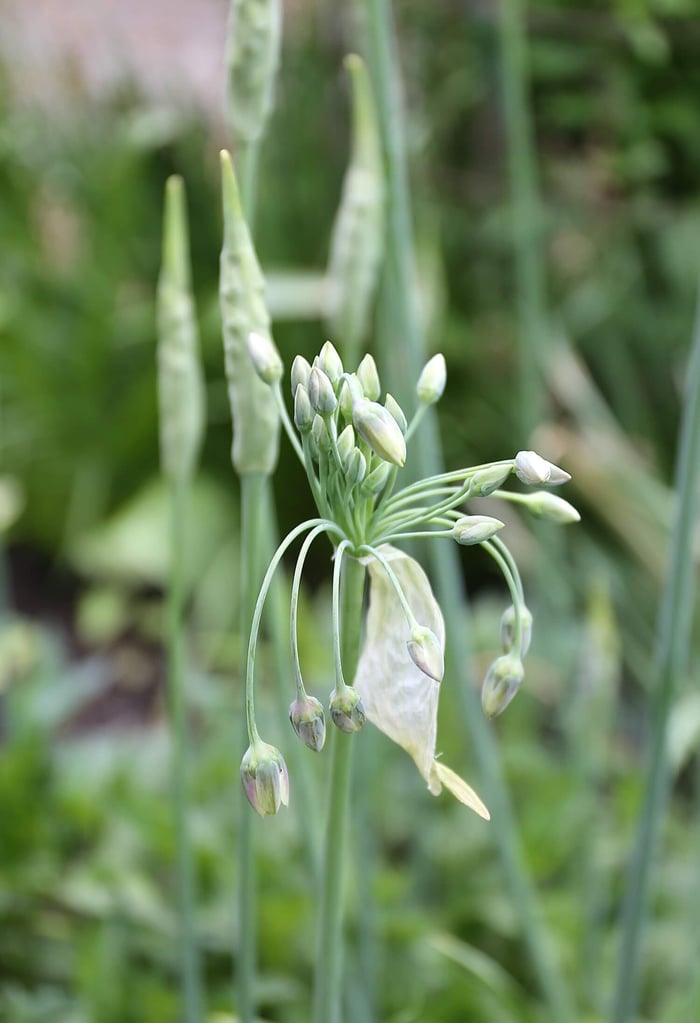
I am a big fan of alliums and grow more than a dozen different types of them in my garden. All are trouble-free, rodent resistant, deer resistant and pollinator-friendly. Sicilian honey garlic is all that and more. The flowers of this curious plant are entertaining in ways the others are not. As the plants get ready to bloom, the first thing you'll see are sausage-like buds, wrapped in a semi-transparent sheath. After a day or two, these sheaths split open and the dusky, blue-grey flower buds tumble out.
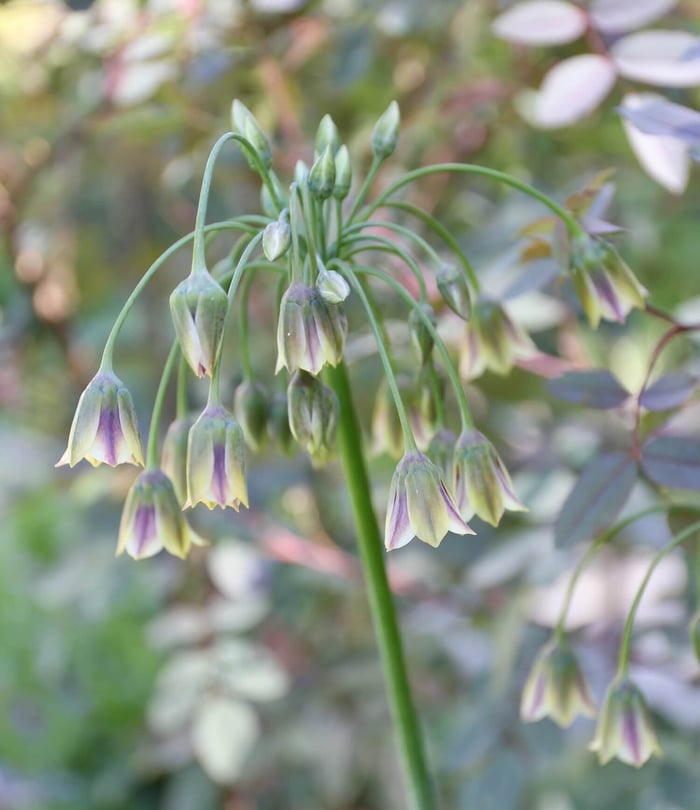
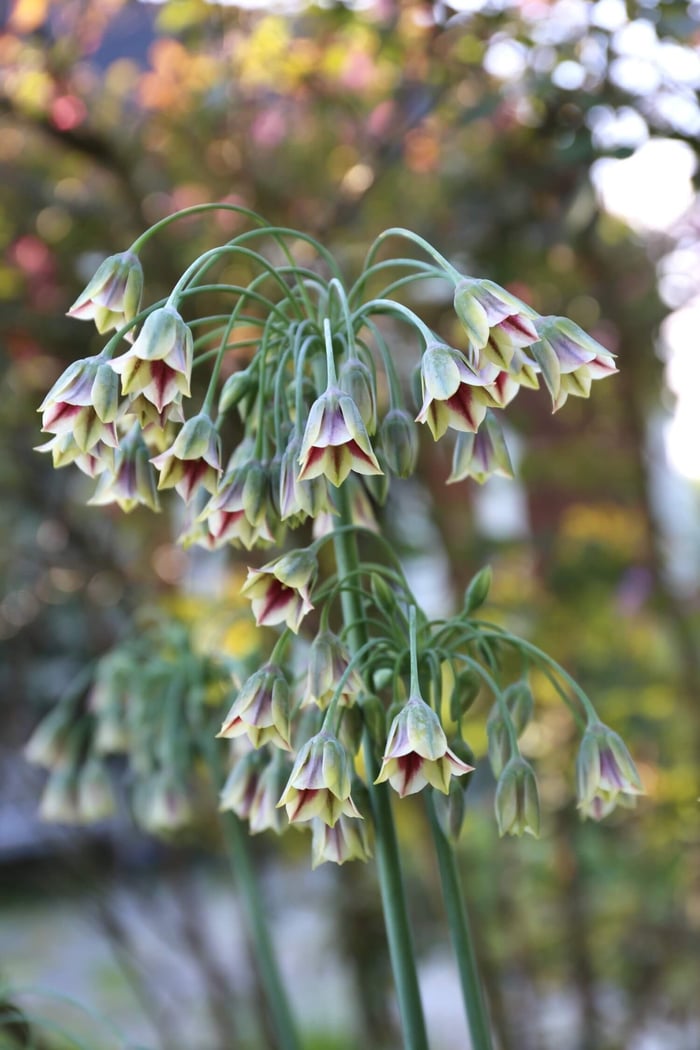
As the dangling flower buds begin to open, you'll see they have buttery-white interiors with burgundy markings. On the outside, the flowers are glaucous with teal blue accents. Bees and hummingbirds are crazy about them. The flowers are also fabulous in arrangements and will last for more than a week in a vase.
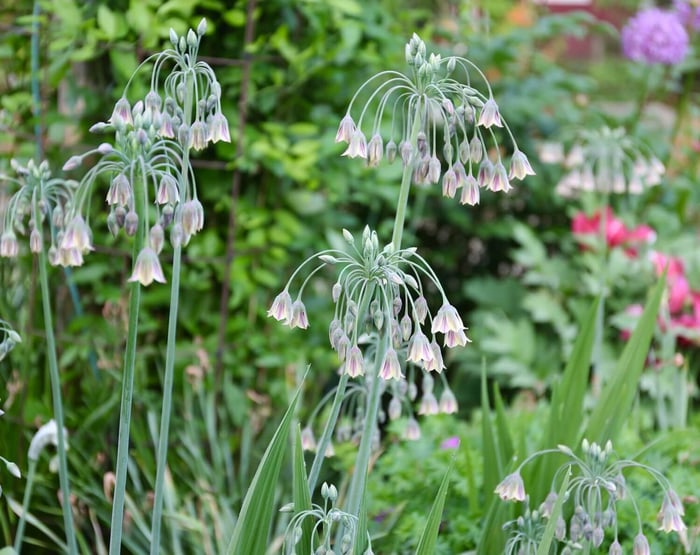
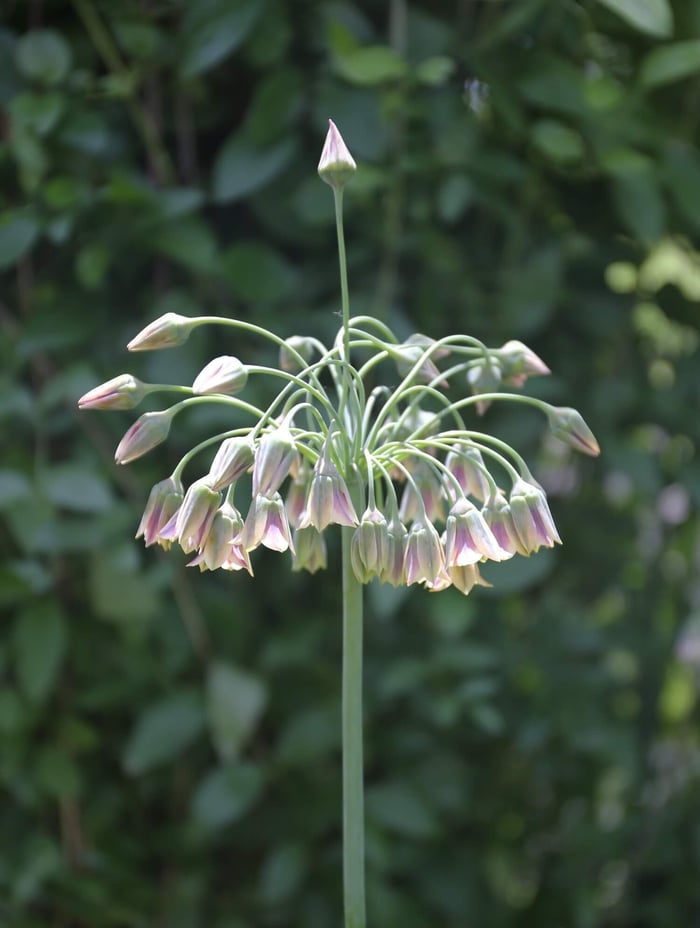
After a blossom has been pollinated, it closes up tightly and slowly begins to rise. Eventually, all of the spent flowers are pointing straight up.
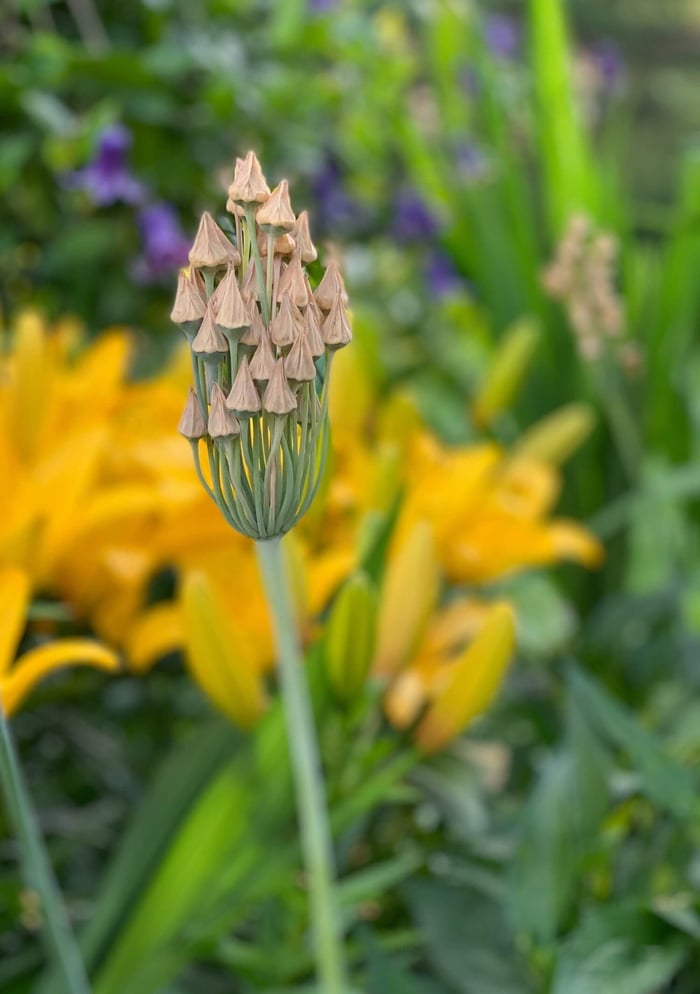
I usually let these flower heads hang around for a few weeks because they look so cool. Once the stems are also brown and dry, you can easily pull them out with a firm tug. That's it until the flowers reappear next year.
As with other alliums that grow from bulbs, planting time comes around just once a year -- in the fall. Bulbs may be reserved starting in midsummer and will be shipped at the proper planting time for your hardiness zone.
To see our complete selection of alliums, click HERE. If you would like to learn more about growing alliums, you may be interested in these articles on our website: All About Alliums, Planning Guide for Alliums, Types of Alliums, and Alliums for Every Garden.