 Vegetable gardens are prettier and a lot more fun when they include flowers as well as vegetables. I have found that tulips and dahlias are ideal companions for vegetables. Read on to learn how you can combine flower bulbs with vegetables and enjoy a bounty of blooms from spring through fall -- while still leaving you plenty of space for growing tomatoes, salad greens and other food crops.
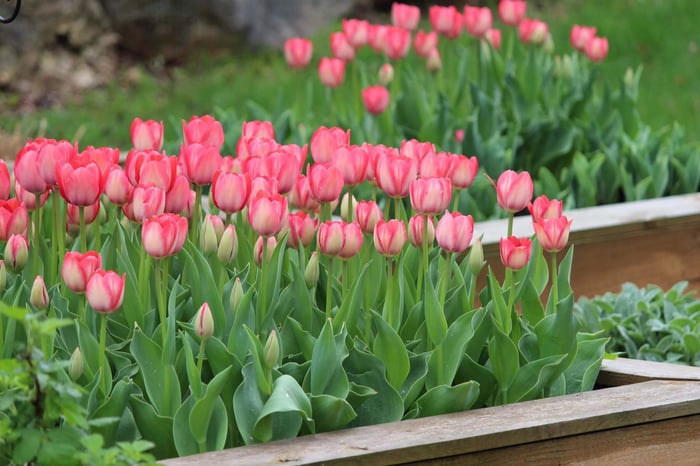
Kick Off the Gardening Season with Tulips
Most vegetable gardens stand empty until the middle or end of May. Why not put some of that space to work and brighten up your spring with tulip bulbs?
Tulips like the same growing conditions as vegetables: fertile, well-drained soil and full sun. If you have planted these bulbs in other places around your yard, you'll be surprised how much better they perform in a vegetable garden. When treated like royalty, tulips grow bigger and burlier, and the flowers are larger and longer-lasting.
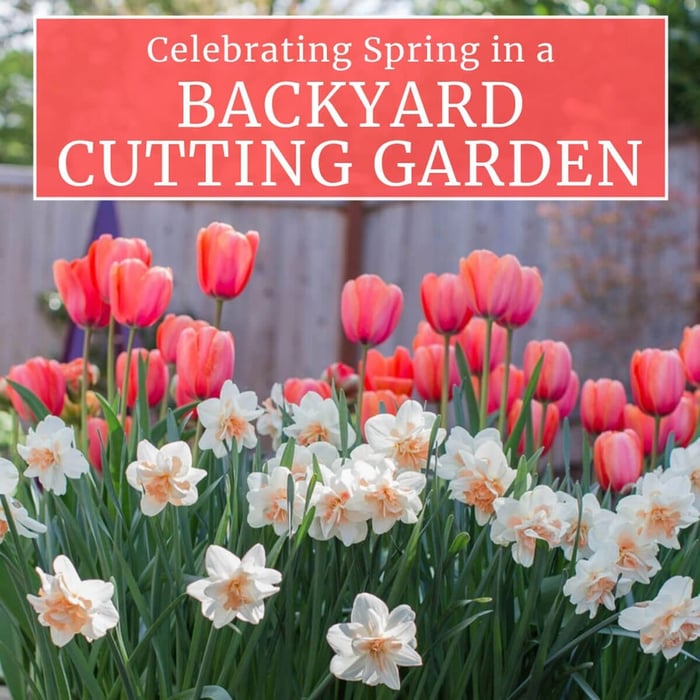
In a vegetable garden, it's easy to plant tulips generously -- in groups of 25, 50 or 100 bulbs. This is the way tulips look best. And you'll finally have enough stems to cut for indoor bouquets.
When choosing which tulip varieties to plant, there's also no need to worry about harmonizing colors, heights and bloom times. You can let your love of tulips run wild and enjoy growing lots of different varieties. Plant the bulbs in blocks, keeping each variety together. Go for one long row with many blocks of color next to each other, or spread the blocks around the garden wherever there's space.
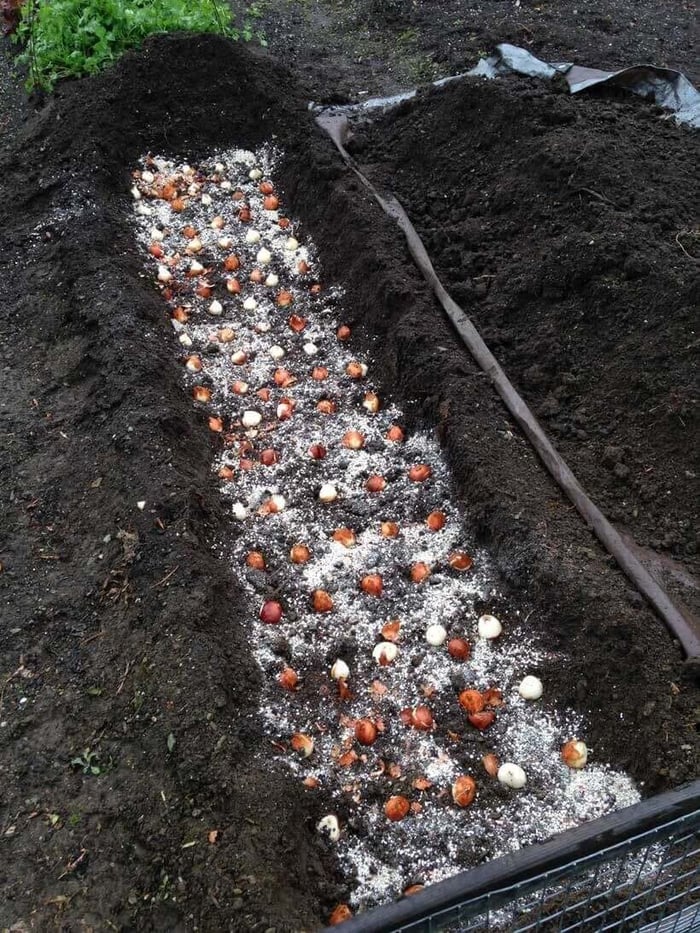 Planting bulbs into a ready-made vegetable garden bed is a snap. Just dig out part of a row, place the bulbs and cover them up.
Plant any time in late fall -- there's no need to hurry. November is actually the best time for planting tulips. By then you will have harvested the last of your summer crops, and there will be plenty of room for bulbs.
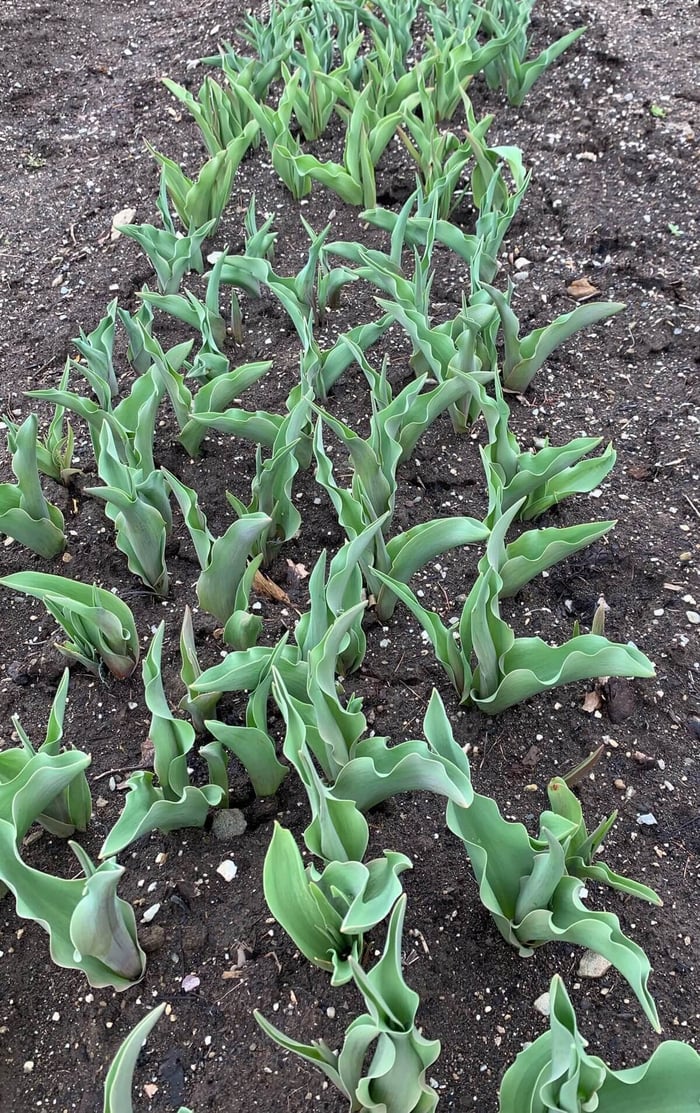 In early spring, the tulips will be up and getting ready to bloom even before it's time to plant peas. If you included a range of early, mid and late season varieties, you'll have flowers blooming for weeks, long before it’s time to plant warm weather crops.
As the blossoms fade, just dig out the plants (bulb and all) to make way for your vegetables. When fall rolls around, start the process all over again with a fresh batch of bulbs.
Tulips are usually treated as annuals, because in most climates the bulbs don't bloom reliably for more than a year or two. (Click HERE to find out which spring-blooming bulbs are reliably perennial.)
Can't bear the idea of tossing out the bulbs? Allow the foliage to stay in place until it has withered. Then pull up the spent foliage and grow a shallow-rooted crop like lettuce or spinach over the bulbs. You could also dig up the bulbs and plant them somewhere else.
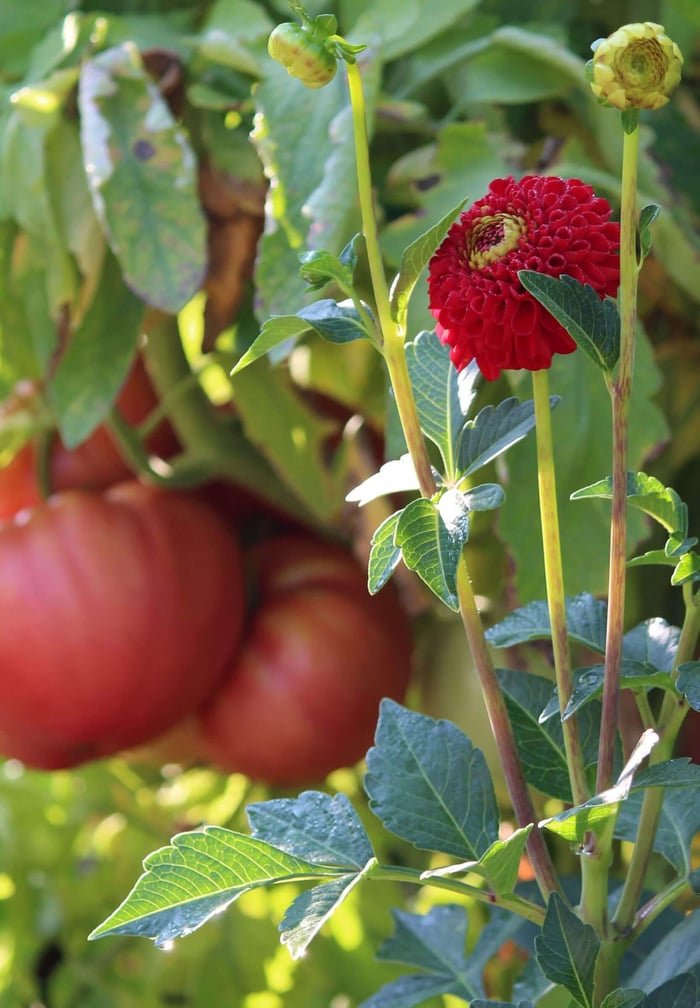
Add Dahlias for Flowers in Summer and Fall
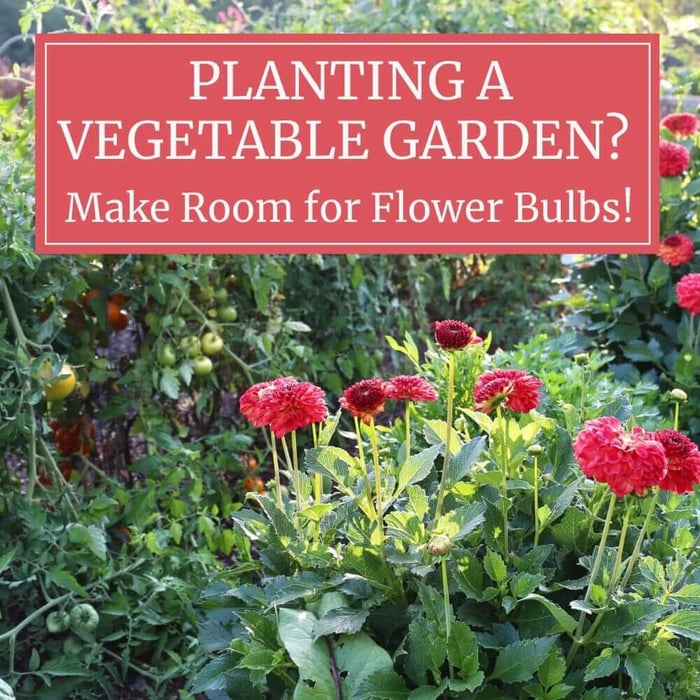
Dahlias perform beautifully in a vegetable garden. They are especially good companions for tomatoes, since the plants are similar in size and require similar care: regular watering and fertilizing, and occasional pruning and tying.
When you’re out picking vegetables for dinner, it's fun to pick a bouquet for the table at the same time. Planting time for dahlias is spring -- the same time as other frost-sensitive crops such as tomatoes, peppers and cucumbers. You can grow dinnerplate dahlias between your tomato plants; decorative dahlias among your peppers, and border dahlias in your herb garden.
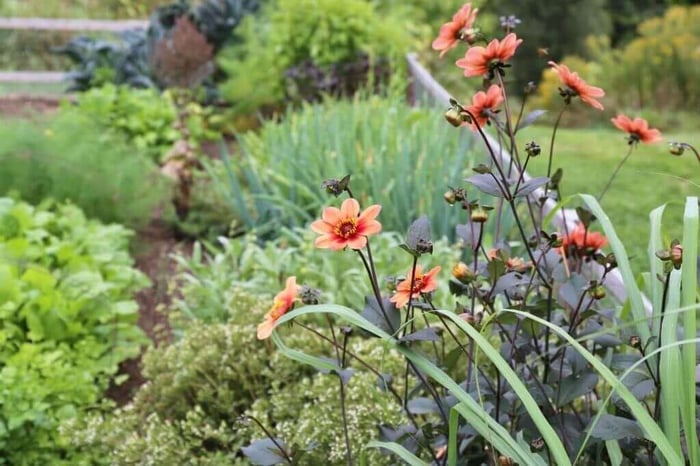 Though all types of dahlias will flourish in a vegetable garden, varieties with single flowers have an added benefit: bees! These daisy-like dahlias have pollen-rich centers that bees can't resist. Attracting more bees to your vegetable garden will result in better pollination and higher yields for fruiting plants such as tomatoes, peppers, eggplants, squash and cucumbers.
As fall approaches, vegetable plants grow more slowly. Fruit production tapers off, and vegetable gardens usually start looking bedraggled. Dahlias, on the other hand, are at their best in early fall. They grow vigorously through the dog days of summer and then turn up their flower production as nights begin cooling down. The bittersweet days of fall are a little sweeter when you are still picking big bouquets of dahlias.
Once there's been a hard frost, you have a couple choices. If you are in growing zones 8-11 you can leave your dahlias in the ground and enjoy them again next year. In colder areas, you can dig up the tubers and either store them indoors for the winter or compost them and plant new tubers next spring. Click HERE to learn about overwintering dahlias indoors.
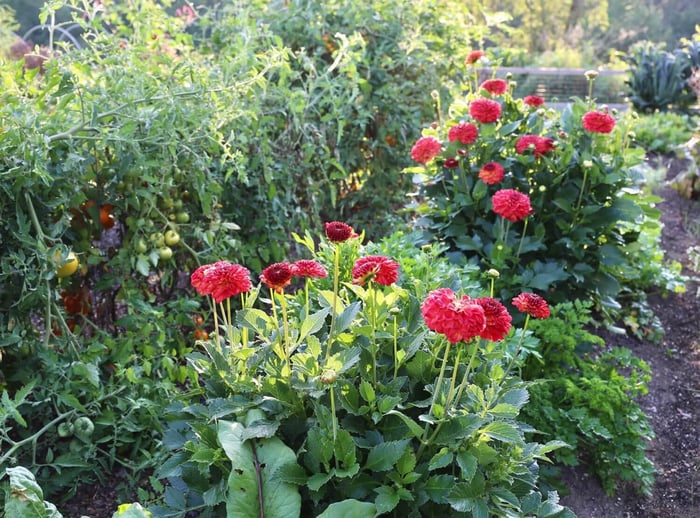 Growing flower bulbs with vegetables lets you enjoy delicious fresh food plus beautiful fresh flowers. Do you combine flower bulbs with vegetables? Leave a comment and tell us about your favorites! Shop HERE for tulips and HERE for dahlias