Are you looking for an elegant way to grow amaryllis that doesn’t require lots of space, pots, or potting soil? Then try growing amaryllis over water! Amaryllis will happily bloom on top of a bed of pebbles filled with water, and the mess-free display can be placed almost anywhere inside your home.
Supplies
To grow amaryllis over water you'll need a watertight vessel, activated charcoal, an amaryllis bulb, and a base layer of pebbles, marbles, or seashells. I prefer to use a clear glass vessel which makes monitoring the water level easy. However, any strong watertight container that's tall enough to support the weight of an amaryllis will work. Stay away from short vessels, forcing vases meant for hyacinths, plastic containers, or lightweight glass. These containers will not adequately support the weight of a growing amaryllis and will likely topple.
Although you can grow amaryllis over water without activated charcoal, I highly recommend purchasing a tub. Activated charcoal will keep the water fresh and prevent your holiday display from smelling fishy.
How to grow amaryllis over water
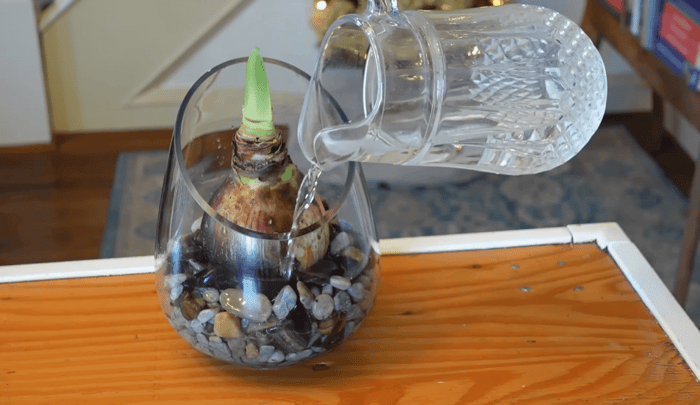
Start by filling a watertight vessel with 5 inches of pebbles, marbles, or seashells. Next, add ½ teaspoon of activated charcoal to the container. Position the bulb on top of the pebbles and add additional pebbles around the bulb's perimeter to anchor it in place. Leave the top 1/3 of the bulb exposed. Fill the vessel with water to just below the base of the bulb. The goal is to keep the roots in water but the bulb dry because any bulb that sits in water will rot. As the water evaporates and is absorbed by the roots, add more water, keeping the level just below the base of the bulb.
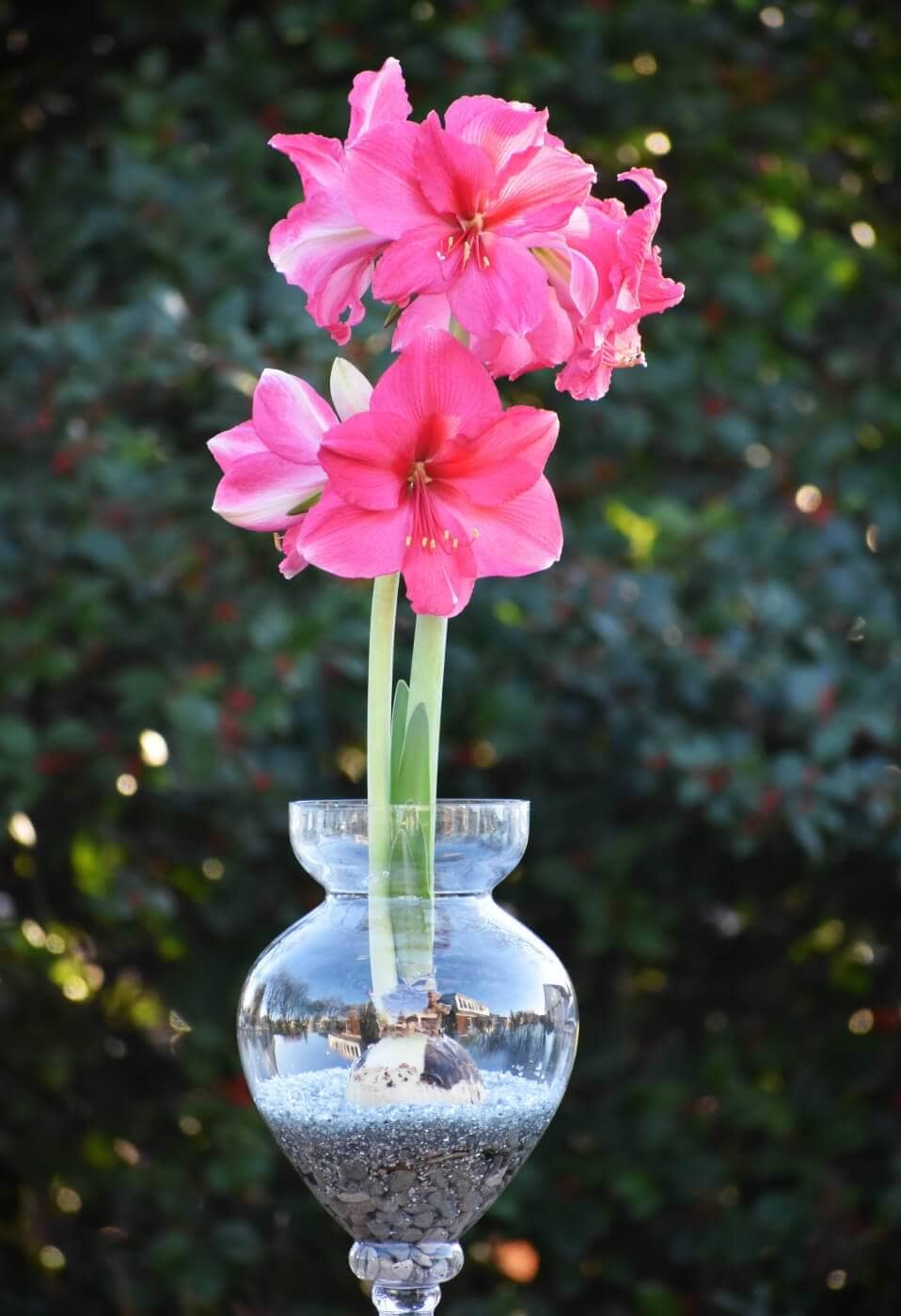
A bulb from the southern hemisphere will bloom in approximately 4-6 weeks, while a bulb from the northern hemisphere will flower in approximately 8-10 weeks. Large bulbs will produce 2-4 flowering stems and will continue to bloom over the course of 1-2 months.
Cut off each flowering scape (the technical name for the flowering stem) as they fade but leave all the foliage intact to collect energy for next year's blooms.
Potting up an amaryllis grown over water
When your amaryllis bulb has finished flowering, remove it from the water and plant it into potting soil. Amaryllis prefer to be snug in their pots, so choose a container that's only 2 inches wider than your bulb. Use a heavy container with a drainage hole to keep the display from toppling over and from becoming waterlogged.
Start by filling the bottom half of the container with lightly moistened potting soil. Set the bulb on top of the soil and fill in around it with more potting soil, leaving the top 1/3 of the bulb exposed. Water sparingly around the perimeter of the bulb to settle the soil. Then, place the pot in a warm area (68-70°F) with bright light and allow the plant to soak up the sun's energy inside until all danger of frost has passed. Continue to water your bulb approximately once a week, or when the top two inches of soil is dry.
How to rebloom an amaryllis
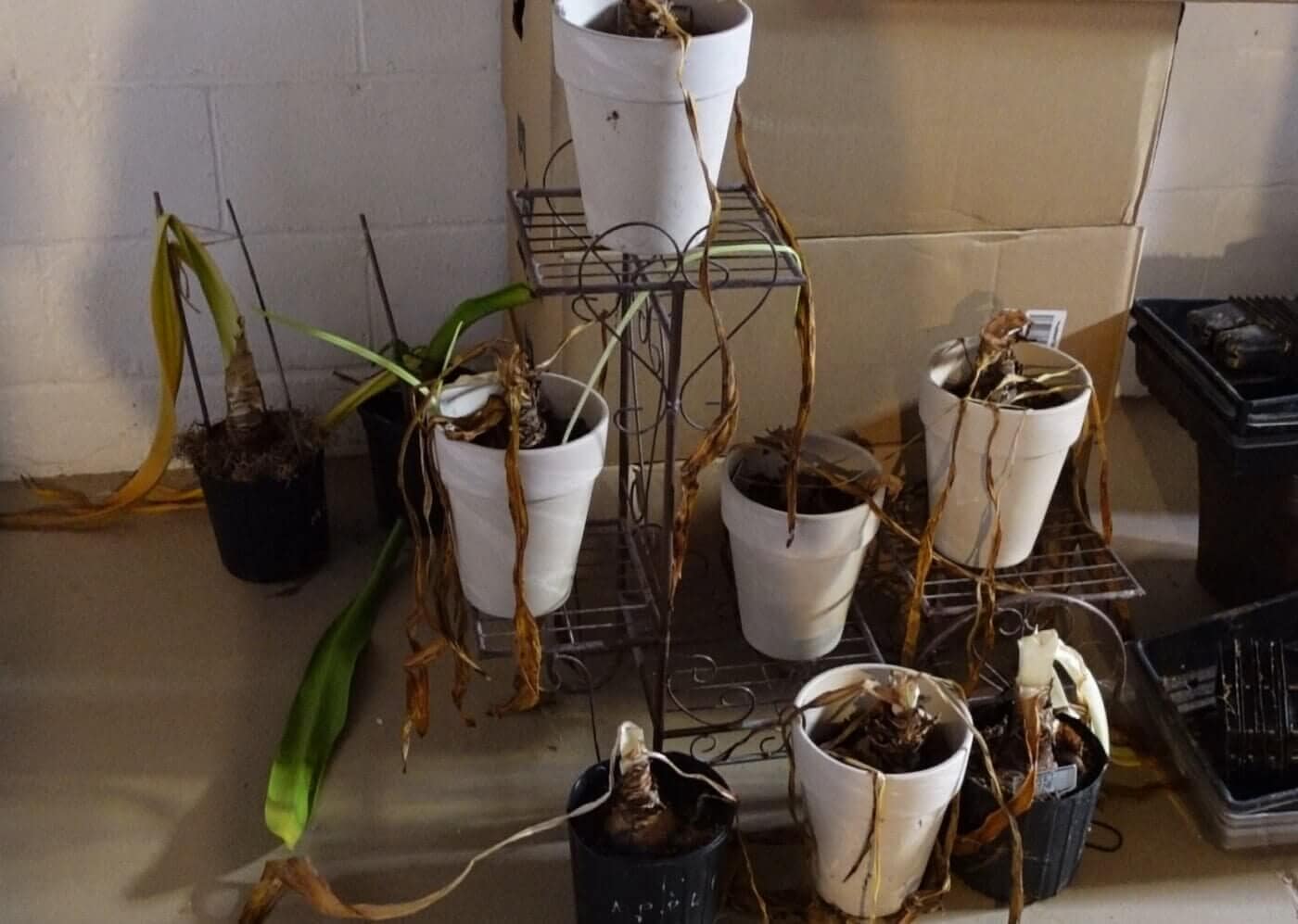
After all danger of frost has passed, move the pot outside for the summer. Continue to water as noted above and leave the bulb outside until early fall. At this point, stop watering the amaryllis and move the potted bulb to a cool (50-55°F), dark, dry location. An unheated basement is ideal. The leaves will gradually wither as the plant goes dormant. Leave the bulb in dormancy for at least 8-10 weeks.

Once the bulbs have completed their dormancy period, you can bring them upstairs to rebloom. Remove the dead foliage and refresh the top layer of soil. Then, water well around the bulb's perimeter with tepid water and bring the pots into a warm area (70°F) with bright light to bloom again!
To learn more about amaryllis, you may be interested in reading these articles on our website: All About Amaryllis, 6 Tips for Growing Amaryllis, When Will Your Amaryllis Bloom?, and How to Get an Amaryllis Bulb to Rebloom.