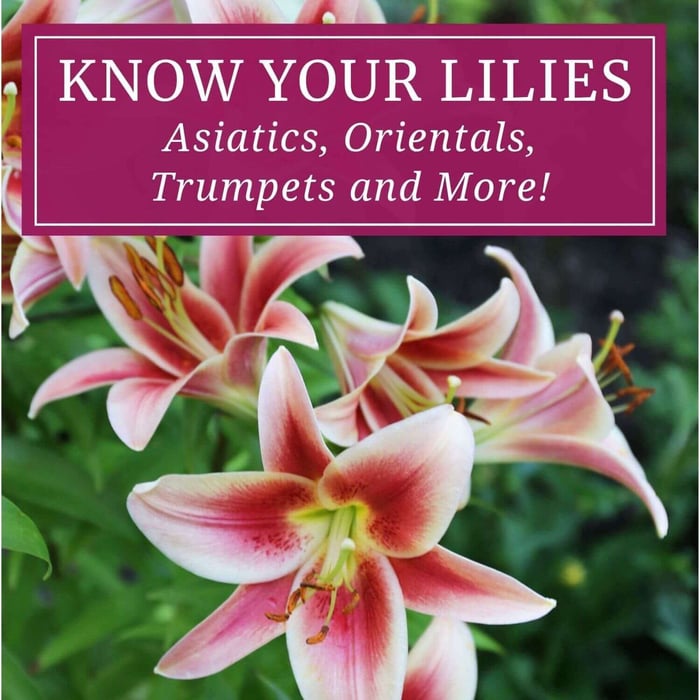
 Can you recognize the difference between an Asiatic lily and an Oriental lily? How about between a trumpet lily and a tiger lily? If not, you and your garden are probably missing out on a lot of summertime beauty. Getting to know the different types of lilies is essential if you want to enjoy the full experience of growing these elegant perennials.
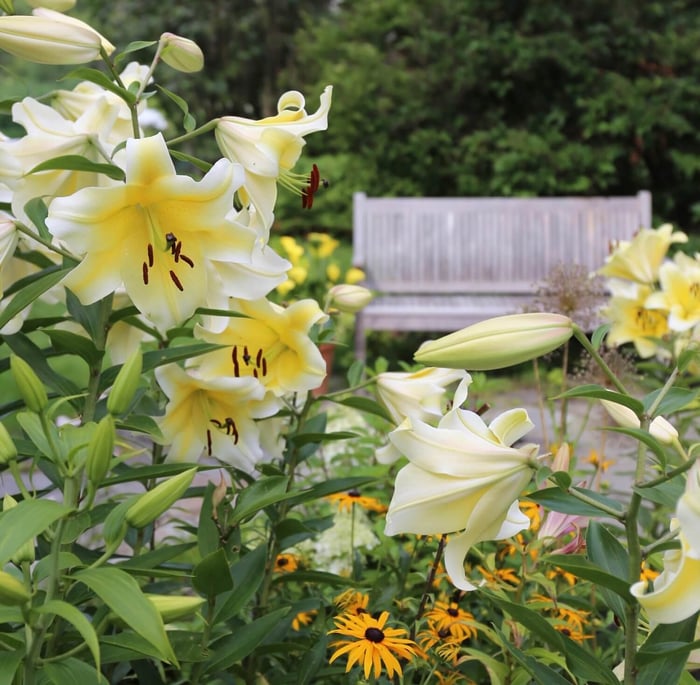 True lilies are members of the LILIUM family. All of the plants in this genus are from temperate regions of North America, Europe and Asia. Though their flowers and foliage are relatively similar, they display a number of different growth habits, flower forms and bloom times.
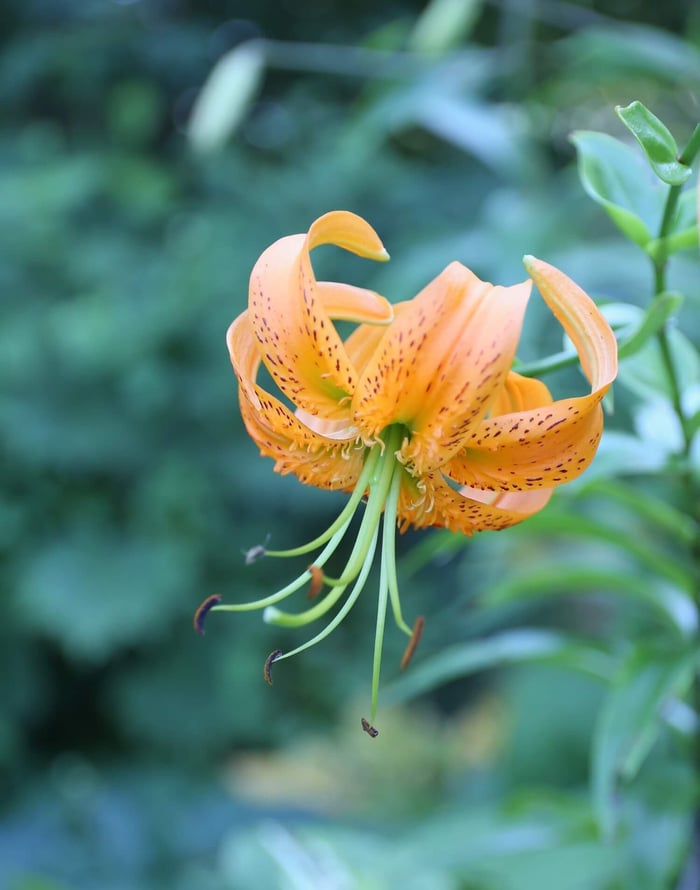 Species Lily Henryi
Species Lilies
Though the bulbs for these lilies are commercially propagated, the plants are essentially the same as you would find in the wild. With their more delicate flowers and informal style, species lilies are a great choice for shade gardens and natural areas. Included in this category are martagon lilies, rubrum lilies, Lilium pumilum, Lilium candidum and Lilium auratum.
Most species lilies have relatively small, downward-facing flowers with recurved petals on long, slender stems. Bloom times are variable. Some types bloom in very early summer, while others wait until fall. Many will tolerate partial shade and most are suitable for zones 4-8. Species lilies that are commonly available include Lady Alice, Henryi and Black Beauty.
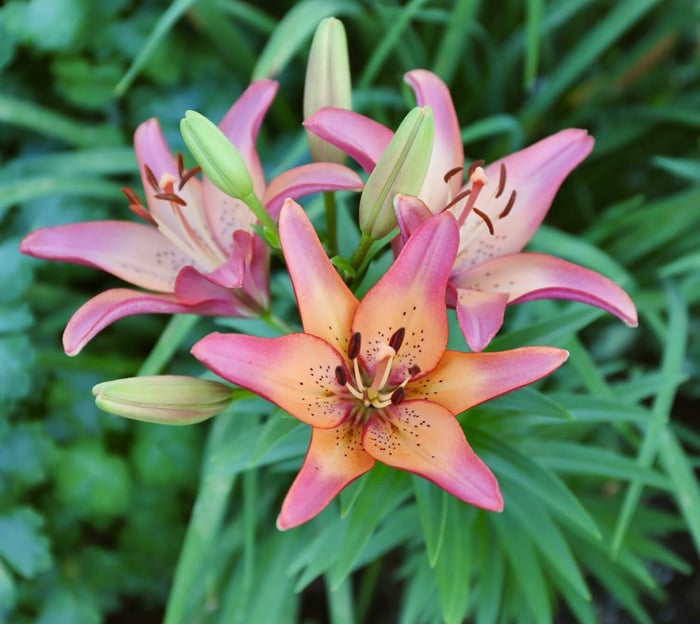 Asiatic Lily Royal Sunset
Asiatic Lilies
These lilies bloom early, usually opening right after peony season. They are the shortest type of lily, and at just 18 to 24" tall, are ideal for perennial beds and containers. The Asiatic lily's most distinctive characteristic is its upward-facing flowers, which bloom in many bright colors including white, yellow, orange, pink, red and deep burgundy.
ThoughAsiatic lilies do not have a fragrance, their flowers add a welcome burst of color to early summer gardens and flower arrangements. They are hardy in zones 4-8. Asiatic lilies that are commonly available include Royal Sunset, Forever Linda and Mapira.
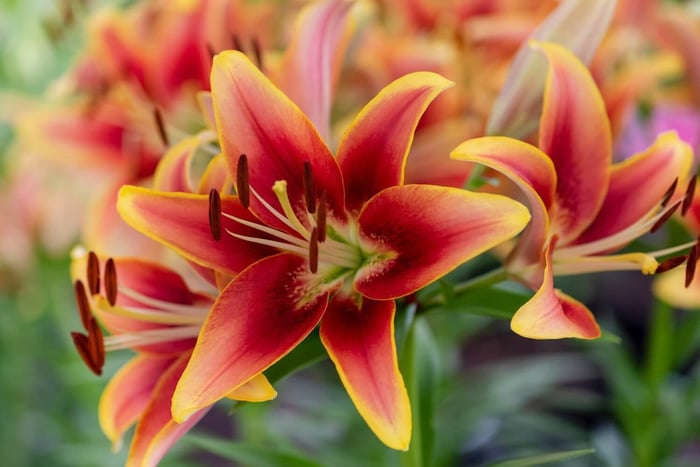 Asiatic-Oriental Lily Kaveri
Asiatic-Oriental Lilies (AO Hybrids)
These lilies are relatively recent hybrids that combine the brilliant colors of Asiatic lilies with the bigger flowers and longer stems of Oriental lilies. Though originally developed for the cut flower industry, these lilies are also excellent plants for home gardens.
Oriental-Asiatic hybrids usually grow 3 to 4 feet tall, so they rarely need staking. They are a great addition to any perennial garden and also perform well in containers. Hardy in zones 4-8. Look for AO hybrids such as Kaveri and La Vida.
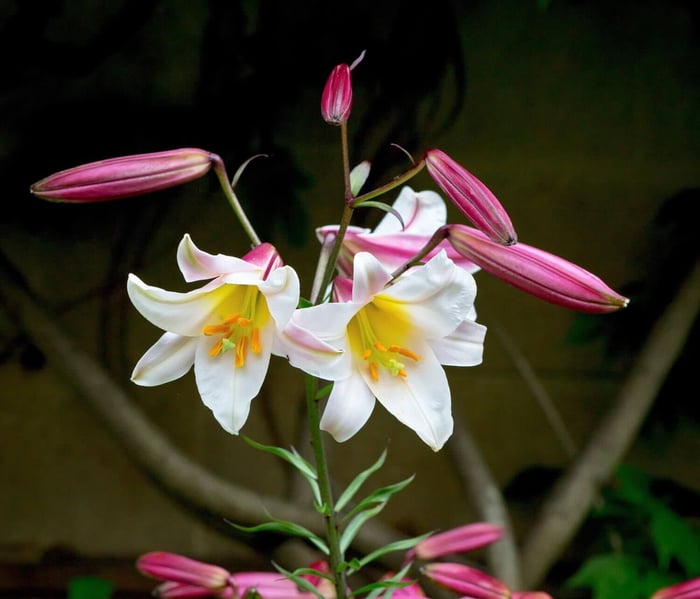 Trumpet Lily Regale
Trumpet Lilies
This category includes the Regale lily which is native to China, Longiflorum lilies (commonly called Easter lilies) and Aurelian hybrids. Trumpet lilies begin blooming in midsummer, a few weeks after the Asiatics. Their flowers have thick, waxy petals and deep trumpets, and come in colors including white, cream, yellow, peach and pink.
Most trumpet lilies grow 5 to 6 feet tall and are best planted near the back of perennial borders. Be prepared to stake them if they are in a windy spot. Once established, each stem can bear up to a dozen intensely fragrant flowers. Just a few plants will perfume your entire garden – especially in the evening. Hardy in zones 4-8. Look for trumpet lilies such as Pink Planet, African Queen and Regale.
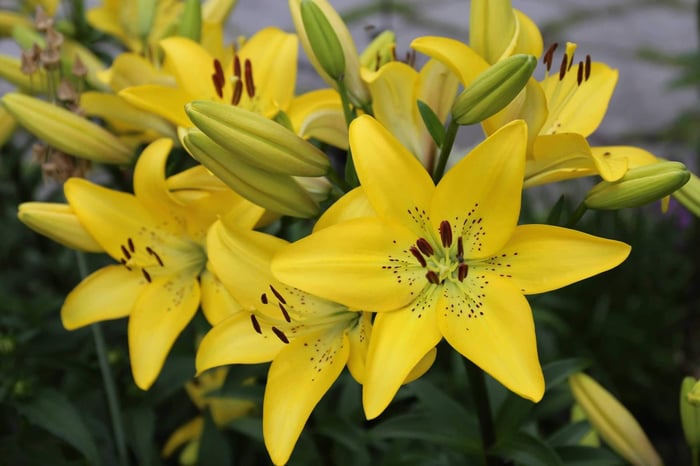 Longiflorum-Asiatic Lily Yellow Diamond
Longiflorum-Asiatic Lilies (LA Hybrids)
These lilies are the result of crossing a Longiflorum lily with an Asiatic lily. The flowers have thick, smooth petals and upward facing, open flowers. Most varieties stand about 4 feet tall and have a light fragrance.
Longiflorum lilies are hardy in zones 4-8. They tolerate warmer climates than many other lilies, so they're a good choice for both southern and northern gardens. Varieties include Yellow Diamond, Brindisi and Eyeliner.
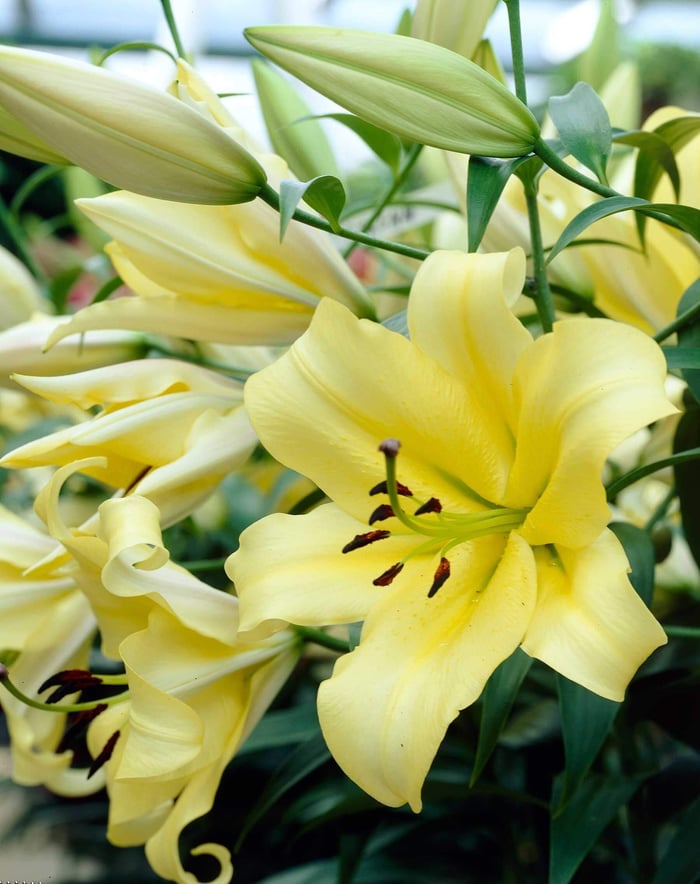 Oriental-Trumpet Lily Yelloween
Oriental-Trumpet Lilies (OT Hybrids)
These lilies are a cross between Trumpet Lilies and Oriental Lilies and are commonly called either Orientpets and OT hybrids. The flowers bloom in mid to late summer and display all the best qualities of both parents. The blossoms are very large, with thick, waxy petals and an open form. The blossoms may face upward, outward or slightly downward on the stem.
Oriental-Trumpet lilies are winter hardy in zones 4-9. Over time, the bulbs form large clumps and will produce dozens of blooms. The thick, extra strong stems average 4 to 6 feet tall. Flowering usually begins a week or two before Oriental lilies. Most cultivars are fabulously fragrant. Varieties include Lavon, Gaucho, Purple Prince and Yelloween.
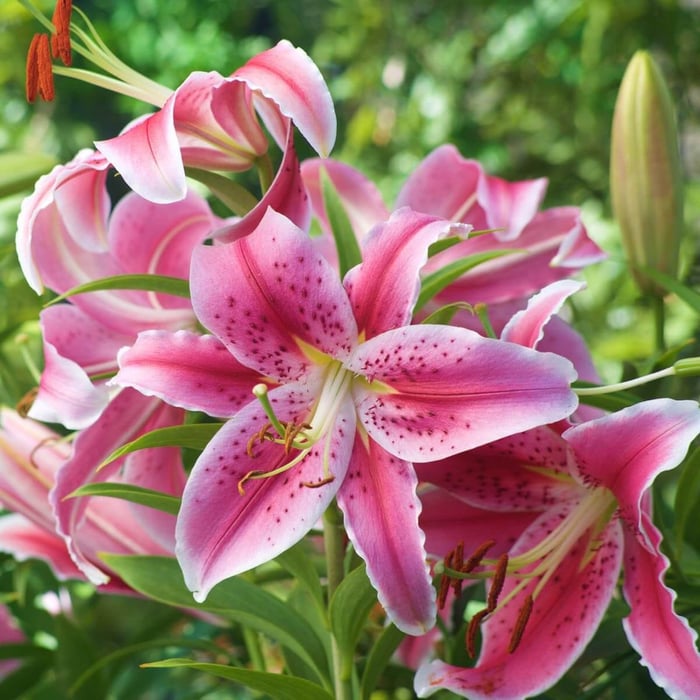
Oriental Lilies
These lilies are among the world's most popular cut flowers. They have very large, outward-or upward-facing flowers with broad petals, and an open, star-like shape. Heights range from 3 to 4 feet tall. Oriental lilies are known for their heady fragrance, which will perfume a room or an entire garden. Flower colors range from yellow and white to pink and burgundy. Many display contrasting freckles or stripes on the petals.
These lilies are a must for cutting gardens and add late summer excitement to any perennial garden. Be sure to plant extras in containers, so you can move them into the garden or onto the patio as they come into bloom. Winter hardy in zones 5-9. Varieties include Stargazer, Casablanca, Muscadet and Salmon Star.
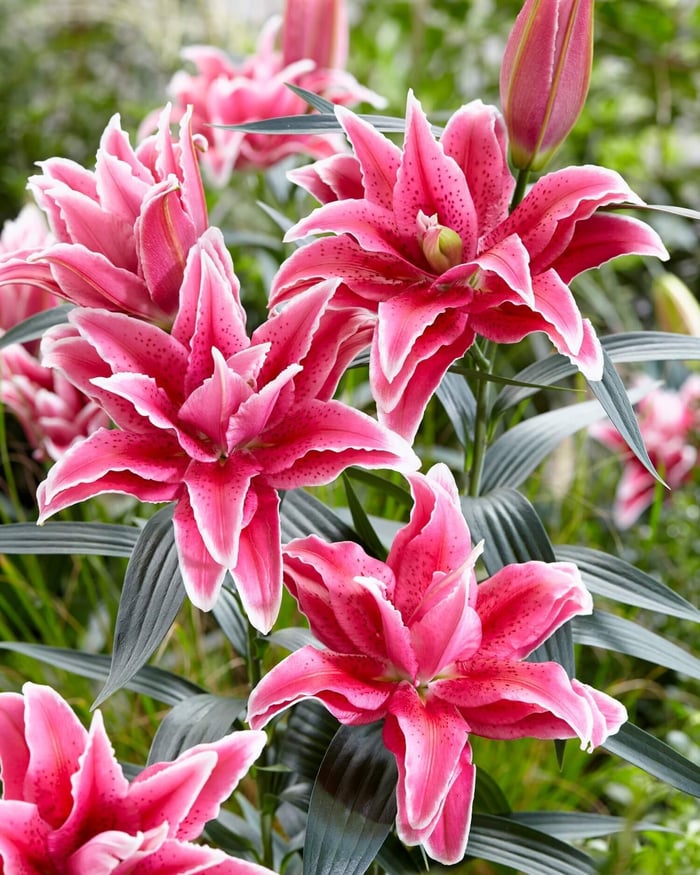
Double Oriental Lilies
These lilies are a relatively new introduction, courtesy of the cut flower trade. The flowers have extra petals rather than stamens and anthers. This means there's no messy pollen. It also means the flowers last longer and have a more subtle fragrance.
Double Oriental lilies are 2 to 3 feet tall and usually have several flowers on each stem. Plant the bulbs in cutting gardens and in containers. They will be the stars of all your summer bouquets. Varieties include Roseliles Tatsjana, Ramona, Editha, and Samantha.
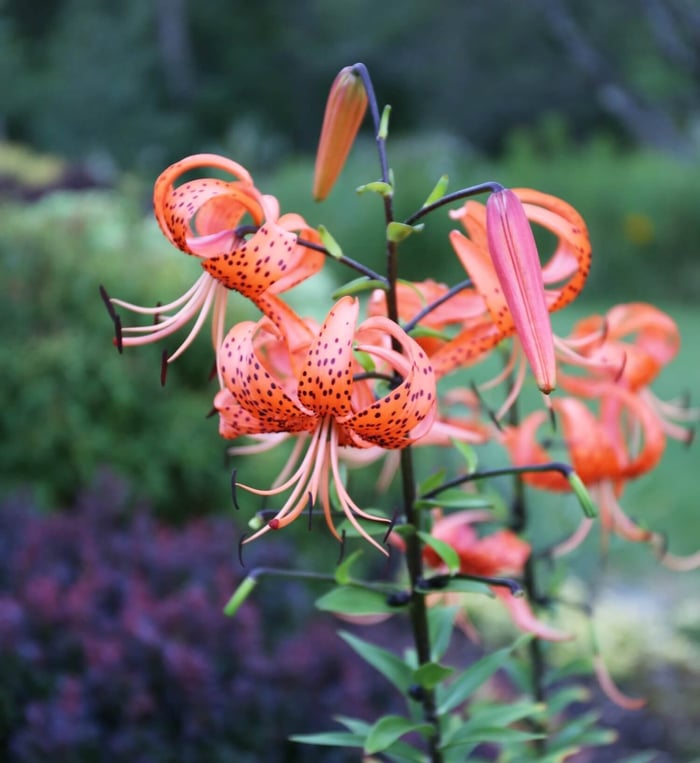
Tigridium and Lancifolium Lilies
Though tiger lily flowers are not as large as some other lilies, their bright color and prominent black freckles make them really stand out. The pendulous flowers have recurved petals in warm shades of gold, orange and red. Blossoms may be single or double. Shiny, black, pea-sized bulblets line the 3 to 4 foot stems.
These are among the hardiest (zones 3-8) and longest-lived lilies. The plants have an old-fashioned charm and are an excellent choice for natural areas. Heights are 3 to 4 feet and bloom time is late summer.
To learn more about growing lilies, you may be interested in reading All About Lilies and 8 Tips for Growing Better Lilies. Use our Planning Guide for Lilies to create a succession of blooms from June through August. Click HERE to see our full assortment of lilies for spring planting.