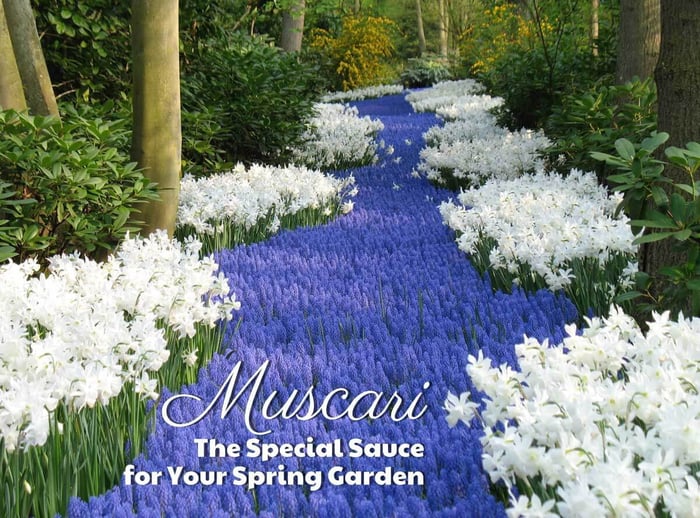
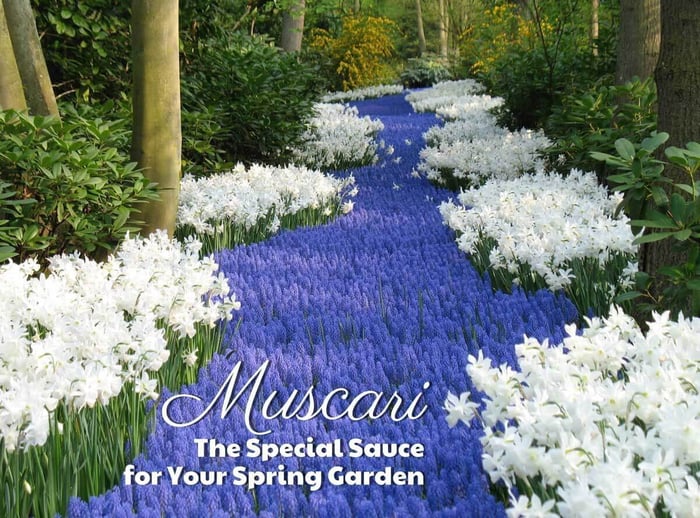
If you love flowers, Holland’s Keukenhof gardens should definitely be on your bucket list. It's a floral wonderland with 79 acres of spring flowers, including tulips, daffodils, hyacinths and great rivers of muscari.
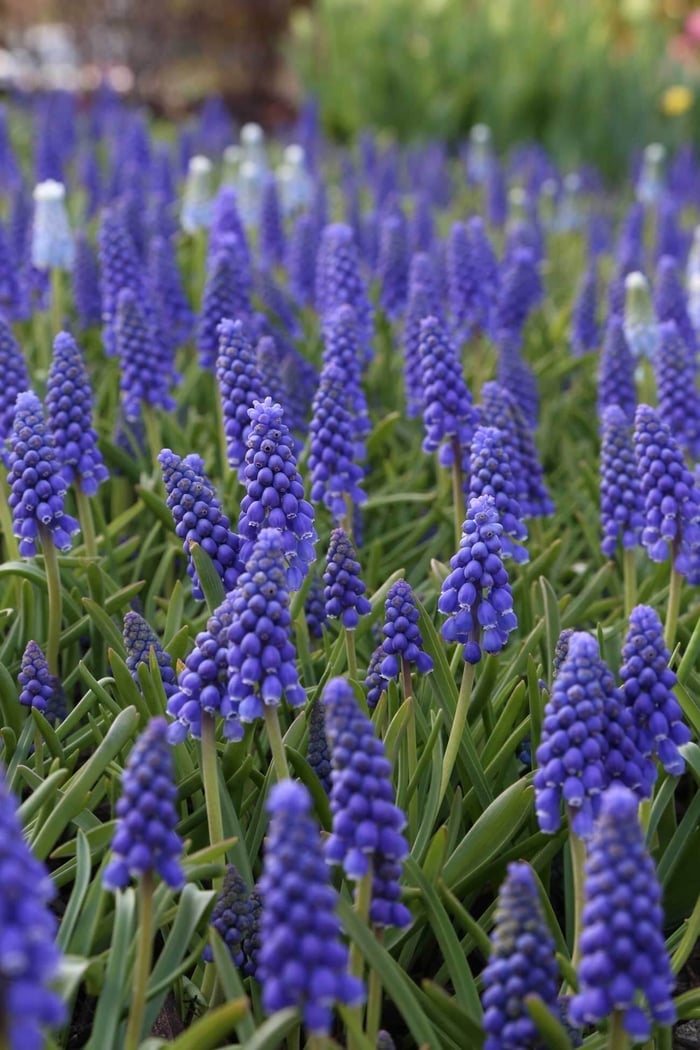
Why are these grape-scented flowers, commonly known as grape hyacinths, used so extensively? They are the perfect companion for every other type of spring-blooming bulb. Here are 6 reasons you should be planting them this fall:
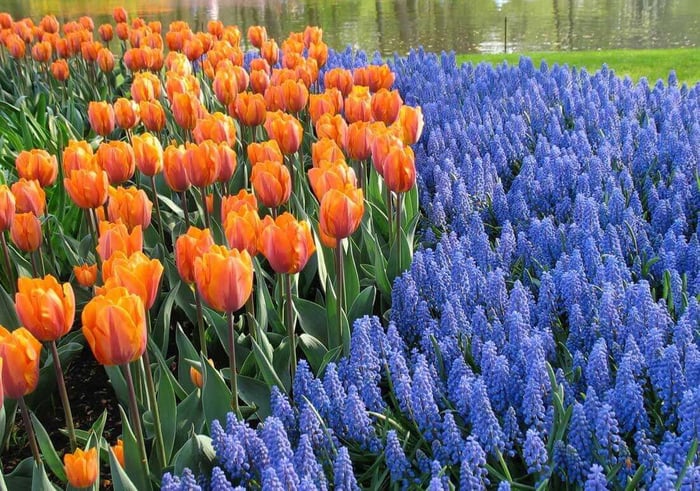
A Color That Refreshes the Eye
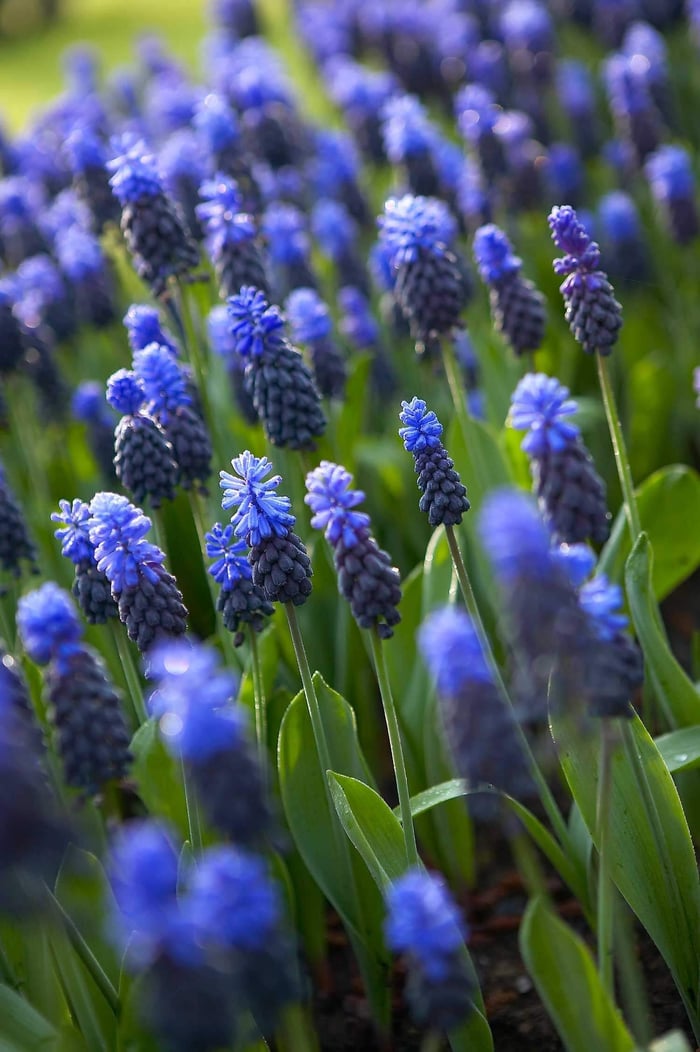
Blue is an easy color to use in the garden. It goes well with everything, making hot colors more intense and pastels colors softer. But blue is also the world’s rarest flower color. Fortunately, grape hyacinths provide some of nature's truest blues. Any way you look at it, adding a splash of blue to your garden is always a good thing.
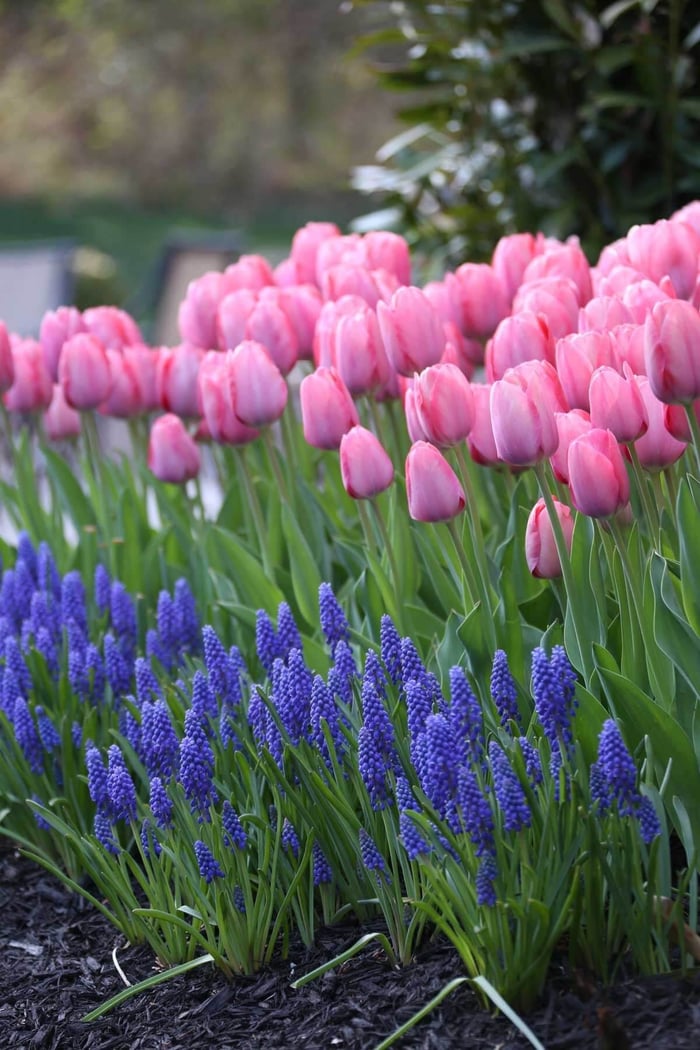
Midseason Bloom Time
Muscari flower in mid-spring, right at the peak of spring bulb season. At this point, the early spring blues such as scilla siberica and chionodoxa have already come and gone. These carefree bulbs burst into bloom just in time to keep the blue theme going strong.
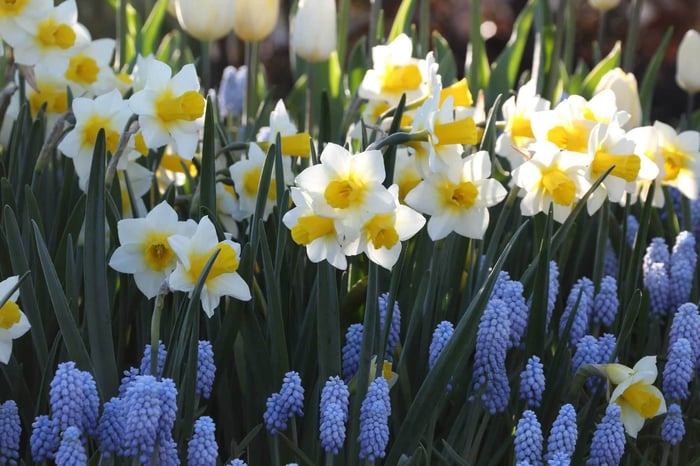
Not Too Tall, Not Too Short
Most types of muscari stand 5-7” tall. Other spring bulbs, such as tulips, daffodils and allium, are two to three times that height. Combining flowers of different heights gives you twice the color in the same amount of space. Shown above is a beautiful pairing of daffodil Golden Echo and Valerie Finnis.
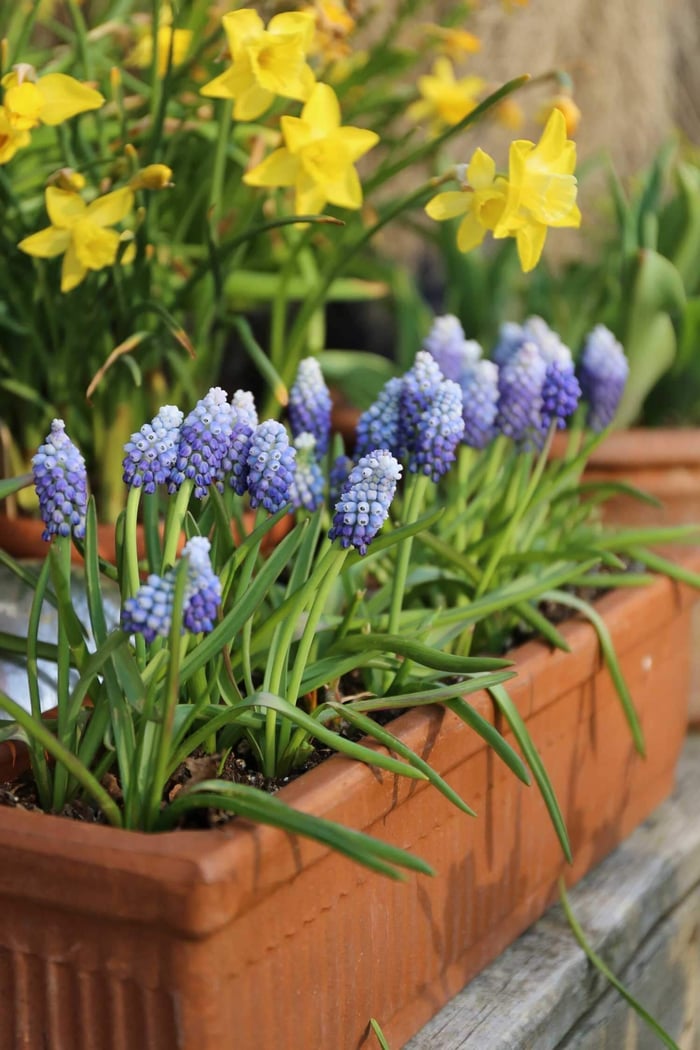
Easy to Plant and Easy to Grow
These spring-blooming bulbs are unfussy and long lived. They grow in sun or part shade, and multiply over time. The bulbs are small and only need to be planted a few inches deep, so it takes very little effort to add them to existing gardens. They will also grow as well in containers as they do in the garden.
Lots of Bulbs for Little Money
The bulbs are inexpensive, so it doesn't cost much to plant a lot of them. We offer them in bulk to save you even more money.
A Distinctive Fragrance
To my nose, muscari smell like grape juice. One of the best ways to appreciate their fragrance is to put them in a vase. Add some lily of the valley, primroses and violets for a nostalgic nosegay.
For another up close experience, consider forcing the bulbs for late winter blooms. Plant them in containers in the fall, then chill them at 40°F (or colder) for at least 10 weeks.
Suitable for Underplanting and Interplanting
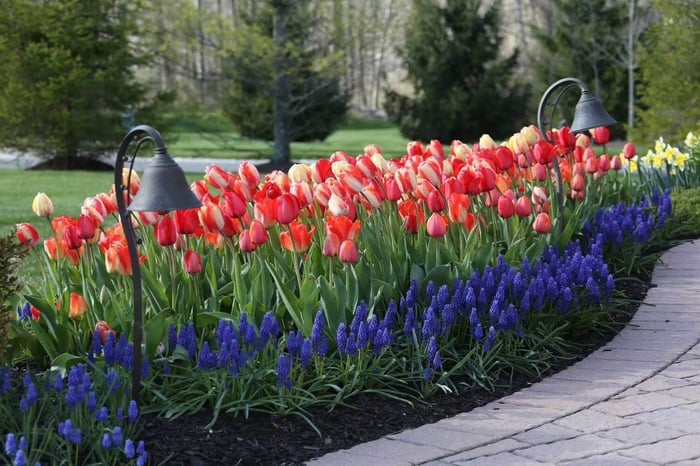
Nature plants in layers, and the same approach works well in gardens. Spring-blooming bulbs such as tulips and daffodils create a colorful understory beneath trees and shrubs. Muscari let you add yet another layer of color beneath those taller bulbs. Depending on the variety, heights range from 4" to 8", so it's usually best to position them near the front of your borders.
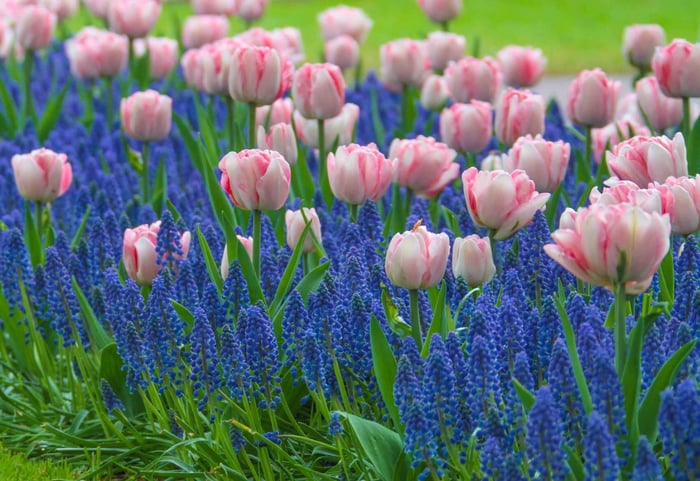
In our trial garden, we've also been experimenting with planting muscari bulbs right on top of tulips or daffodils. It's been hard to come up with combinations that look anything other than great. The larger bulbs need to be planted deeper, so put them in the ground first, cover with some soil, scatter the smaller bulbs on top and finish refilling the hole.
If you want to purchase one of our garden-tested combinations, check out the "Perfect Pairs" collections. Planting a number of different varieties will extend the show and let you create some really exciting combinations. Ready to order your bulbs? Check out the choices HERE!