 Daffodils in bloom means that spring has arrived and warmer days are just ahead. I love seeing these cheery yellow, orange and white blossoms popping up all over my yard and garden.
But once the flowers have come and gone, daffodil foliage hangs around for weeks. To ensure another year of great flowers, it's important to let the foliage stay. But it's not the look I want to see in my gardens during June. I needed to find an alternate solution!
An Ideal Partnership
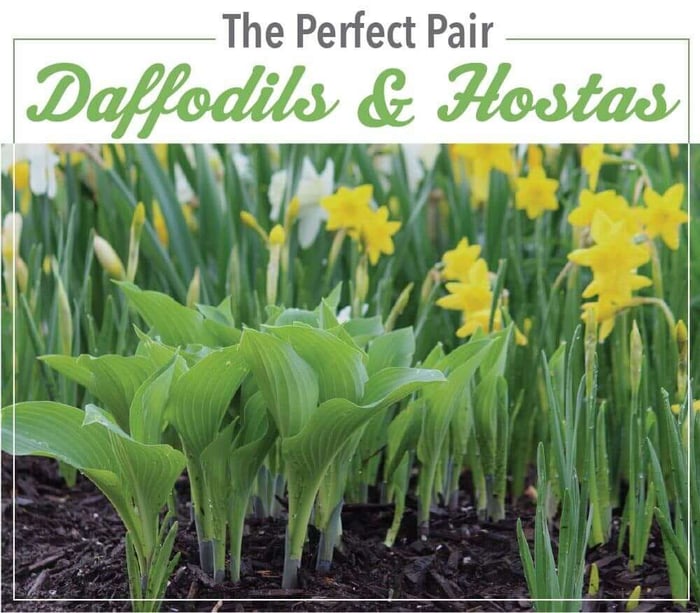
It's important to let daffodil foliage die back naturally because the bulb needs to build up food reserves to multiply and build up more flowers for the following year. Unfortunately, I don't like the way all that limp looks in my garden. So a couple of years ago I planted daffodil bulbs in with the hostas along my walkway in the hopes that the emerging hosta foliage would hide the dying daffodil foliage.
This spring, when the daffodils were at peak bloom, the hostas were just starting to unfurl their leaves. As the season progressed, the daffodil flowers faded and the hosta leaves got bigger. Eventually they overtook the spent flower heads, yet still allowed the daffodil foliage to continue growing and feeding the bulbs. I was so happy with the results!
By the time the Globemaster alliums started to bloom, the hostas had filled out and completely hidden the daffodil foliage. Alliums are also known for having less than attractive foliage, and the hostas hid those yellowing leaves as well. The best part? Cleaning up that garden now happens just once a year, in late fall. Any remaining daffodil and allium foliage gets raked up along with the frosted hosta leaves.
If you love simple solutions in the garden, I recommend planting daffodils with hostas. They're better together!