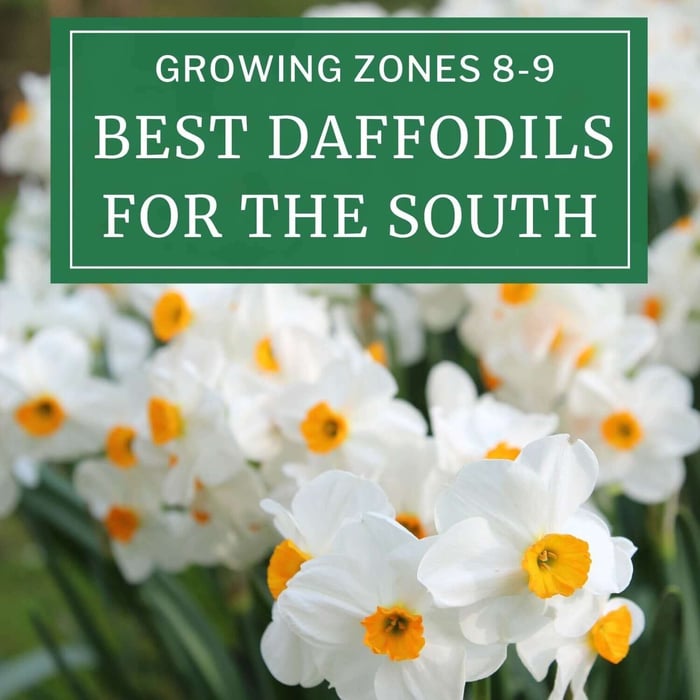
No matter how short or mild the winter, everyone is happy when spring arrives. This is as true in Texas as it is in Maine. And what better way to celebrate the coming of spring than with daffodils? These easy and adaptable flowers bloom bravely and reliably almost everywhere in the country.
Daffodils are particularly valuable in southern states where many other spring bulbs require pre-chilling or simply do not flower well. Over the years, gardeners in growing zones 8 and 9 have discovered that some daffodils perform better than others.
In general, it's best to stick with types that are native to areas with warmer winters. These include varieties in four families of daffodil: Jonquilla, Tazetta, Triandrus and Cyclamineus.
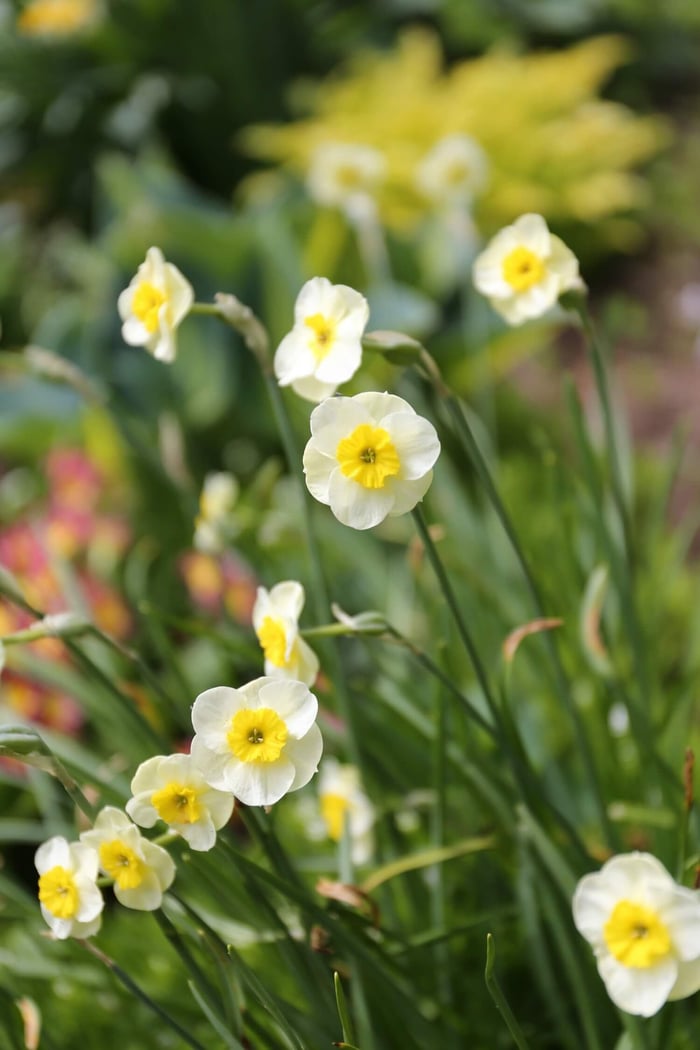 Jonquilla Daffodil Sun Disc when it first opens. The outer petals eventually become completely yellow.
Heat Tolerant Jonquilla Daffodils
Jonquilla daffodils have petite flowers with small, open cups. There are usually several flowers per stem and most varieties are wonderfully fragrant. The foliage of Jonquilla daffodils is narrow and grass-like, which makes it easier to work these bulbs into flower beds.
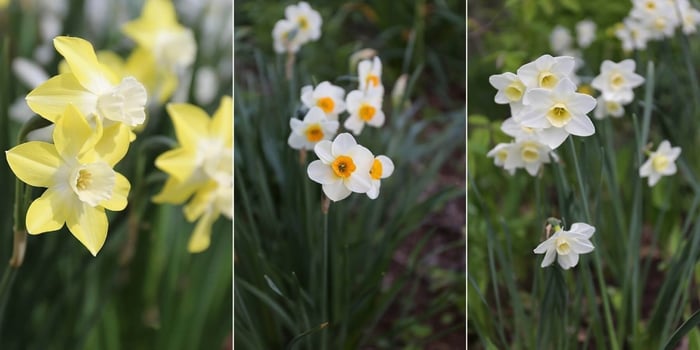
Left to right: Jonquilla Daffodils Pipit, Beautiful Eyes, Silver Smiles
Jonquilla daffodils are good for naturalizing, growing in containers and for indoor forcing. They are also beautiful in a vase. And, while these long-lasting, heat tolerant daffodils perform well in southern gardens, they are equally suitable for the north.
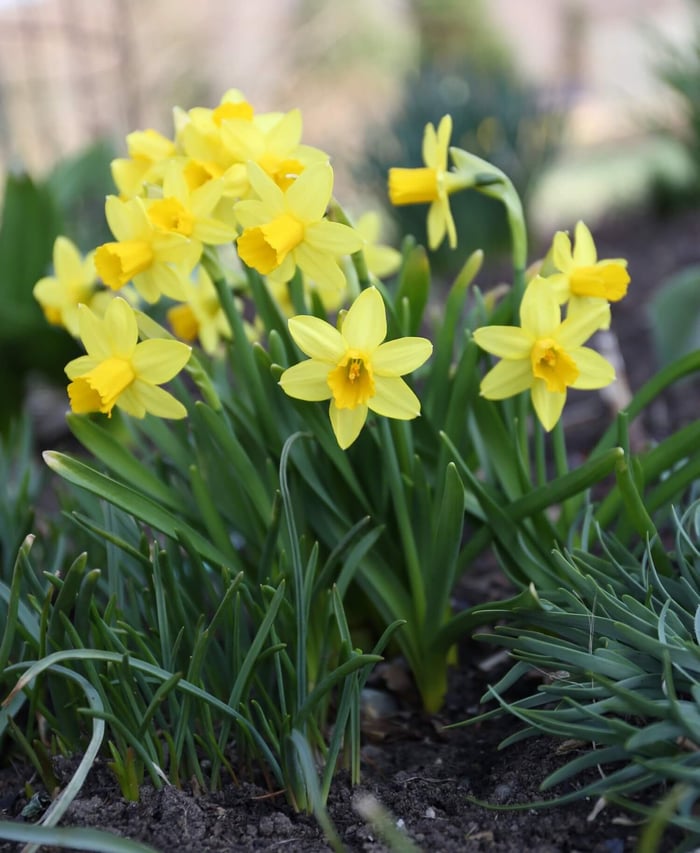 Cyclamineus daffodil Tete a Tete.
Petite Daffodils for Warm Climates
The Cyclamineus family of daffodils is relatively easy to recognize. Most varieties have reflexed (pulled back) petals and small, narrow cups. They are moisture and shade tolerant and good for forcing. They bloom in early spring and tend to be shorter in stature than most other daffodils.
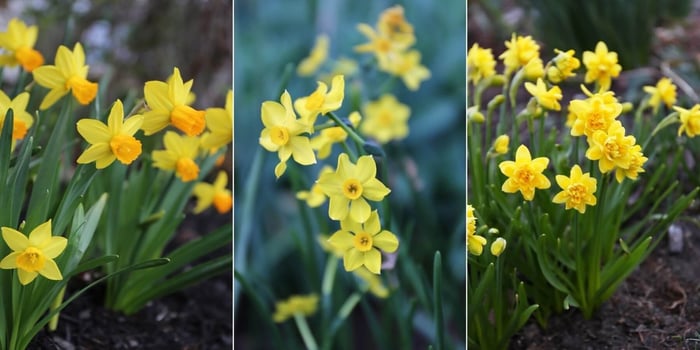 Left to right: Cyclamineus daffodils Jetfire, Baby Boomer and Tete Boucle.
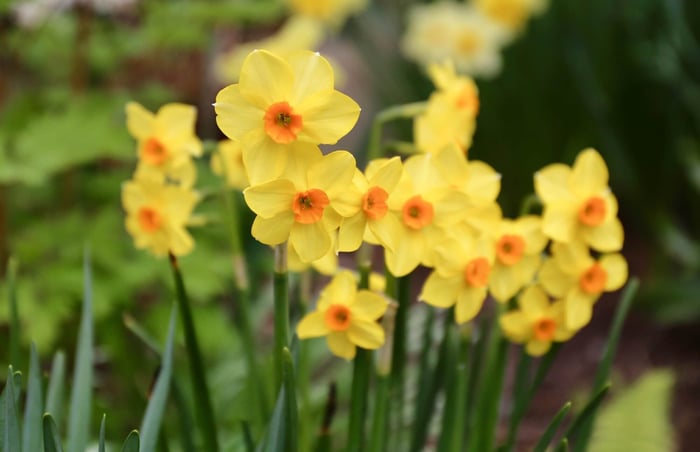 Tazetta daffodil Golden Dawn.
Tazetta Daffodils for Warm Climates
These daffodils bear their flowers in clusters, with anywhere from 2 to 20 dainty blossoms per stem. The flowers have short cups, rounded petals and an intense, sweet fragrance. They are very long-lasting in both the garden and vase.
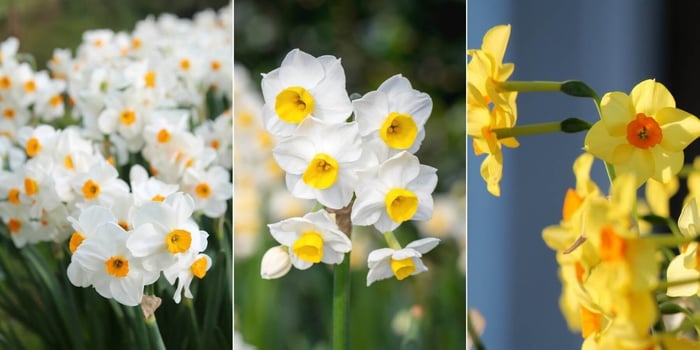 Left to Right: Tazetta Daffodils Cragford, Avalanche and Falconet.
Tazetta daffodils perform beautifully in gardens and containers. They are also excellent for indoor forcing. In fact, paperwhites are members of the tazetta family. Not all varieties of tazettas are winter hardy in northern climates, so if you live in zones 3-5, be sure to check the hardiness rating before you buy.
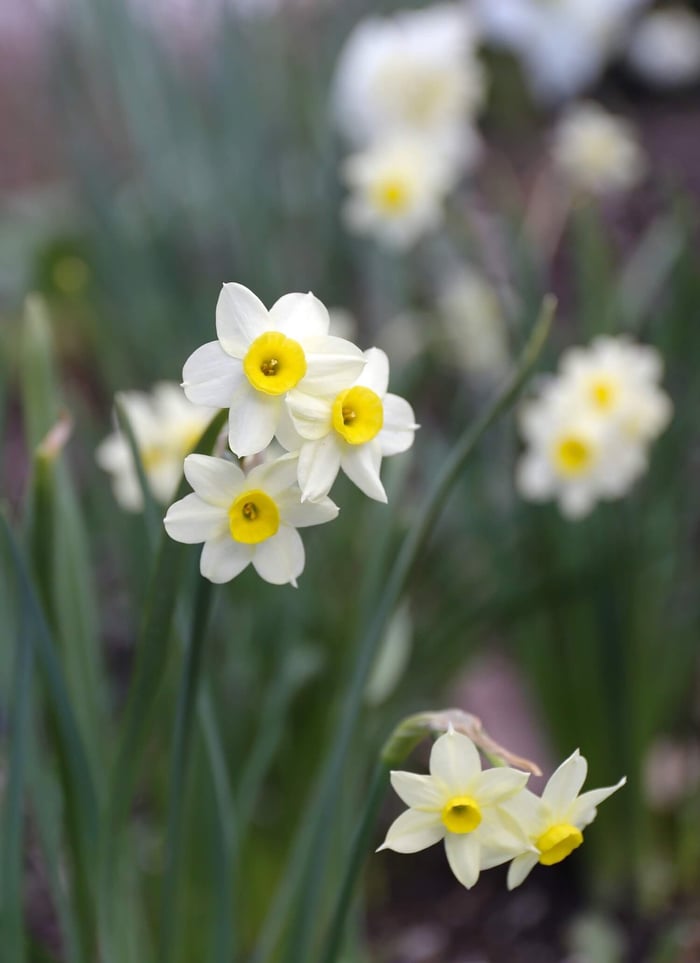 Tazetta Daffodil Minnow
More Daffodils for Warm Climates
There are three more daffodil varieties that gardeners in growing zones 8-9 often recommend. These are Erlicheer, which is classified as a double, Thalia, which is a Triandrus daffodil, and the small cup variety Barrett Browning.
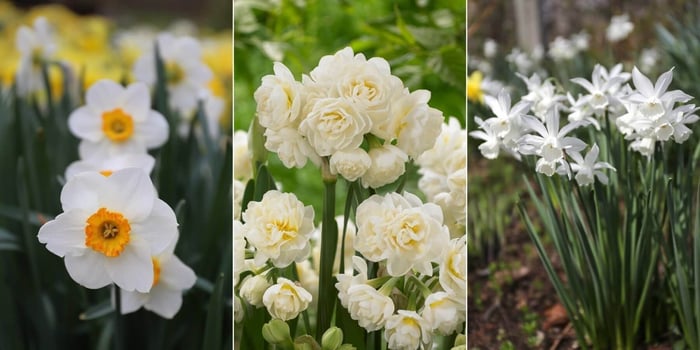 Left to Right: Daffodils Barrett Browning, Erlicheer and Thalia.
If you find some of these daffodils for the south are sold out, or are reading this off season, keep in mind that you can reserve fall-planted bulbs starting in July, and we will deliver them at the proper planting time for your area.
To learn more about daffodils, you may be interested in reading the following articles on our website: Planting Guide for Daffodils, Best Daffodils for Naturalizing and All About Daffodils.