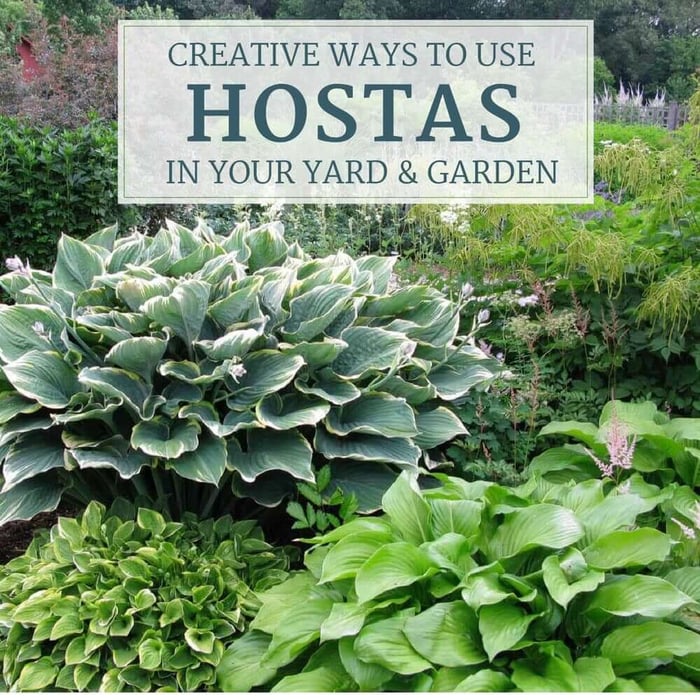
Hostas are so incredibly tough and easy to grow, that they sometimes don’t get the respect they deserve. More than just problem solvers for shady areas, hostas offer gardeners an exciting palette of plants in many different sizes, colors and textures. Here are some creative ways to use hostas around your home and in your garden.
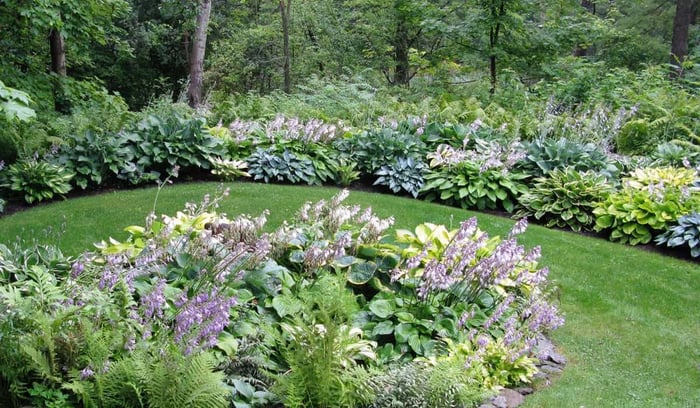
Plant Hostas with Hostas
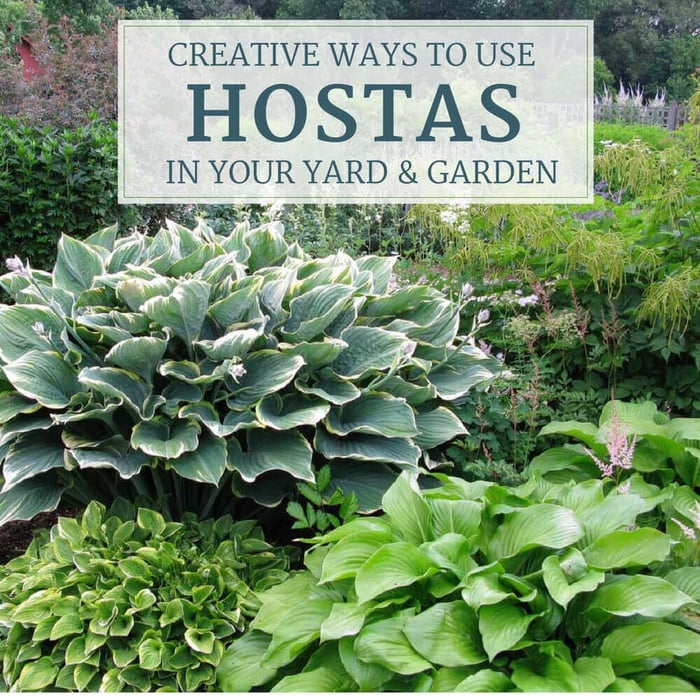
With so many different types of hostas to choose from, it's easy to create a beautiful garden that contains nothing but hostas. If you do this, you'll want cultivars that are different enough to be interesting, yet similar enough to look like they belong together. Strive for a tapestry of foliage with repeating shapes and colors. As a general rule, large plantings of hostas should include mostly solid greens and blues. Create visual interest with variations in leaf sizes and textures. You’ll also want to incorporate some plants with variegated foliage, making sure they echo the same green and blue hues.
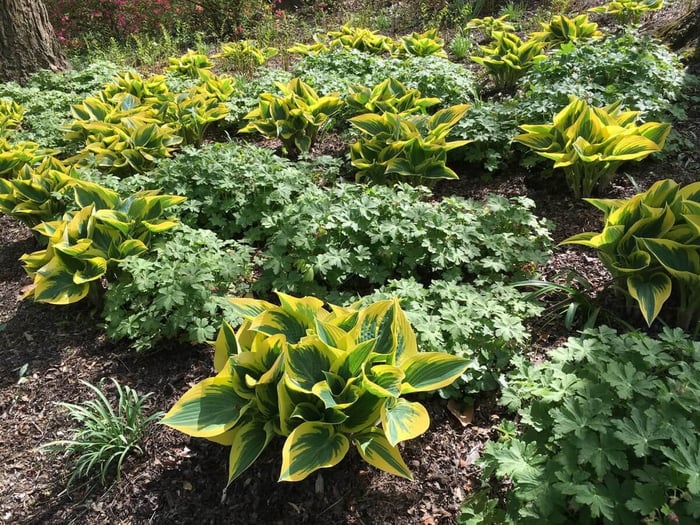 Hostas with yellow foliage (both solid and variegated) add bright, unexpected color in the landscape. They’re best used as accent plants or grouped into drifts that snake their way through other plantings.
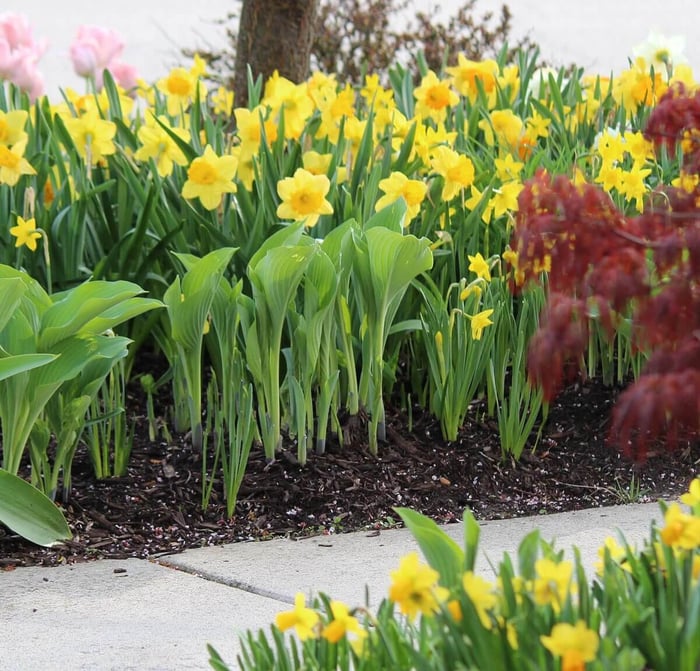
Pair Hostas with Spring Bulbs
Hostas are excellent companions for spring-blooming bulbs. The flowers of daffodils, scilla, crocus, fritillaria and others open early, and are already beginning to fade away by the time hostas unfurl their leaves. Old-fashioned bleeding heart (Dicentra spectablis) is another good companion for hostas. Both the bulbs and the bleeding heart die back to the ground after they flower. Hostas waste no time in quickly filling that space.
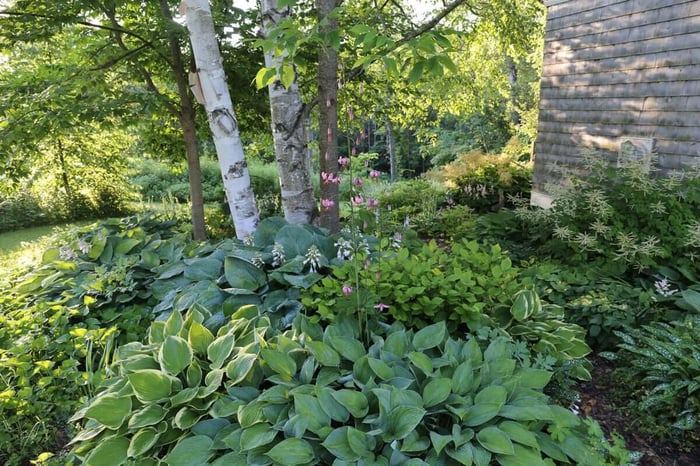
Pair Hostas with Shade-Tolerant Perennials
Hostas are attractive companions for other perennials such as astilbes, ferns, dicentra and heuchera. You can also pair them with shade-tolerant annuals such as impatiens, nicotiana, coleus, caladium and begonias.
When using hostas with flowering plants, look for opportunities to create color echoes. Consider pairing the yellow-green flowers of Nicotiana langsdorfii with hosta Golden Tiara's pale yellow leaf margins. Combine a white astilbe, aruncus or columbine with a green and white hosta like Patriot. Or positioning a burgundy-leaved heuchera near a richly-colored hellebore and a lime-green hosta like Sum and Substance.
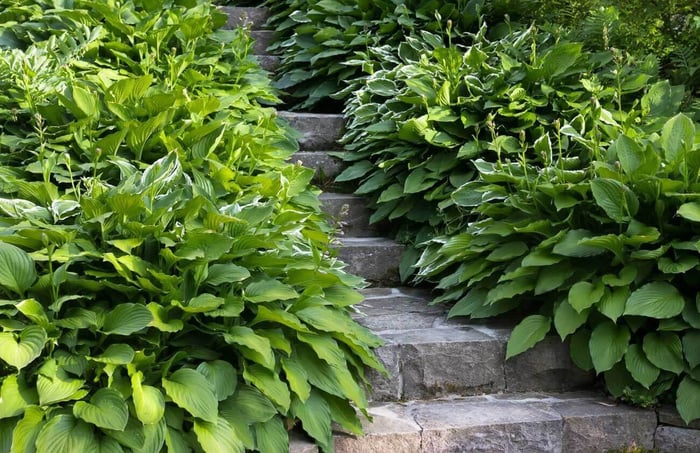
Use Hostas as Ground Covers
Hostas are a great solution for shaded areas where there’s not enough sun to grow a healthy lawn. They are also far more interesting!
When selecting hostas and deciding where to position them in the garden, be sure consider their mature size. Large leaved varieties can reach 3 feet tall and 4 feet wide, and will quickly overtake small-leaved, low-growing varieties. Position small hostas where they can be admired up close, such as at the front of a border, the edge of a path, or beside some steps.
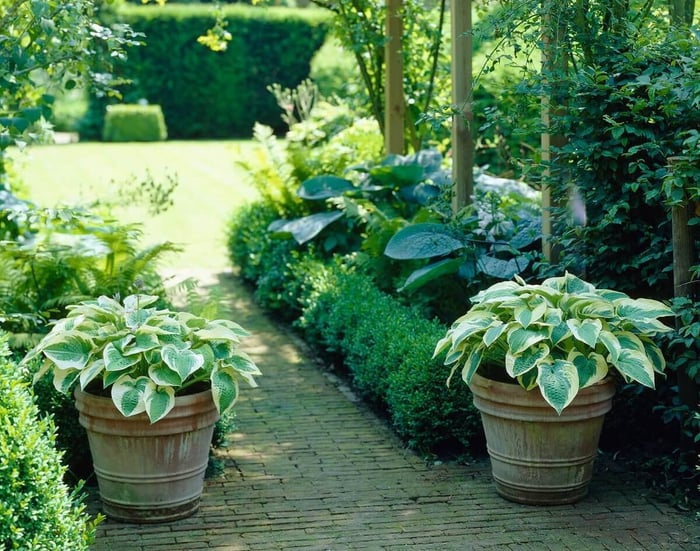
Plant Hostas in Containers
If you plant decorative containers for a shady porch or patio, consider incorporating hostas. Feature them alone in a pot or add them to a mixed container. Choose small or mid-size varieties so they don’t overwhelm their neighbors. Hosta foliage complements colorful annuals and will stay fresh all season. You can purchase potted hostas in spring or simply use a sharp spade to cut off a piece of a plant that's already in your garden.
In northern areas, you'll need to protect container-grown hostas from cold temperatures. The easiest way is to remove the hosta from the pot and plant it into a garden bed for the winter. Make sure the entire root ball is below the soil surface, just as it would be in the garden.
To learn more, you may be interested in reading: All About Hostas, 10 Easy Perennials for Shady Gardens, Best Ground Covers for Shade and Design Tips for Shady Gardens.