Table of Contents
- Introduction
- Why Grow Dahlias in Containers?
- Choosing the Right Container
- Selecting the Best Dahlia Varieties for Pots
- The Perfect Soil Mix
- When and How to Plant
- Caring for Potted Dahlias
- Pruning and Maintenance
- Managing Common Challenges
- End of Season Care
- Conclusion
- FAQ
Introduction
There is nothing quite like the sight of a dahlia in full bloom. These spectacular flowers are the crown jewels of the late-summer garden, offering colors and shapes that seem almost too beautiful to be real. If you have a sunny patio, a small balcony, or just a few steps by your front door, you might wonder if you can enjoy these blooms without a traditional garden bed.
The answer is a resounding yes. At Longfield Gardens, we know that many of the most stunning dahlia varieties happen in pots and planters. Growing dahlias in containers allows you to bring their vibrant energy right to your outdoor living spaces where you can enjoy them every day. It is an excellent way for beginners to get started or for seasoned gardeners to expand their collection when ground space is limited.
This guide will show you exactly how to choose the right varieties, pick the perfect pots, and provide the care these plants need to thrive. Whether you want massive dinnerplate blooms or compact border varieties, you can grow them all in containers with just a few simple steps.
Why Grow Dahlias in Containers?
Growing in containers offers several advantages that you won't find when planting directly in the ground. For many, the primary benefit is control. When you plant in a pot, you are in charge of the soil quality, the drainage, and even the location. If a particular corner of your patio doesn't get enough sun, you can simply move the pot to a better spot.
Potted dahlias also allow you to enjoy flowers at eye level. By placing containers on tables, pedestals, or porch railings, you can appreciate the intricate geometry of the petals up close. This is especially rewarding with "dinnerplate" varieties, which can produce flowers the size of a human head.
Additionally, containers help bridge the gap between seasons. You can start your dahlias in pots indoors or in a protected area before the weather warms up. This gives the plants a head start, leading to earlier blooms in the summer. For gardeners in cooler climates, this extra month of growth can make a significant difference in the total number of flowers you get to enjoy before the first frost.
Choosing the Right Container
Success with dahlias starts with the pot. Because these plants grow quickly and produce a large root system, they need plenty of space. A common mistake is choosing a pot that is too small, which can lead to stunted growth and a plant that dries out too quickly in the summer heat.
Size and Depth
As a general rule, a dahlia needs a container that is at least 12 inches deep and 12 inches wide. For larger varieties, such as those that grow over three feet tall, a 5-to-7-gallon pot is ideal. This provides enough volume for the tuber to expand and for the roots to anchor the plant against the wind.
Think of the container as the foundation for a tall building. Dahlias can become top-heavy when they are in full bloom. A heavy, wide-based pot provides the stability needed to prevent the plant from tipping over during a summer thunderstorm.
Material Matters
You can use almost any material for your dahlia containers, but each has its own characteristics:
- Plastic and Resin: These are lightweight and excellent at retaining moisture. They are a great choice if you live in a hot, dry climate where pots dry out quickly.
- Terra Cotta and Ceramic: These are heavy and stable, but they are porous. Water evaporates through the sides of the pot, so you may need to water more frequently.
- Fabric Pots: These allow for excellent aeration of the roots, but they dry out the fastest.
- Wooden Barrels: These are classic choices that offer a large volume of soil and stay relatively cool in the sun.
The Importance of Drainage
No matter what the pot is made of, it must have drainage holes. Dahlias are sensitive to "wet feet." If the soil remains saturated for too long, the tubers can rot. Before planting, check the bottom of your pot. If there are no holes, or if they are very small, use a drill to add a few more. A layer of high-quality potting mix is usually enough to ensure drainage, so you do not need to add rocks or gravel to the bottom of the pot.
What to do next:
- Measure your available space to see how many large pots you can fit.
- Check your existing containers for drainage holes.
- Source 5-to-7-gallon pots for any tall dahlia varieties you plan to grow.
Selecting the Best Dahlia Varieties for Pots
While you can grow almost any dahlia in a container, some varieties are naturally better suited for life in a pot. Understanding the different dahlia forms will help you choose a plant that fits your space and your aesthetic.
Border and Decorative Dahlias
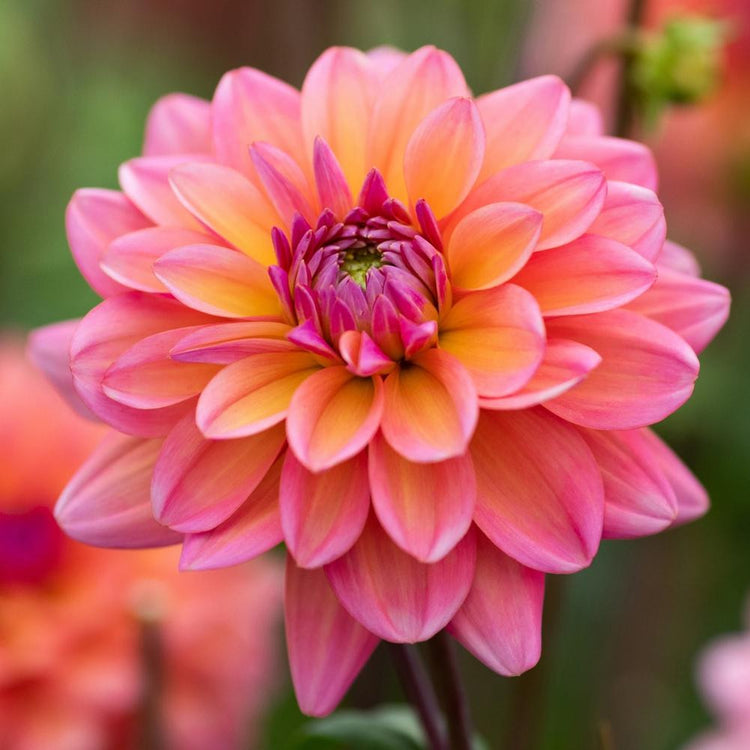
If you are looking for a low-maintenance option, look for varieties labeled as "border," "compact," or "gallery" dahlias. These typically grow 12 to 24 inches tall. They produce a profusion of flowers and generally do not require staking. They are perfect for smaller pots or for lining the edge of a patio.
Dinnerplate Dahlias
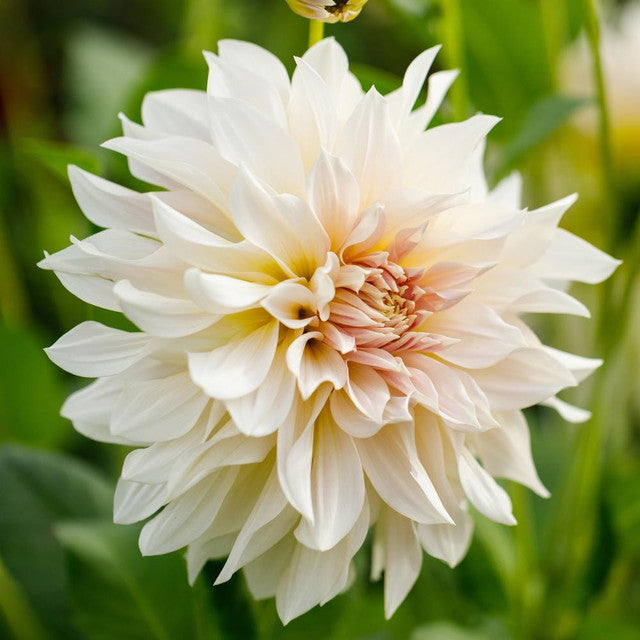
Many gardeners dream of growing the massive dinnerplate dahlias. These can certainly grow in containers, but they require the largest pots and a bit more attention. Because these plants can reach four or five feet in height, you will need to provide a sturdy stake at the time of planting.
Cactus and Pompon Dahlias
Cactus dahlias have unique, spiky petals that add great texture to a container garden. Pompon dahlias produce perfectly round, ball-shaped flowers that are incredibly charming. Both types come in various heights, so check the "mature height" on the package to ensure your pot is large enough.
We recommend choosing a mix of heights and colors to create a dynamic display. At Longfield Gardens, we maintain trial gardens to evaluate how different varieties perform, so you can trust that the tubers we provide are healthy and true to their variety.
The Perfect Soil Mix
You should never use "garden soil" or "topsoil" in a container. These soils are too heavy and often contain clay, which packs down tightly in a pot. This prevents air from reaching the roots and stops water from draining.
Instead, use a high-quality, soilless potting mix. These mixes are usually made of peat moss, coconut coir, perlite, and vermiculite. This combination is light, fluffy, and holds just the right amount of moisture while allowing excess water to flow through.
To give your dahlias a boost, you can mix in a bit of finished compost. A ratio of four parts potting mix to one part compost provides a steady supply of nutrients and improves the soil's ability to hold onto water.
When and How to Plant
Timing is everything when it comes to dahlias. These are tropical plants that love the warmth. They are not frost-tolerant, so you must wait until the danger of frost has passed and the soil has warmed up.
Timing Your Planting
In most regions, this means planting in late May or early June. A good rule of thumb is that if it is warm enough to plant tomatoes outside, it is warm enough for dahlias. If you want to start earlier, you can plant the tubers in pots indoors about four weeks before the last frost date and move them outside once the weather settles.
Planting Step-by-Step
- Fill the pot: Fill your container about halfway with pre-moistened potting mix.
- Position the tuber: Lay the dahlia tuber horizontally on the soil. Look for the "eye"—a small bump or sprout near the stem end. This eye should be facing upward.
- Cover: Add about 4 to 6 inches of soil over the tuber. Leave about two inches of space between the top of the soil and the rim of the pot to make watering easier.
- Stake early: If you are growing a tall variety, insert a sturdy stake into the pot now. Doing this at planting time ensures you won't accidentally poke a hole through the tuber later on.
The First Watering Rule
This is one of the most important parts of dahlia care: do not water the tuber heavily right after planting. The tuber contains all the energy and moisture the plant needs to get started. If the soil is too wet before the plant has roots and a sprout, the tuber might rot. Wait until you see the first green shoot poking through the soil before you begin a regular watering schedule.
Key Takeaway: Dahlias are heavy feeders and fast growers, but they are vulnerable to rot in the early stages. Start with damp soil, but hold off on heavy watering until the plant is actively growing.
Caring for Potted Dahlias
Once your dahlias are established and growing, they need consistent care to produce those iconic blooms. Because they are in containers, they rely entirely on you for their food and water.
Sunlight Requirements
Dahlias are sun-worshippers. To get the best blooms, they need at least 6 to 8 hours of direct sunlight every day. If they are in the shade, the stems will become "leggy" as they reach for the light, and they will produce fewer flowers. On very hot afternoons in southern climates, a little bit of dappled shade can help prevent the petals from scorching, but full sun is generally best.
Mastering the Water Routine
In the height of summer, a large dahlia in a pot may need to be watered every day. The goal is to keep the soil consistently moist but not soggy. To check if it's time to water, stick your finger about an inch into the soil. If it feels dry, it's time to water.
Always water at the base of the plant. Avoid getting water on the leaves, as this can encourage powdery mildew, a common fungus that looks like white flour on the foliage.
Feeding for Flowers
Dahlias are "heavy feeders." This means they use a lot of nutrients to build their large stems and flowers. Start fertilizing once the plant is about 12 inches tall.
Use a water-soluble fertilizer that is low in nitrogen. Nitrogen encourages lots of green leaves, but you want to encourage flowers. Look for a fertilizer where the second and third numbers (phosphorus and potassium) are higher than the first (nitrogen), such as a 5-10-10 or 10-20-20 blend. Fertilize every two weeks throughout the growing season.
Pruning and Maintenance
A little bit of maintenance goes a long way in keeping your potted dahlias looking their best.
Pinching for a Bushier Plant
When your dahlia is about 12 inches tall and has three to four sets of leaves, you should "pinch" it. This means snipping off the very top of the main center stem. It might feel like you are hurting the plant, but this actually encourages it to grow side branches. The result is a bushier, stronger plant with many more flower buds.
Deadheading
To keep the flowers coming all season, you must remove the old blooms. This process is called deadheading. Once a flower begins to fade or drop its petals, follow the stem down to the next set of leaves and snip it off. This tells the plant to stop putting energy into making seeds and instead focus on producing more flowers.
Supporting Tall Plants
Tall varieties in pots need support. As the plant grows, use soft garden twine to loosely tie the stems to the stake you installed at planting time. This prevents the heavy flowers from snapping the stems during a breeze.
Maintenance Checklist:
- Pinch the center stem at 12 inches tall.
- Check soil moisture daily in July and August.
- Apply low-nitrogen fertilizer every two weeks.
- Remove faded blooms promptly to encourage new ones.
Managing Common Challenges
Even in containers, dahlias can face a few hurdles. The most common issues are pests like slugs and spider mites.
Slugs love the tender new shoots of young dahlias. You can protect your pots by keeping them off the ground on a stand or by using organic slug bait around the base of the pot.
Spider mites can sometimes appear during hot, dry spells. They are tiny and hard to see, but they cause the leaves to look stippled or yellow. Increasing the humidity around the plants or washing the leaves with a gentle spray of water can help keep them at bay.
Powdery mildew is the most common disease. As mentioned earlier, the best way to prevent it is to ensure good air circulation around your pots and to water only at the soil level. If you do see white spots on the leaves, you can use a simple spray of neem oil or a mixture of baking soda and water to treat the affected foliage.
End of Season Care
Dahlias will continue to bloom until the first frost. When the temperatures drop and the foliage turns black from the cold, the growing season is over.
If you live in a warm climate (USDA zones 8-11), you may be able to leave the pots outside, provided they stay relatively dry over the winter. However, in most parts of the country, the tubers must be protected.
You have two choices:
- Treat them as annuals: Many gardeners choose to start fresh each year with new tubers. This allows you to try different varieties and colors every season.
- Save the tubers: You can dig up the tubers, brush off the soil, and store them in a cool, dark, frost-free place like a basement or garage. Pack them in peat moss or wood shavings to keep them from drying out completely.
Regardless of which path you choose, gardening is about the joy of the current season. The beauty a dahlia brings to your patio for those few months is well worth the effort.
Conclusion
Growing dahlias in containers is a rewarding way to transform your patio into a lush, colorful sanctuary. By selecting the right pot size, using a quality soilless mix, and providing plenty of sun and water, you can enjoy these spectacular blooms regardless of the size of your yard. We are here to help you succeed, and our 100% quality guarantee ensures that your journey begins with the very best tubers.
As you watch your first sprout emerge and your first massive bloom unfurl, you will see why so many gardeners become lifelong dahlia enthusiasts. It is an accessible, enjoyable hobby that rewards a little bit of attention with a whole lot of beauty.
- Choose a container at least 12 inches deep with excellent drainage.
- Wait for warm weather and visible sprouts before watering heavily.
- Provide 6-8 hours of direct sun and regular fertilizer for the best blooms.
For the best results, start with high-quality dahlia tubers from Longfield Gardens and watch your summer garden come to life with color.
FAQ
What is the best pot size for a dinnerplate dahlia?
A dinnerplate dahlia needs a large container to support its height and root system. We recommend a pot that is at least 15 to 18 inches in diameter and 12 inches deep. A 5-to-7-gallon container is usually the perfect size for these larger-than-life varieties.
Can I leave my potted dahlias outside during the winter?
In most parts of the United States, dahlias cannot survive the winter outdoors because the tubers will freeze. If you live in USDA zone 8 or warmer, they might survive if the pot stays dry. In colder zones, you should either move the entire pot into a frost-free garage or dig up the tubers to store them indoors.
Why are my dahlia leaves turning yellow and falling off?
Yellowing leaves are usually a sign of either overwatering or a lack of nutrients. Check the soil; if it is constantly soggy, the roots may be struggling, and you should reduce watering. If the soil moisture is correct, the plant may need a boost of low-nitrogen fertilizer to help it stay healthy.
Do I need to stake dahlias that are grown in pots?
If you are growing compact or border varieties that stay under 24 inches, you generally do not need a stake. However, any variety that grows taller than two feet should be staked. It is best to place the stake in the pot at planting time so you do not damage the tuber later on.