Table of Contents
- Introduction
- The General Timeline for Dahlia Growth
- When Do Dahlias Sprout?
- Factors That Influence Growth Speed
- How Variety Affects the Bloom Schedule
- Getting a Head Start Indoors
- The Growth Phases: What to Expect
- Regional Timing and USDA Zones
- Maintenance Tips for Faster, Healthier Growth
- Why Some Dahlias Take Longer Than Others
- Conclusion
- FAQ
Introduction
There is nothing quite like the anticipation of watching a dahlia tuber transform into a magnificent, multi-petaled bloom. These garden favorites are famous for their incredible variety of colors and forms, from the massive dinnerplate dahlias to the perfectly symmetrical ball dahlias. Whether you are dreaming of a vibrant cutting garden or a stunning backyard display, the journey from a dormant tuber to a flowering plant is one of the most rewarding experiences in gardening. At Longfield Gardens, we love helping gardeners navigate this process to ensure their summer landscape is filled with as much color as possible, and our dahlias for sale are a great place to start.
Understanding the timeline of dahlia growth helps you plan your garden and manage your expectations throughout the season. This guide will walk you through exactly what to expect from the moment you put your tubers in the ground until the first frost of autumn. We will cover the factors that influence growth speed, how to get a head start on the season, and how variety selection changes your blooming schedule. By getting the timing right, you can enjoy a long and successful season of these spectacular flowers.
The General Timeline for Dahlia Growth
When you plant a dahlia tuber, you are essentially planting a storage unit full of energy. Because the plant has to build an entire root system and a leafy structure from scratch each year, it takes a bit of time to reach its full glory. On average, most dahlias take between 90 and 120 days from planting to produce their first flowers.
This window can shift depending on several factors, including the weather, the specific variety, and how you care for the plant in its early stages. Generally, you can expect the following milestones:
- Sprouting: 2 to 6 weeks after planting.
- Vegetative Growth: 6 to 10 weeks of rapid leaf and stem development.
- Bud Formation: Appearing roughly 10 to 12 weeks after planting.
- First Bloom: 12 to 16 weeks (90–120 days) after planting.
Once the plants start blooming, they are incredibly generous. Unlike many spring bulbs that bloom once and then fade, dahlias will continue to produce new flowers all the way until the first hard frost of the fall. This means that while you might wait a few months for the first flower, the payoff is a continuous supply of color for the rest of the summer.
When Do Dahlias Sprout?
The first stage of growth is often the most testing for a gardener’s patience. After you tuck your tubers into the soil, it usually takes about two to four weeks for the first green shoots to poke through the surface. However, it is not unusual for some varieties to take up to six or even eight weeks to show signs of life.
The speed of sprouting depends almost entirely on the temperature of the soil. Dahlias are native to Mexico and Central America, so they thrive in warmth. If you plant your tubers in early May when the ground is still cool, they will sit dormant until the soil reaches about 60°F. If you wait until the soil is naturally warm in late May or early June, you might see sprouts in as little as ten days.
It is important to remember that the size of the tuber does not dictate how fast it sprouts. A small, firm tuber from a miniature variety might sprout much faster than a large tuber from a dinnerplate variety. What matters most is that the tuber is healthy and has a viable "eye"—the small bump where the sprout emerges.
Key Takeaway: The Patience Phase Don't worry if you don't see green growth immediately. As long as your soil is warm and you haven't overwatered, the tubers are likely working hard underground to establish their first roots.
Factors That Influence Growth Speed
While every plant has its own internal clock, several environmental factors can speed up or slow down the process. Understanding these can help you provide the best possible environment for your plants.
Soil Temperature
As mentioned, warmth is the primary driver for dahlia growth. Soil temperature is more important than air temperature in the early weeks. We recommend waiting to plant until the soil is consistently 60°F or warmer. If the ground is cold and soggy, the tuber may stay dormant for too long, which increases the risk of rot.
Sunlight
Dahlias are high-energy plants that require at least six to eight hours of direct sunlight every day. Sunlight doesn't just help the plant create food through photosynthesis; it also keeps the soil warm. Plants situated in a shady spot will grow much more slowly, produce weaker stems, and may take an extra three to four weeks to produce their first buds.
Planting Depth
The depth at which you plant your tubers affects how long it takes for the sprouts to reach the surface. We suggest planting tubers about 4 to 6 inches deep. If you plant them deeper than 6 inches, the sprout has a long journey to the light, which can delay the appearance of green growth by a week or more. If you plant them too shallowly, the roots may not stay cool and moist enough during the heat of summer.
Drainage and Soil Quality
"Drainage" refers to how fast water leaves the soil. Dahlias need soil that stays moist but never stays saturated or "wet." In heavy clay soil where water lingers, growth can be sluggish because the roots struggle to get oxygen. Incorporating compost into your planting site improves the soil structure and ensures the roots have the perfect balance of moisture and air, leading to faster, healthier growth.
How Variety Affects the Bloom Schedule
Not all dahlias are created equal when it comes to timing. At Longfield Gardens, we provide a wide range of dahlia collections, and each has its own rhythm. When planning your garden, it helps to group your dahlias by their expected bloom times so you can have a staggered display of color.
Early Bloomers (75–90 Days)
Smaller varieties and those with simpler flower forms often bloom the fastest. These include:
- Mignon and Single Dahlias: Because they don't have to produce hundreds of petals for every flower, these varieties often start blooming earlier in the summer.
- Ball Dahlias: Many ball-shaped varieties, like 'Linda's Baby', are known for being prolific and relatively early starters.
- Compact border dahlias: These compact plants focus their energy on flowers rather than tall stalks, often hitting their stride by mid-July.
Mid-Season Bloomers (90–100 Days)
The majority of decorative dahlias fall into this category. These are the classic garden dahlias that grow 3 to 4 feet tall. They spend the first half of the summer building a sturdy frame and then begin blooming in earnest by late July or early August.
Late Bloomers (100–120 Days)
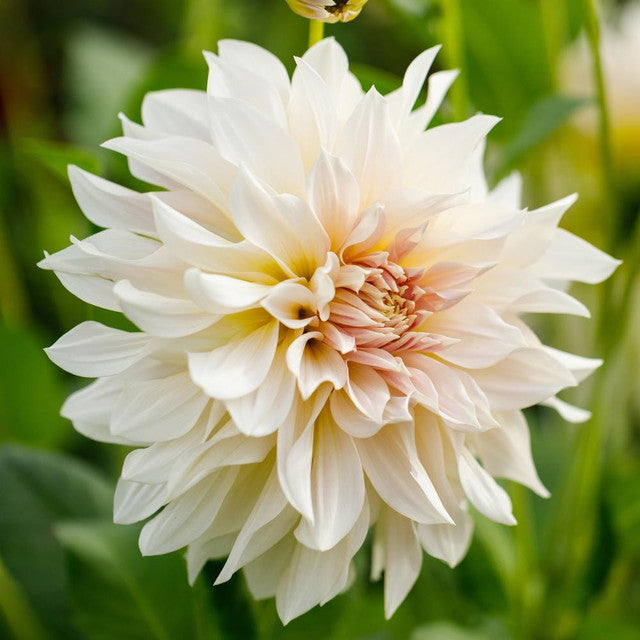
The largest dahlias, often called "Dinnerplate" dahlias, take the longest to grow. Varieties like the famous Cafe au Lait or 'Emory Paul' have to produce an immense amount of plant tissue and huge, complex flower heads. These varieties often don't reach their peak until late August or September. While they take longer to arrive, their massive size and breathtaking beauty are well worth the wait.
Getting a Head Start Indoors
If you live in a region with a short growing season or you simply want to see flowers earlier in the summer, you can "start" your dahlias indoors. This process involves waking the tubers up before it is safe to plant them outside. If you want a refresher, our How to Plant Dahlias video covers the basics.
About 4 to 6 weeks before your last expected spring frost, you can plant your tubers in pots. Use a standard potting mix and containers that are slightly larger than the tubers. Place the pots in a warm, bright spot—a sunny window or under grow lights works perfectly.
By the time the soil outside has warmed up to 60°F, your potted dahlias will already have a well-developed root system and several inches of green growth. When you transplant them into the garden, they will be about a month ahead of tubers planted directly into the ground. This often results in blooms appearing in early July rather than August.
Steps for a Successful Head Start:
- Select the right pot: Ensure it has drainage holes to prevent water from sitting at the bottom.
- Use light soil: A high-quality potting mix provides the right environment for early root growth.
- Provide warmth: Use a heat mat or a warm room (around 70°F) to trigger sprouting.
- Wait to water: Don't water the pot until you see the first green shoot appear. The tuber has enough moisture to get started on its own.
The Growth Phases: What to Expect
Knowing what the plant is doing at each stage can help you provide the right care at the right time.
The Vegetative Phase (Weeks 4–10)
Once the sprout is above ground, the plant enters a period of rapid vegetative growth. During this time, the dahlia is focused on building its "solar panels"—its leaves. You will see the plant get taller and bushier every week.
This is the best time to "pinch" your dahlias. When the plant is about 12 inches tall, snip off the top few inches of the main stem. While this might feel like you are setting the plant back, it actually encourages the dahlia to grow multiple side branches. This results in a bushier, stronger plant with many more flowers. Pinching usually delays the first bloom by about two weeks, but it significantly increases the total number of flowers you will get over the course of the season. For more detail, see our How to Pinch and Stake Dahlias.
The Bud Phase (Weeks 10–14)
As the plant reaches its mature height, it will begin to produce flower buds at the ends of the stems. Initially, these buds look like small, green peas. Over the course of two to three weeks, they will swell and eventually show a "blush" of color.
During this phase, it is vital to keep the plants well-watered. Dahlias have a high water content, and any drought stress during bud formation can lead to smaller flowers or buds that fail to open. Deep watering once or twice a week is better than a light sprinkling every day.
The Blooming Phase (Week 14 to Frost)
The moment you've been waiting for! Once the first flower opens, the plant will continue to produce more. To keep the plant growing fast and producing new buds, you must practice "deadheading." This means cutting off flowers as soon as they begin to fade. If you leave old flowers on the plant, it will shift its energy toward producing seeds, which slows down the production of new blooms. Learn more in our How and Why to Deadhead Flowers.
What to Do Next: Early Summer Care
- Check for sprouts daily once the soil warms up.
- Pinch the center stem when the plant is 12 inches tall to encourage branching.
- Install stakes or supports early, before the plant gets too large.
- Begin a regular watering schedule only after the plant is 12 inches tall.
Regional Timing and USDA Zones
The time it takes for your dahlias to grow is also influenced by where you live. In the United States, we use the USDA Hardiness Zone Map to determine planting times.
In warmer zones (Zones 8–10), gardeners can often plant in March or April, meaning they might see blooms as early as June. In cooler zones (Zones 3–6), gardeners usually have to wait until mid to late May to plant, leading to a late July or August bloom.
Regardless of your zone, the "Golden Rule" of dahlia timing is to wait for the soil to be warm. Planting too early in cold, wet soil is the most common reason for slow growth or failed tubers. We ship our orders from our facility in Lakewood, New Jersey, according to your specific zone's ideal planting time, ensuring your tubers arrive just when the conditions are right.
Maintenance Tips for Faster, Healthier Growth
While you can't force a plant to grow faster than its biology allows, you can ensure it doesn't face any "speed bumps" along the way.
Proper Watering
As a rule of thumb, do not water your dahlia tubers at all when you first plant them. The tubers are full of moisture, and adding more water to the soil before they have roots can lead to rot. Once the plant is about 12 inches tall and has plenty of leaves, you can begin watering. At this stage, they need about an inch of water per week. If the weather is exceptionally hot and dry, you may need to increase this.
Fertilizing for Success
Dahlias are heavy feeders. To keep them growing vigorously, we recommend enriching your soil with compost or a balanced, slow-release fertilizer at planting time. Once the plants are well-established and starting to form buds, you can use a water-soluble fertilizer every two to three weeks. Look for a fertilizer with a lower nitrogen number (the first number on the package) and higher phosphorus and potassium numbers (the second and third numbers). This encourages flower production rather than just excessive leaf growth.
Pest Prevention
Nothing slows down a dahlia faster than a pest infestation. Slugs and snails are particularly fond of the tender new sprouts. Keeping an eye out for these early in the season ensures your plants aren't set back by damaged foliage. Once the stems toughen up and the plants get taller, they are much more resistant to these common garden visitors.
Toxicity Note
It is important to remember that dahlia tubers and foliage can be toxic to cats, dogs, and horses if ingested. If you have curious pets, ensure your dahlia beds are protected or situated in an area where your animals cannot snack on the plants. If you suspect a pet has eaten part of a dahlia, contact your veterinarian for guidance.
Why Some Dahlias Take Longer Than Others
Sometimes, even when you do everything right, one plant might be significantly behind its neighbors. This is usually due to one of three things:
- Dormancy Depth: Some tubers go into a very deep dormancy over the winter. It simply takes them longer to "wake up" and realize it is springtime. This doesn't mean the plant will be inferior; it just means it's a late starter.
- Microclimates: Even within one garden, some spots are warmer than others. A dahlia planted near a brick wall that absorbs heat will grow faster than one planted in a spot that gets a cool morning breeze.
- Genetics: Just like people, every plant has its own genetic pace. Some varieties are bred for vigor and speed, while others are bred for the complexity of their blooms, which naturally takes more time.
Conclusion
The journey from a simple tuber to a towering plant covered in blossoms is one of the true highlights of the summer garden. While most dahlias take between 90 and 120 days to bloom, the wait is part of what makes that first flower so special.
By choosing a mix of early and late varieties, providing plenty of sun and warmth, and practicing a little patience during the sprouting phase, you can ensure a spectacular season of color. At Longfield Gardens, we take pride in providing high-quality tubers that are true to variety and ready to perform in your garden, and our shipping information explains when orders leave our facility.
Whether you are a first-time grower or a seasoned dahlia enthusiast, we are here to support you with quality plants and practical advice, backed by our 100% Quality Guarantee.
- Wait for Warmth: Don't plant until the soil is 60°F.
- Pinch for Plenty: Remove the center shoot at 12 inches to double your flowers.
- Deadhead Regularly: Removing old blooms keeps the plant focused on new growth.
- Enjoy the Process: Gardening is about the journey as much as the destination.
"The secret to beautiful dahlias isn't a magic trick; it's simply giving the plant the warmth, light, and time it needs to show off its natural beauty."
We wish you a wonderful growing season and look forward to seeing your garden in full bloom.
FAQ
Can I make my dahlias bloom faster?
The best way to speed up the blooming process is to "pot up" your tubers indoors about 4 to 6 weeks before your last frost date. By starting them in a warm indoor environment, you bypass the slow start that happens in cool spring soil. Once you transplant the established plants outdoors, they will often bloom 3 to 4 weeks earlier than tubers planted directly in the ground.
How do I know if my dahlia tuber is growing if I don't see sprouts?
If it has been more than 4 weeks and you haven't seen growth, you can very gently brush away some soil to check the tuber. If it feels firm to the touch, it is healthy and simply taking its time. If it feels soft or mushy, it may have rotted. Most of the time, the tuber is just waiting for the soil to get a little bit warmer before it sends up its first shoot.
Why did my dahlia grow tall but never produced any flowers?
This is usually caused by a lack of sunlight or too much nitrogen in the fertilizer. Dahlias need at least 6 to 8 hours of direct sun to have enough energy to create flowers. Additionally, if you use a fertilizer very high in nitrogen, the plant will put all its energy into growing green leaves and stems rather than developing flower buds.
Do small dahlia tubers take longer to grow than large ones?
No, the size of the tuber is not an indicator of how fast the plant will grow or how many flowers it will produce. Each variety has a different natural tuber size. A small tuber with a healthy "eye" and plenty of stored energy can grow just as quickly and produce a plant just as large as a much bigger tuber. Soil temperature and sunlight remain the most important factors for growth speed.