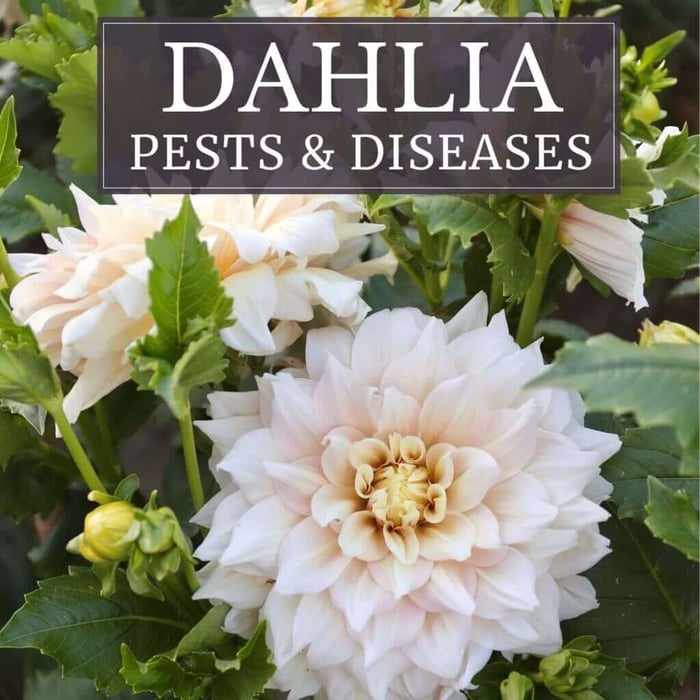
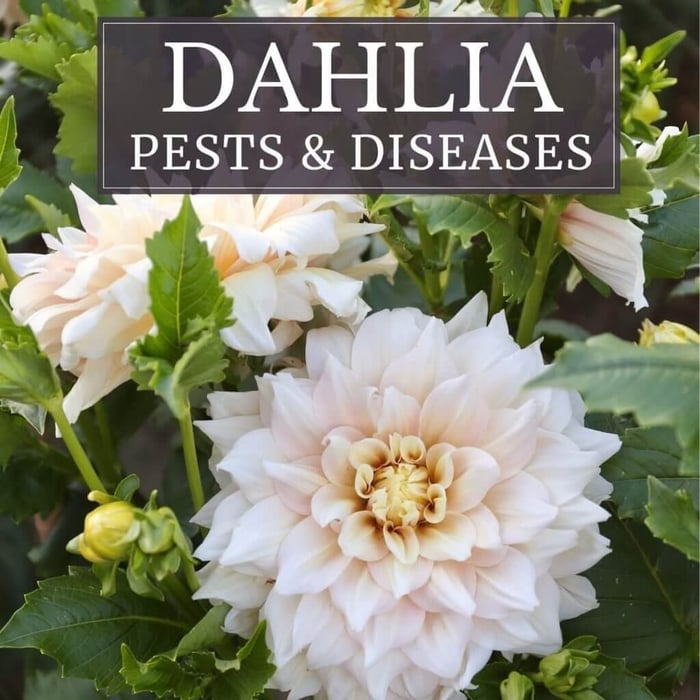
Dahlias are vigorous plants that are born to bloom. Yet they are not invincible. If you suspect your dahlias are being attacked by a pest or disease, this article can help you identify the problem and figure out how to resolve it. But first, please note:
1. It's often difficult to distinguish one plant problem from another -- even for an entomologist. If you are an experience dahlia grower and can offer clarifications or suggestions, please free to add them to the comments below.
2. Healthy dahlias have a much higher resistance to pests and disease. To keep your dahlias as healthy as possible, pamper them as you would a prized tomato plant. Check out these articles for helpful tips about planting and care: All About Dahlias, 8 Tips for Growing Better Dahlias, and 10 Questions About Growing Dahlias.
Common Dahlia Pests
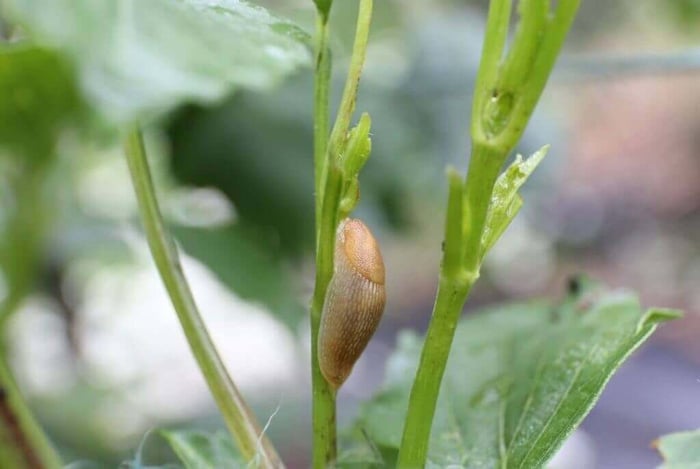 A slug munching on a young dahlia.
Slugs and Snails
These slimy pests are most destructive early in the growing season when dahlia foliage is soft and tender. As the plants grow, their stems and leaves toughen up and become more resistant to damage.
To deter slugs and snails, keep the soil surface as dry as possible. In damp weather, patrol daily (morning and/or evening) to gather and destroy these slimy beasts. You can also protect young plants with an organic slug repellent such as Sluggo.
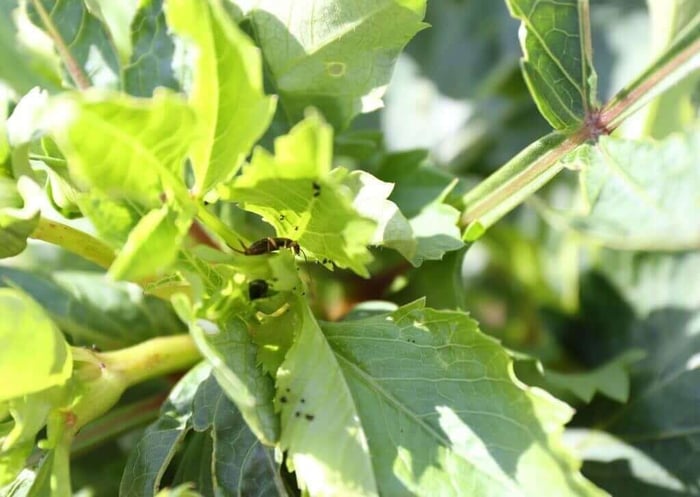 An earwig feeding on dahlia leaves. Earwigs These creepy-crawly insects feed on decaying plant matter. Unfortunately, they also like munching on tender dahlia leaves and flower buds. Earwigs are largely nocturnal and during the day they like to hide among clusters of emerging leaves. You may notice their black frass (shown above) before you see them. Chewed young leaves, buds and flowers are signs of earwig damage.
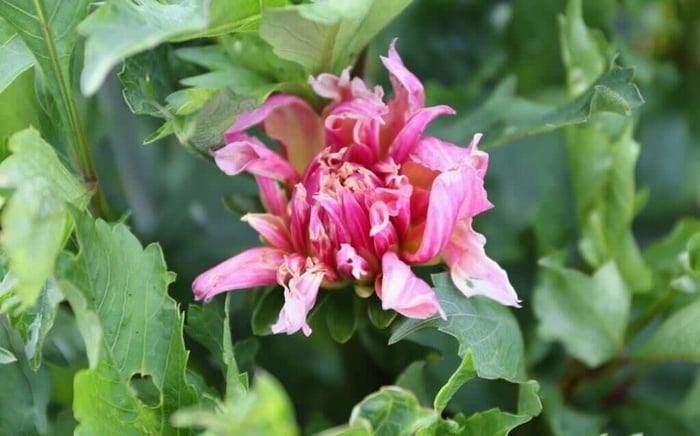 A dahlia flower that was damaged by earwigs. To help deter these pests, keep the area around your dahlias tidy. This means removing spent flowers, pruned foliage, weeds and other organic matter. Avoid mulching with shredded leaves or straw (both of which attract them).
You can try catching earwigs in an upside-down flowerpot filled with moist, shredded leaves. Or use an earwig-control product such as Sluggo Plus, which contains the organic insecticide Spinosad.
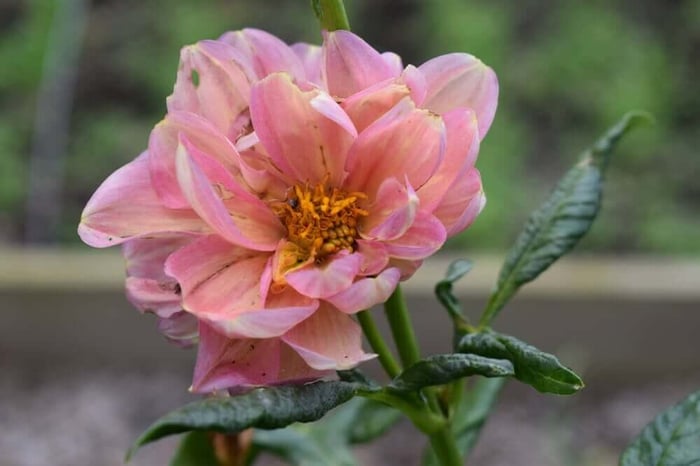 A dahlia that has been damaged by tarnished plant bugs.
Tarnished Plant Bugs
If your dahlia flowers are occasionally distorted in shape or don't open properly, this may indicate tarnished plant bug damage. These pests (both the adults and the much smaller nymphs) have piercing-sucking mouth parts. As they feed, their saliva leaves behind a toxin that damages plant tissues. Tarnished plant bugs overwinter in leaf litter, so controlling weeds and mowing nearby areas can help reduce overwintering populations. Insecticidal soaps can help reduce the severity of outbreaks.
Potato Leafhoppers
Leafhoppers usually attack in early summer. They suck plant juices from the undersides of leaves, causing the foliage to become discolored and drop off. "Hopper burn" is a characteristic yellowing and curling of the leaves. Leafhoppers weaken plants, and by moving from one plant to another, they also spread viral diseases. Spray immature leafhoppers with insecticidal soap, making sure to get the undersides of leaves so the soap comes into contact with these soft-bodied insects.
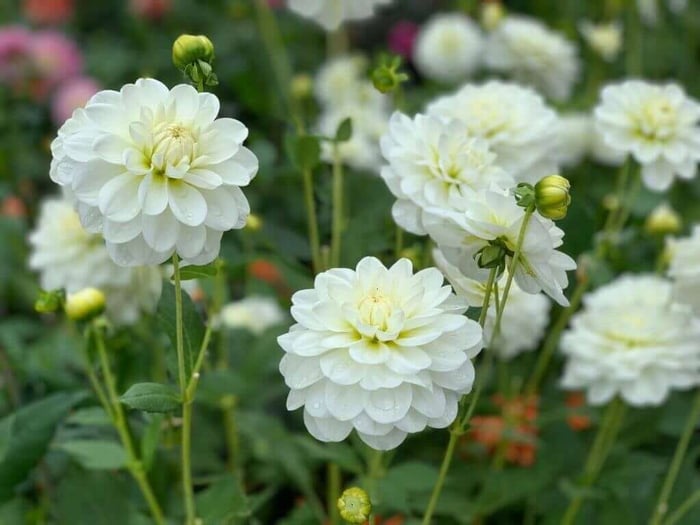 Dahlias can usually outgrow most pest problems and still put on a beautiful show.
Thrips
These sucking insects cause discoloration and distortion of both leaves and blossoms. Left unchecked, they will weaken the entire plant. Thrips can also transmit bacteria and viruses from one plant to another.
Thrips are tiny and difficult to see. They prefer a dry environment, so keeping your dahlias watered can help discourage them. Insecticidal soaps can temporarily reduce an outbreak. Get more information about this pest and how to control it in this article from the Missouri Botanical Garden: Thrips Outdoors 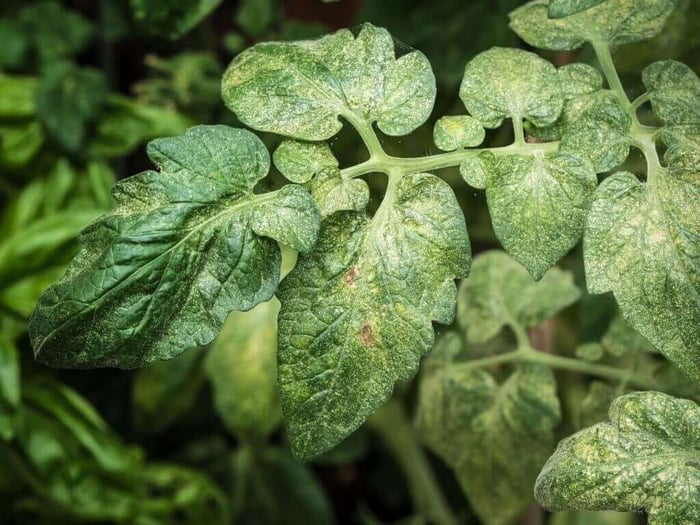 Spider mite damage showing stippling and webbing.
Spider Mites
These plant pests are true spiders that, like thrips, suck plant juices and cause dahlia foliage to become mottled with yellow. When they are under attack by spider mites, dahlias lose vigor and their leaves begin to wilt and drop off.
Spider mites are tiny and difficult to see without a magnifying glass. Look for signs of their webs between the leaves. They thrive in hot, dry weather. Insecticidal soaps and horticultural oil sprays can be used to control spider mites. For a complete description of this pest and various control options, read: Coping with Spider Mites from the American Dahlia Society.
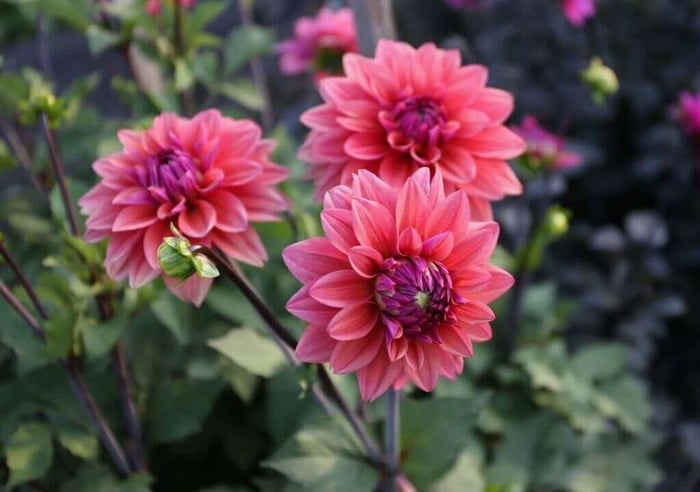
Common Dahlia Diseases
The soil is filled with fungi and most of them are good. But some can cause problems for plants, including dahlias. Here are the most common fungal diseases of dahlias. More information is available in this article from the American Dahlia Society.
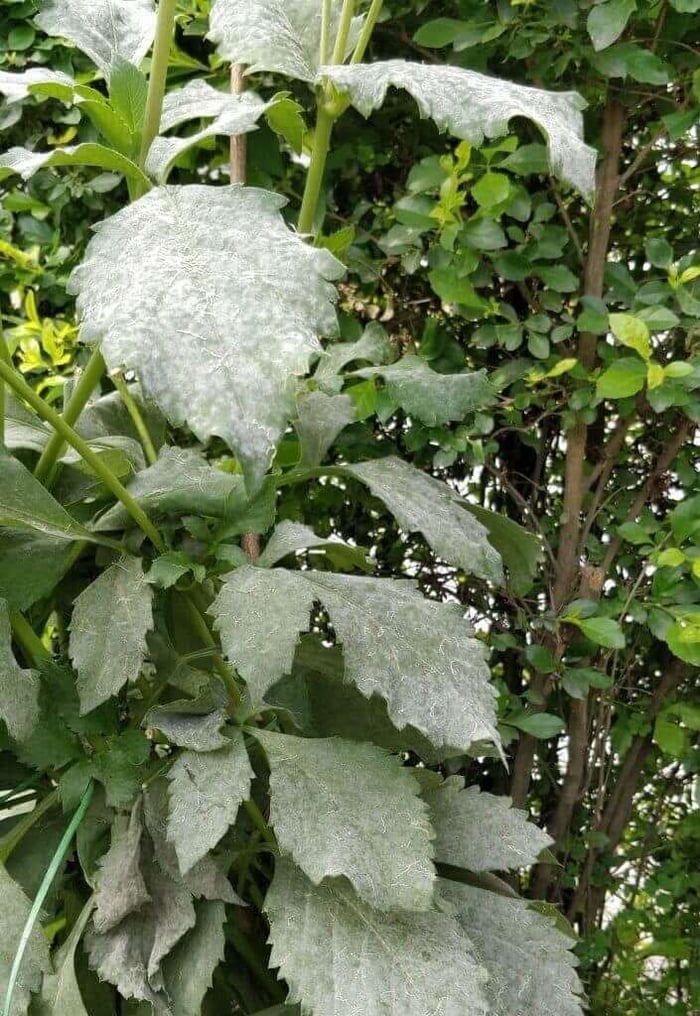 Powdery mildew on a dahlia.
Powdery Mildew
This disease is common in warm, humid climates. It usually shows up during the second half of the growing season. Though powdery mildew can weaken plants, the damage is largely cosmetic. To help to control it, keep dahlia foliage as dry as possible and encourage good air circulation. If you live in an area where mildew problems are common, you may have to just live with the damage. Powdery mildew can be controlled with an anti-fungal spray, but the application must begin before the disease appears and continue throughout the growing season.
Botrytis Also known as grey mold, botrytis is common in peonies and can also affect dahlias. The fungus is encouraged by cloudy, wet weather. Dahlia buds turn dark and may be covered with fuzzy grey mold. The disease eventually infects stems and can kill the plant, so it's important to remove infected plant parts immediately.
Verticillium Wilt
When this soil-borne fungus infects a plant, it clogs up the water-conducting tissues (xylem) and prevents the circulation of water and nutrients. Leaf margins may turn brown or appear scorched. Stems may turn yellow, display brown or black streaks, or simply wilt. There is no cure for verticillium wilt and the plant will eventually die. This fungal disease typically occurs in weak plants and those that have been stressed by unfavorable weather.
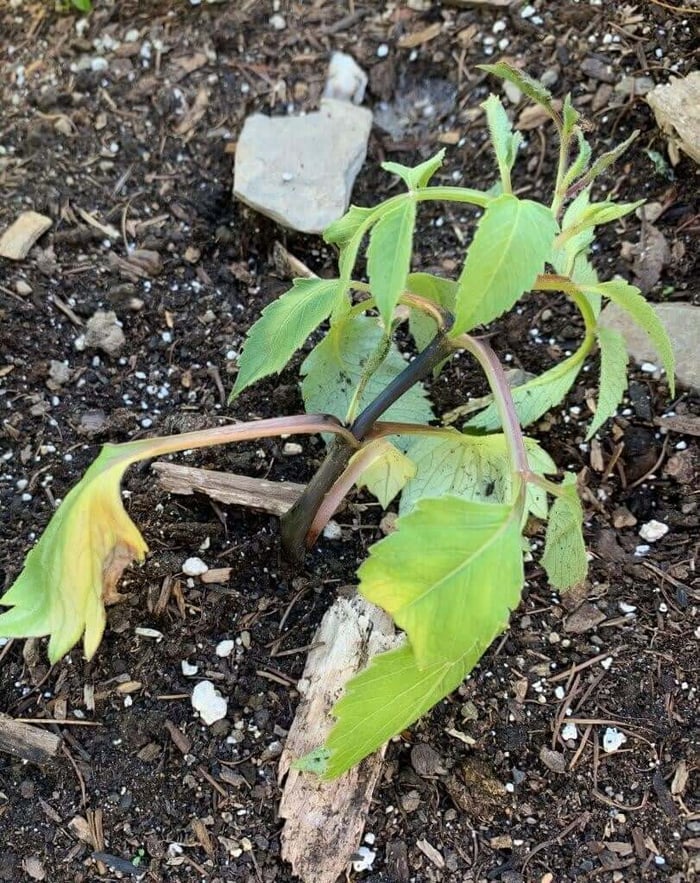 A dahlia succumbing to bacterial stem rot.
Bacterial Diseases
Bacterial diseases are difficult for a home gardener to diagnose. Typically, bacteria enters plants through a wound or natural opening. If a dahlia gets infected during the growing season, overwintered tubers can carry that bacteria on to the next year. Most bacterial diseases are incurable. Affected plants should be removed and destroyed to control spread.
Bacterial Stem Rot
Infection usually starts at the soil level and moves up. Stems become soft and dark, and eventually the entire plant crumples. Unfortunately, there's no coming back from this one.
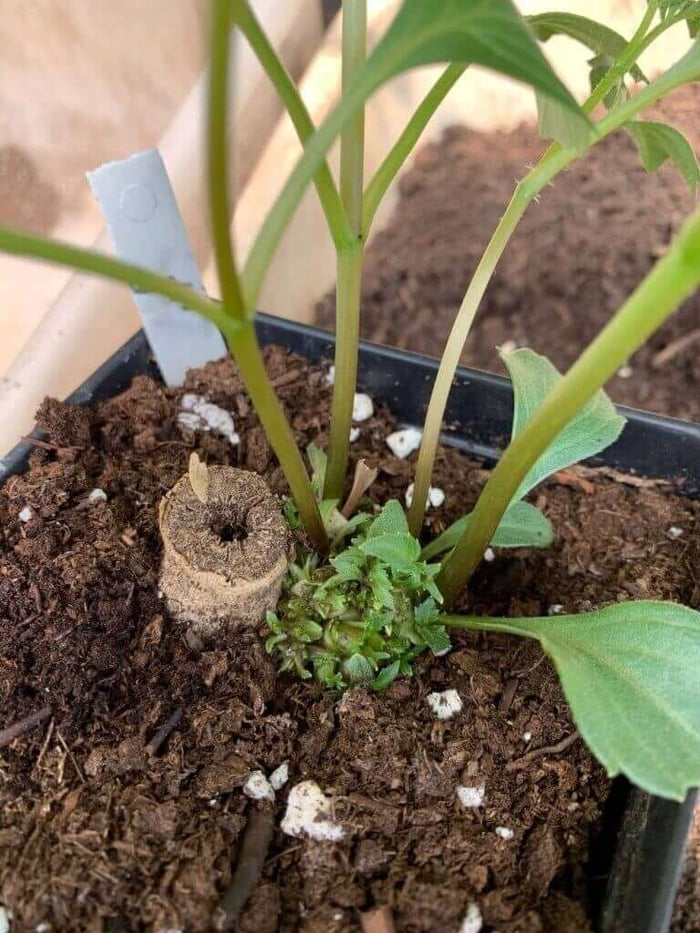 A young dahlia with crown gall.
Leafy Gall
This peculiar bacterial disease causes clusters of distorted growth (galls) near the base of the plant. This is not curable and plants that show signs of leafy gall should be destroyed.
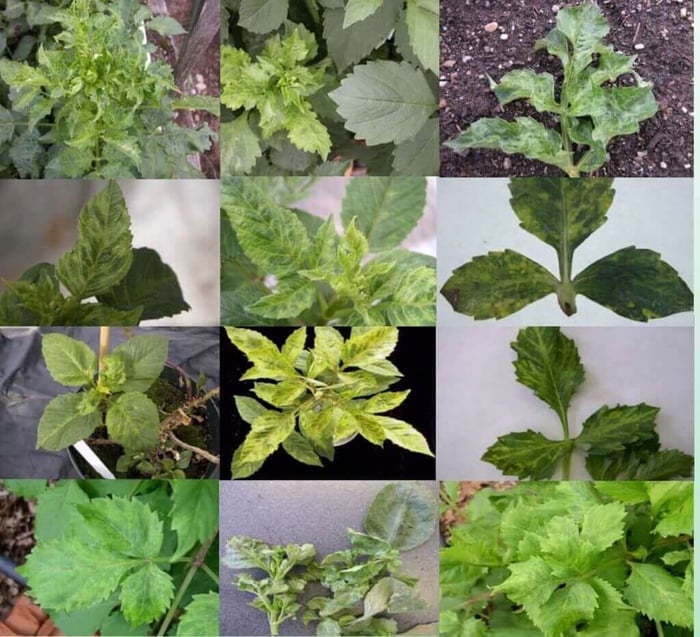 Examples of dahlias with mosaic virus - from Washington State University.
Viral Diseases
There are more than a dozen viruses that can infect dahlias. All have relatively similar symptoms which may include yellow spots or mottling on the leaves, yellowing along the veins, shortened leaf nodes on stems, distorted or twisted foliage, shorter than normal flower stems, poor flowering and overall stunted plants. Unfortunately, these symptoms can resemble other diseases as well as simple weather stress. The only way to determine if a virus is present is to examine some of the infected tissue in a lab. This isn't practical for home gardeners and it's also unnecessary because there is no cure for any of these viral diseases.
Infected dahlias should be removed as soon as possible to avoid spreading the disease to other plants. If you suspect your plants have a virus, do not make cuttings and do not overwinter the tubers, as the virus will be present in all parts of the plant. Dahlia growers in Holland and the US are working to eliminate dahlia viruses, but it's a big challenge. As with other plant diseases, some dahlia varieties seem to be naturally stronger and better able to resist these viruses.
Washington State University has been studying dahlia viruses, and in particular dahlia mosaic virus, for more than 20 years. This website includes lots of relevant information: Virus Diseases of Dahlia. Hopefully your dahlias will avoid most or even all of these problems. But if something does crop up, being able to identify what's going on is the the best way to get to a solution.