Table of Contents
- Introduction
- Understanding Dahlia Height Categories
- Choosing the Right Height for Your Space
- Factors That Influence How Tall Your Dahlias Grow
- Managing Height with Pinching
- Supporting Tall Varieties: Staking and Netting
- Planting for Different Heights: A Layout Guide
- When to Expect Your Dahlias to Reach Full Height
- Troubleshooting Height Issues
- Maximizing the Life of Your Tall Dahlias
- Conclusion
- FAQ
Introduction
There is a unique sense of wonder that comes with watching a dahlia tuber transform into a lush, leafy plant topped with spectacular blooms. Whether you are dreaming of a sea of color in your backyard or a few perfectly placed pots on your patio, dahlias offer an incredible range of possibilities. At Longfield Gardens, we enjoy helping gardeners discover the perfect varieties to fit their specific spaces, from compact border dahlias to towering giants that command attention.
Understanding how tall a dahlia grows is one of the most important steps in planning a successful garden layout. The height of these plants can range from a modest 12 inches to over 5 feet, depending entirely on the variety you choose and the care you provide. This guide will walk you through the different height categories of dahlias, how to choose the right one for your needs, and simple tips to help your plants reach their full potential. By matching the right variety to the right location, you can ensure your garden looks balanced and beautiful all season long.
Understanding Dahlia Height Categories
When you begin browsing for dahlias, you will quickly notice that they are categorized not just by flower shape and size, but also by their expected mature height. This is a vital piece of information because it dictates where the plant should go in your garden bed.
Generally, dahlias are grouped into three main height categories: dwarf or border dahlias, medium-sized garden dahlias, and tall or dinnerplate dahlias. Each group serves a different purpose in the landscape. Choosing the right one ensures that your shorter plants aren't hidden by taller neighbors and that your tall plants have the support they need.
Dwarf and Border Dahlias (12 to 30 Inches)
These are the smallest members of the dahlia family. They are bred specifically for compact growth and high flower production. Because they stay low to the ground, they are perfect for the very front of a flower bed or for lining a walkway. For more on these compact plants, see our How to Grow Border Dahlias. They are also the top choice for container gardening because their root systems are more manageable in pots.
Medium Garden Dahlias (3 feet to 4 feet)
This is the most common height range for many popular dahlia varieties. These plants are versatile and fit well in the middle of a perennial border. They provide a dense wall of foliage and flowers that works beautifully as a backdrop for shorter annuals. While they are sturdy, they usually benefit from a bit of light support to keep them upright during summer storms.
Tall and Dinnerplate Dahlias (4 feet to 5+ feet)
If you want a plant that makes a statement, tall dahlias are the way to go. These varieties, including many of the famous dinnerplate dahlias, can easily reach 5 feet or taller in a single season. Because they grow so high, they belong at the back of the garden bed where they won't block the view of other plants. Their height and large flower heads mean that staking is a requirement rather than an option.
Key Takeaway: Always check the mature height on the plant label or product description before planting. Grouping plants by height—short in front, tall in back—is the simplest way to create a professional-looking garden.
Choosing the Right Height for Your Space
Before you buy your tubers, take a look at your garden and decide what role you want the dahlias to play. Are you looking for a low-maintenance border, or do you want flowers that you can see from across the yard?
Best Heights for Containers
If you are gardening on a balcony, deck, or small patio, stick with varieties that stay under 24 inches. We often recommend Gallery dahlias for this purpose. These plants stay very compact, usually topping out around 15 to 20 inches, but they produce an amazing number of blooms. Using shorter varieties in pots prevents the "top-heavy" problem where a tall plant might blow over in the wind.
Best Heights for Cutting Gardens
If your main goal is to harvest flowers for bouquets, you will likely want varieties in the 3-foot to 4-foot range. This height provides long, sturdy stems that are ideal for vases. While large flowering dahlias are stunning, their extremely large heads can sometimes be heavy for smaller arrangements, so a mix of medium and tall varieties usually gives the best results for floral design.
Best Heights for Privacy and Backdrops
Dahlias that grow 4 to 5 feet tall act almost like a temporary summer hedge. If you have an unsightly fence or want to create a sense of enclosure in a garden "room," these tall varieties are excellent. They grow rapidly in the heat of summer, providing a thick screen of green leaves and bright flowers by mid-August.
Factors That Influence How Tall Your Dahlias Grow
While genetics determine the potential height of a dahlia, environmental factors play a major role in whether the plant actually hits those marks. Gardening is a partnership with nature, and a few simple adjustments can help your plants reach their ideal stature.
Sunlight and Legginess
Dahlias are sun-loving plants. For the best growth, they need at least 6 to 8 hours of direct sunlight every day. When a dahlia doesn't get enough light, it begins to "stretch" toward the sun. This results in a plant that is taller than expected but has weak, thin stems and fewer leaves. This is called legginess. If your 3-foot dahlia is suddenly 5 feet tall and flopping over, it likely needs a sunnier spot.
Soil Quality and Nutrients
Rich, well-draining soil provides the energy dahlias need for their rapid growth. We suggest amending your soil with compost before planting to give the tubers a steady supply of nutrients. While nitrogen helps the plant grow tall and green, too much of it can lead to massive plants with very few flowers. A balanced fertilizer used once a month is usually the best approach for steady, healthy growth. For more care basics, see our 8 Tips for Growing Better Dahlias.
Water Consistency
Dahlias have a high water content in their stems and leaves. To reach their full height, they need consistent moisture. Soil that is allowed to bone-dry will stunt the plant's growth, while waterlogged soil can lead to rot. The best method is to water deeply once or twice a week, allowing the top inch of soil to dry out between sessions. This encourages the roots to grow deep, creating a more stable base for a tall plant.
Temperature and Climate
Dahlias love the warmth of summer. In regions with long, hot growing seasons, dahlias may grow slightly taller than their listed height. Conversely, in areas with short summers or very cool nights, they may stay a bit more compact. If you're unsure which zone you garden in, our Hardiness Zone Map can help.
What to do next:
- Measure the sunlight in your intended planting spot to ensure it gets 6+ hours of sun.
- Mix a shovelful of compost into each planting hole to support healthy growth.
- Set a regular watering schedule to keep moisture levels even.
Managing Height with Pinching
One of the most effective ways to control the height and shape of your dahlia is a technique called pinching. This might sound like it would hurt the plant, but it is actually one of the kindest things you can do for it.
When your dahlia is about 12 to 18 inches tall and has four sets of leaves, you can snip off the very top of the center stem. This signals the plant to stop growing straight up and instead start growing outward.
Why Pinching Matters
- Stronger Stems: Pinching encourages the plant to develop a sturdier, bushier base.
- More Flowers: Instead of one main stem, the plant will produce multiple side branches, each of which will eventually produce flowers.
- Height Control: It keeps the plant slightly shorter and more compact, which reduces the risk of it falling over.
If you skip pinching, the plant will likely grow to its maximum height very quickly, but it may be thin and prone to breaking. A pinched dahlia is a much more successful garden resident.
Supporting Tall Varieties: Staking and Netting
If you choose varieties that grow over 3 feet tall, you must plan for support. A dahlia in full bloom is heavy, especially after a rain shower when the flower heads hold onto water. Without support, a tall dahlia can easily snap at the base.
Individual Staking
For home gardeners with just a few plants, individual stakes are the easiest solution. Bamboo poles, wooden stakes, or sturdy metal green stakes work well. It is best to place the stake in the ground at the time of planting. This prevents you from accidentally driving a stake through the tuber later in the season. As the plant grows, use soft garden twine to loosely tie the stem to the stake every 12 inches.
The Corral Method
If you are growing a row of tall dahlias, the corral method is very efficient. Drive a heavy-duty stake (like a metal T-post) into the ground at each corner of the bed. Wrap sturdy twine around the posts at a height of about 18 inches, and then add another layer of twine at 3 feet. This creates a "cage" or corral that the dahlias can grow up through, using the twine as a supportive wall.
Practical Scenario: Handling Summer Storms
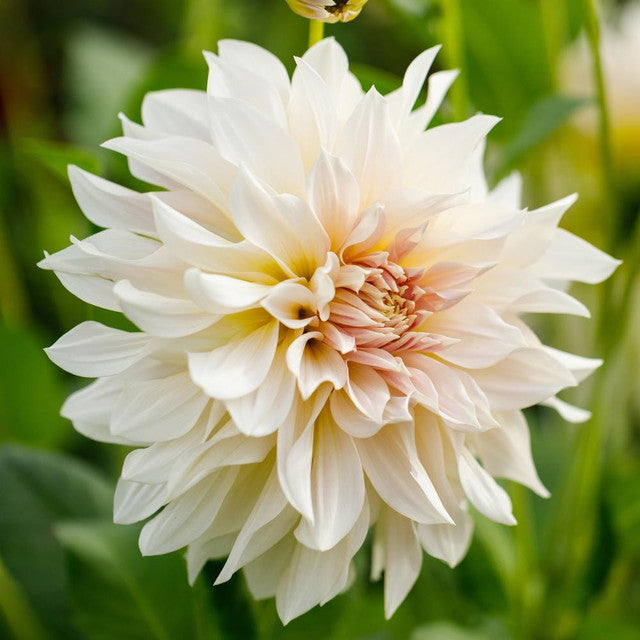
Imagine a sudden August thunderstorm with heavy rain and wind. If your 4-foot tall "Cafe au Lait" dahlias are properly tied to stakes, they will sway with the wind and remain upright. Without that support, the weight of the wet, oversized blooms could cause the entire plant to collapse. Taking five minutes to secure your plants in July saves hours of frustration in August.
Planting for Different Heights: A Layout Guide
Designing a dahlia bed is like staging a group photo. You want everyone to be visible. Using the "right plant, right place" rule ensures that your dahlia height works for you rather than against you.
The Tiered Border
For a classic flower bed against a fence or wall:
- Front Row: Plant Gallery or Melody series dahlias. Their 15–24 inch height creates a colorful "skirt" for the taller plants behind them.
- Middle Row: Choose medium-sized decorative or ball dahlias that grow 3–4 feet tall. These provide the bulk of your color and foliage.
- Back Row: Place your dinnerplate varieties here. Their 5-foot height will tower over the rest, creating a stunning vertical backdrop.
Island Beds
If your garden bed is in the middle of the lawn and can be seen from all sides, place the tallest dahlias in the very center. Work your way outward with medium varieties, finishing with the shortest border dahlias around the edges. This creates a mountain-like effect of blooms that looks beautiful from every angle.
Container Arrangements
You can also mix heights within a single large pot. Try planting a 3-foot dahlia in the center of a 20-inch diameter container and surrounding it with trailing plants like sweet potato vine or calibrachoa. This "thriller and spiller" combination makes the dahlia the star of the show.
When to Expect Your Dahlias to Reach Full Height
Patience is a key part of gardening. Dahlias are not instant-gratification plants; they are slow starters that finish with a sprint.
In the first few weeks after planting, you might feel like nothing is happening. The tuber is busy establishing a root system underground. Once the sprouts emerge, growth is steady but relatively modest through June. However, once the heat of July and August arrives, dahlias can grow several inches in a single week. If you are planning an order, our Shipping Information page can help you line up delivery with planting time.
Most dahlias will not reach their full listed height until they are in peak bloom, which is usually late August through September. If your plants seem short in July, don't worry. As long as the leaves look healthy and green, they are likely just waiting for the right combination of heat and light to make their big move.
Key Takeaway: Growth speed varies by region. In the North, dahlias may grow more slowly initially but catch up quickly during the long days of midsummer. In the South, they may grow rapidly in spring, slow down during the extreme heat of July, and then have a second growth spurt in the cooler days of autumn.
Troubleshooting Height Issues
Sometimes, despite your best efforts, a dahlia doesn't grow the way you expected. Here is how to handle the most common height-related situations. For a broader refresher on dahlia care, see our All About Dahlias.
My Dahlias are Too Short
If a variety that should be 4 feet tall is stalling at 18 inches, check the soil moisture. Often, stunted growth is a sign of underwatering. It can also be a sign of poor soil. A quick application of a liquid seaweed or fish emulsion fertilizer can often provide the boost the plant needs to get moving again.
My Dahlias are Falling Over
This is almost always a support issue. If a plant has already flopped, be very gentle when trying to stand it back up. Use wide, soft ties (like old t-shirt strips) to secure it to a stake. Avoid using thin wire, which can cut into the fleshy stems. If a stem has snapped completely, it is best to prune it off cleanly. The plant will usually send up new growth from the base to replace it.
My Dahlias are All Leaves and No Flowers
If your plants are incredibly tall and lush but haven't produced a single bud by late August, you may have over-fertilized with nitrogen. To fix this, stop all fertilizing and switch to a "bloom booster" formula with a higher middle number (phosphorus). This encourages the plant to stop focusing on height and start focusing on reproduction (flowers).
Maximizing the Life of Your Tall Dahlias
As the season winds down and autumn arrives, your tall dahlias will be at their most vulnerable. The plants are at their maximum weight, and fall winds can be tough.
Keep up with deadheading (removing faded flowers). This lightens the load on the stems and encourages the plant to keep producing new buds. Check your stakes and ties one last time in September to make sure nothing has loosened.
When the first frost finally arrives, the foliage will turn black. This is the signal that the growing season is over. Even though the tops of the plants are gone, the tubers underground have spent the summer storing energy. You can then cut the stalks down to about 4 inches, lift the tubers and store them for the winter, ready to reach those heights all over again next year.
Conclusion
The height of a dahlia is one of its most exciting features, offering everything from petite border accents to grand, towering floral displays. By selecting the right variety for your space and providing a little bit of support and sunshine, you can create a garden that feels lush, layered, and full of life. Remember that gardening is an ongoing journey of discovery, and every season brings new lessons on how to help your plants thrive.
At Longfield Gardens, we take pride in providing high-quality tubers that are true to variety, ensuring you get the height and color you planned for. Whether you are a beginner or a seasoned grower, we are here to support you with quality plants and practical advice. We stand behind our products with a 100% quality guarantee, so you can plant with confidence and enjoy the rewarding experience of watching your dahlias reach for the sky.
"Dahlias are the workhorses of the late-summer garden, providing height and color when many other plants are fading. Getting the height right is the simplest way to transform a good garden into a great one."
- Pick the right spot: Ensure your tall dahlias have 6-8 hours of sun and plenty of room to grow.
- Support early: Place your stakes at planting time to avoid damaging the tubers later.
- Pinch for success: Snip the tops of young plants to encourage a bushier, more flower-filled shape.
- Water deeply: Consistent moisture is the secret to strong, tall stems.
Ready to start your dahlia journey? Visit our website to explore our dahlia collections and find the perfect heights for your garden this season.
FAQ
Do all dahlias need to be staked?
Not all dahlias require staking, but it depends on their mature height. Dwarf and border varieties that stay under 24 inches are usually sturdy enough to support themselves. However, any variety that grows 3 feet or taller should be staked to prevent the stems from snapping or flopping over during wind and rain.
Can I grow tall dinnerplate dahlias in pots?
While it is possible to grow tall dahlias in containers, it is challenging because the plants can become very top-heavy. If you choose to grow a tall variety in a pot, use a large, heavy container (at least 5 to 7 gallons) and ensure you have a way to secure the stake so the entire pot doesn't tip over in the wind.
Why is my dahlia taller than the height listed on the package?
Dahlias often grow taller than their listed height if they are competing for light. If the plant is in a slightly shady spot, it will stretch upward to find more sun. Additionally, very rich soil or high-nitrogen fertilizers can cause a plant to put more energy into height and foliage than it normally would.
Does pinching a dahlia make it shorter?
Yes, pinching the center stem when the plant is about 12-18 inches tall will result in a slightly shorter, bushier plant. By removing the dominant upward bud, you encourage the plant to grow multiple side branches. This creates a more stable, compact shape that is easier to manage and often produces more flowers.