 Dahlias are amazing plants. It takes less than three months for them to grow from potato-like tubers to chest height plants with dozens of flowers. The dahlia's genetic diversity is equally impressive. You can spend a lifetime growing dahlias and still be discovering -- and falling in love with -- new varieties.
Each type of dahlia (ball, pompon, decorative, single, cactus, anemone) has its own special charm. You can see their relative heights and flower sizes in this infographic: Planning Guide for Dahlias. But for sheer flower power, dinnerplate dahlias always come out on top. 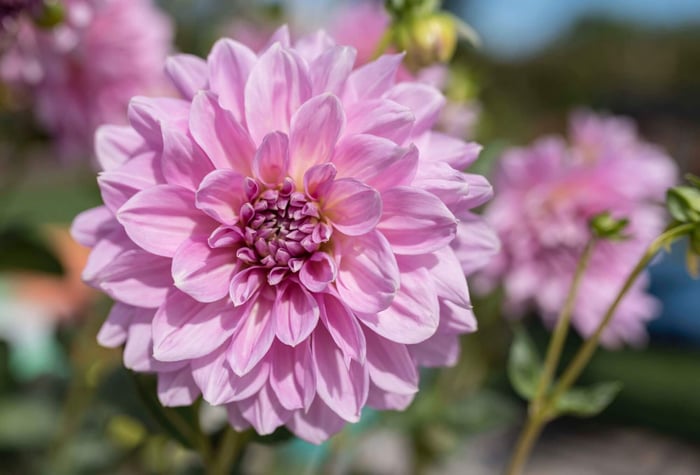 The flowers of dinnerplate dahlia Lavender Perfection are 8-10" across.
What Are Dinnerplate Dahlias?
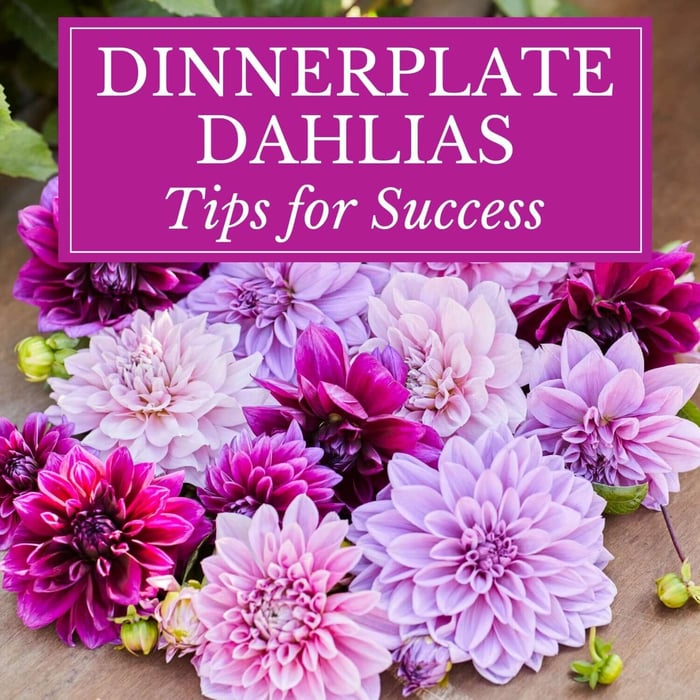
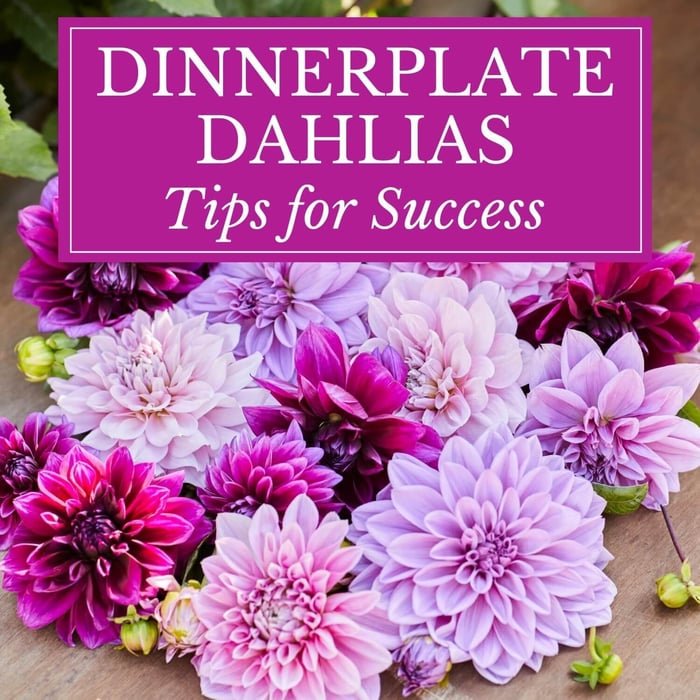
"Dinnerplate" is not an official dahlia society classification (like cactus, ball and pompon). Rather, it's a common name applied to varieties with flowers that measure at least 8” across. The flower form varies. A dinnerplate dahlia may have broad, gently cupped petals, such as Café au Lait, Lavender Perfection and Thomas Edison. The petals could be twisted as in Taihejo, quilled as in Avignon, or shaggy as in Penhill Dark Monarch.
A generation ago, dinnerplate dahlias were still somewhat of a novelty. Popular for gardeners trying to win ribbons at the state fair, but uncommon in home gardens. Today, dinnerplate dahlias are coveted by gardeners from coast to coast. They are must-have flowers for weddings and essential for extravagant summer bouquets. Growing dinnerplate dahlias isn’t much different from growing any other type of dahlia. But to make sure these divas reach their full potential, it’s worth giving them some extra attention in a couple of key areas. 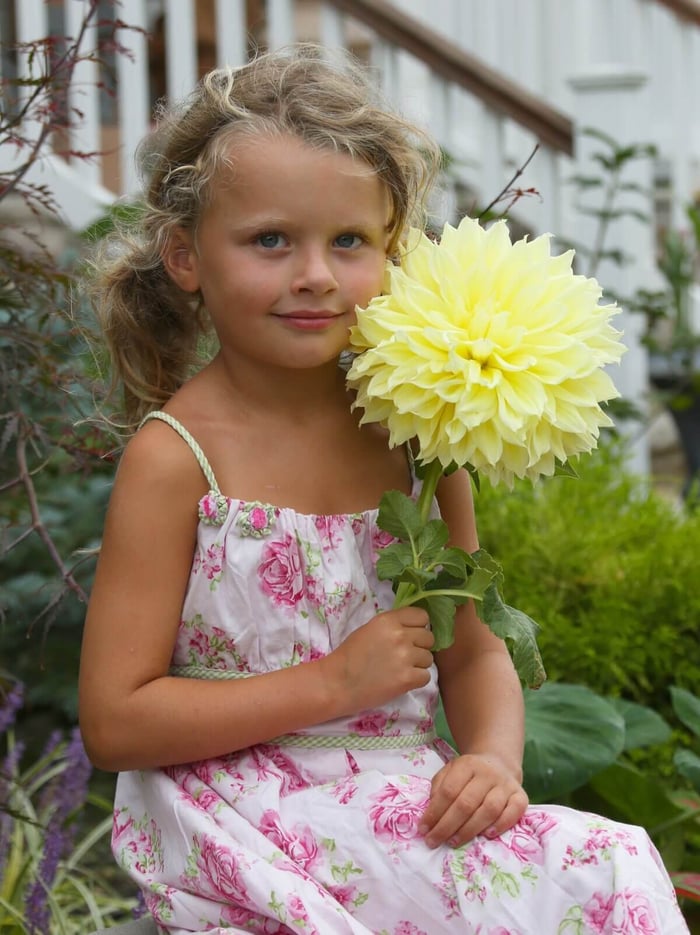 Dinnerplate Dahlia Yellow Passion
Planting Dinnerplate Dahlias
It takes a large plant to produce such impressive flowers. Most dinnerplate dahlias will be 4 to 6 feet tall by the time they start flowering. The sooner you can get your plants to maturity, the sooner they will start producing flowers.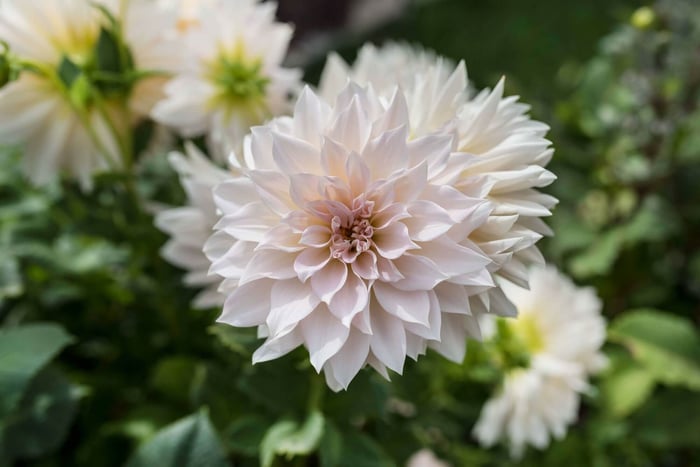 Dinnerplate Dahlia Cafe au Lait
Watering and Fertilizing
All dahlias respond well to being fertilized, and this is especially true for dinnerplate dahlias. At planting time, enrich the soil with compost and an all-purpose granular fertilizer (follow package directions).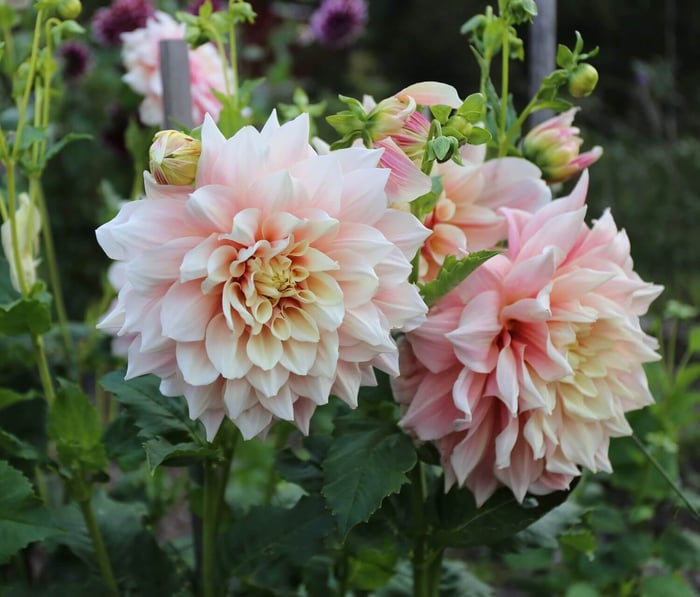 Dinnerplate Dahlia Break Out
Supporting Dinnerplate Dahlias
Dahlias have hollow stems that can easily bend, break, or split. The jumbo flower heads of dinnerplate dahlias are particularly at risk, especially if they get waterlogged. Sturdy support is essential. Stake the plants immediately after planting, and tie in the stalks as they grow. Once the plants begin to flower, keep a ball of twine at the ready. You can read about a number of staking options HERE.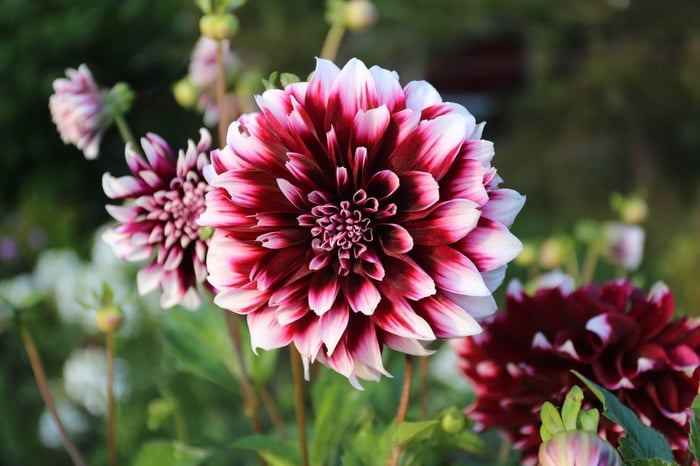 Dinnerplate Dahlia Contraste
Picking and Deadheading
As with other dahlias, the more flowers you pick, the more blooms you'll get. Plan to walk through your dahlia patch every 2-3 days, and bring the following things with you: sharp scissors, twine, a clean bucket with water for harvesting, and a bucket or tub for collecting spent blooms.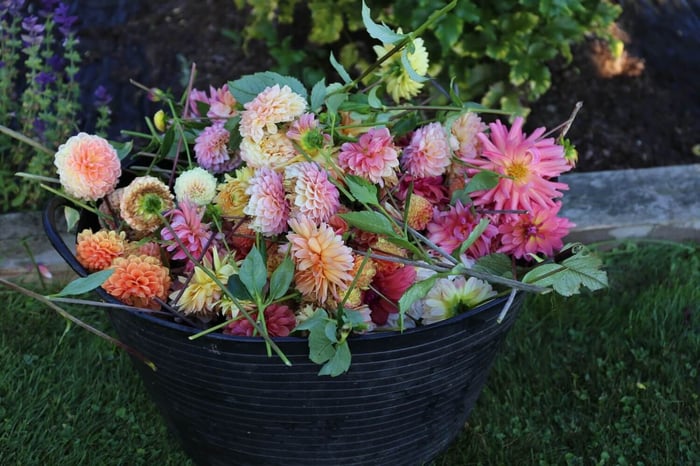 Deadhead often and remove the whole stem, not just the flower. In addition to encouraging more blooms, frequent deadheading also helps minimize pest and disease problems. By removing decaying plant matter from the plants and the surrounding area, you'll attract fewer earwigs, slugs and other pests. This also makes it more difficult for powdery mildew to take hold.