Roses may be red, and violets may be blue, but peonies are perfection, and their blooms are too good to be true. Okay, that’s cheesy. But I’m not joking when I say that peonies are my favorite flower. In fact, I would sacrifice all other spring blooms for a single whiff of their sweet perfume.
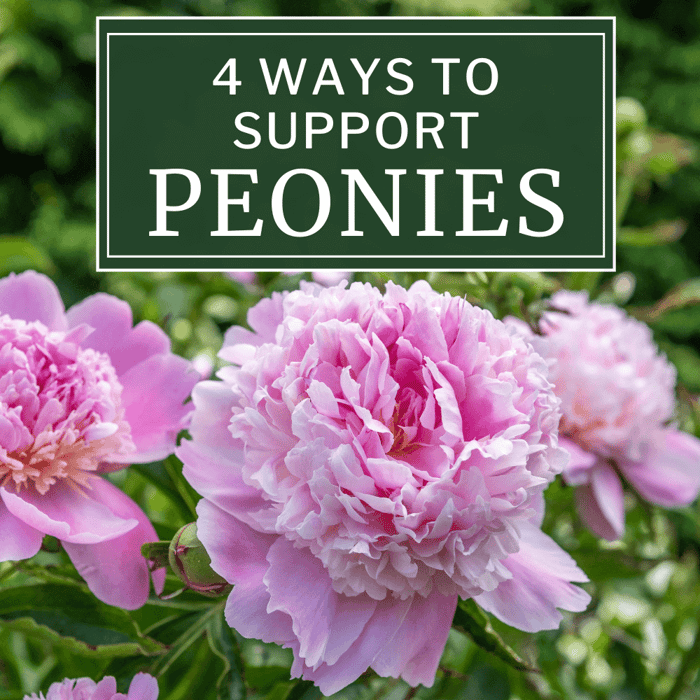
Seemingly, peonies are the perfect flower. Their massive, fragrant blooms light up the spring garden and their glossy, deep green foliage adds bold texture to the landscape. Peonies can live for generations and making divisions for friends and family is easily accomplished. Certainly, a peony root from a cherished relative is more valuable than an inheritance of diamonds. But every rose has its thorn, and when it comes to peonies the thorn is the “flop.”
This “flop” can occur when a strong spring rain causes the huge blooms to topple over. The pain of watching your peony's once immaculate flowers sag in the mud is almost too much for a gardener to bear. Fortunately, there are several support systems that will keep peony flowers upright no matter what nature throws at them. Here are my four favorite ways to support peonies and why I would choose one application over another.
Peony Cages
Peony cages are circular metal grids on top of four stakes. They must be placed on the plants early in the growing season so the stems can grow through the grid. If you try to cage a fully leafed out peony with large buds, you may damage some of the foliage and/or flowers.
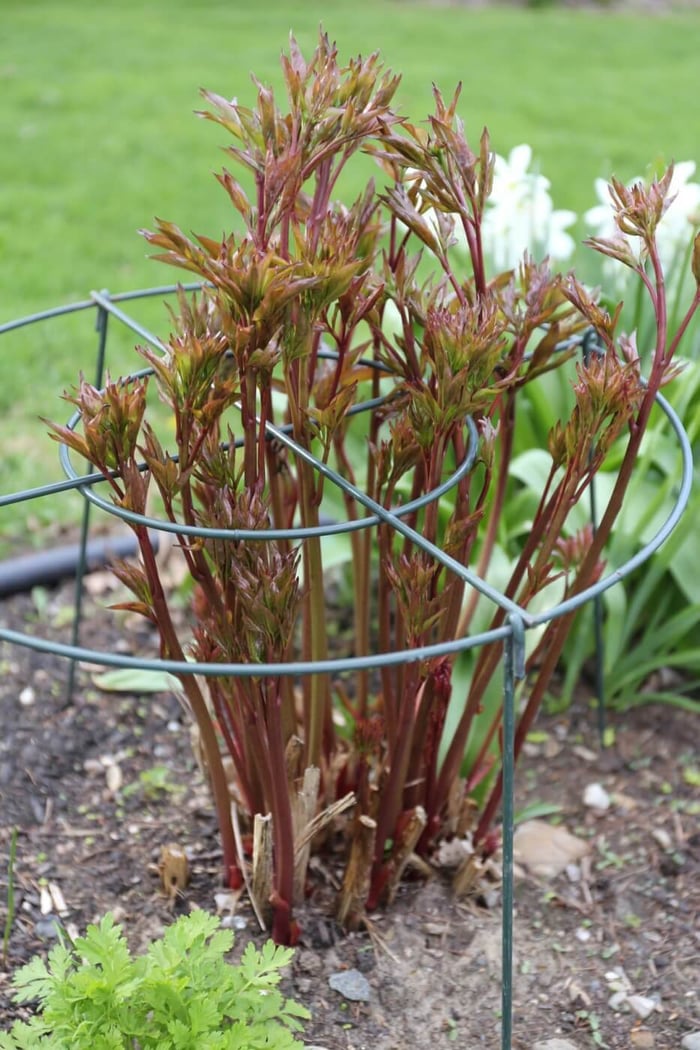
Peony cages are the best option for plants in herbaceous borders. They allow the bloom stalks to stay separated which gives the appearance of a beautiful, upright peony bouquet. Though cages are the most expensive option per plant, they last for decades if cared for properly, and are well worth the investment in the long run.
Peony Rings
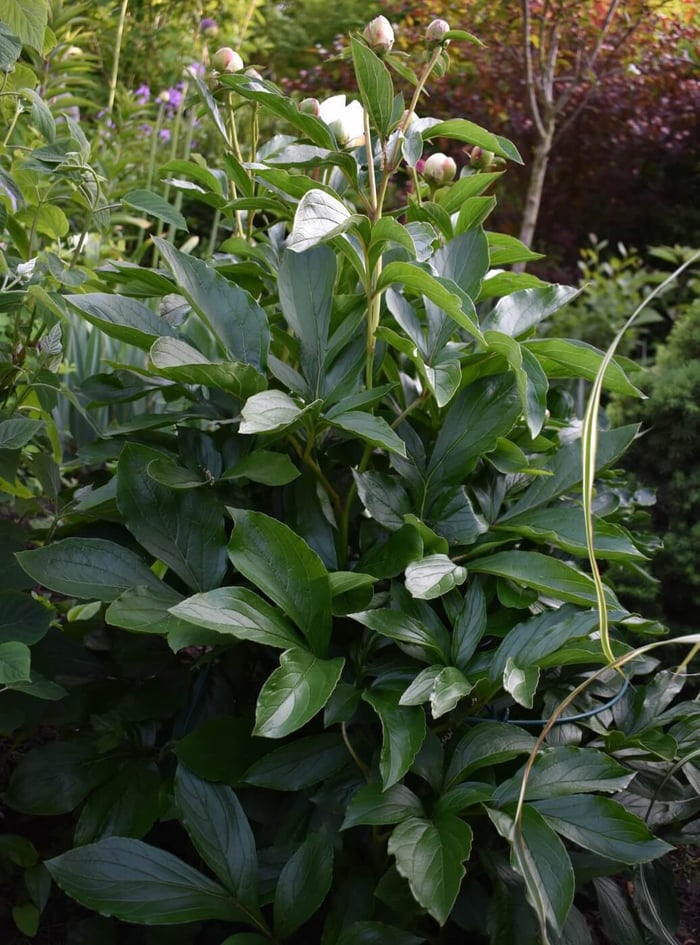
Peony rings are like cages but without a wire grid. They usually come in two half circles that link together around the plant's perimeter. This allows them to be placed around the peony at any time. These supports are a great option once your peony plant is fully leafed out and budded up. Take care to purchase rings that are at least 24 inches tall. Short rings still allow the plant to topple and possibly break where the stem touches the ring. These supports are generally less expensive than cages and they're quick to install. They offer slightly less support than a cage but are still a worthwhile investment.
Corralling
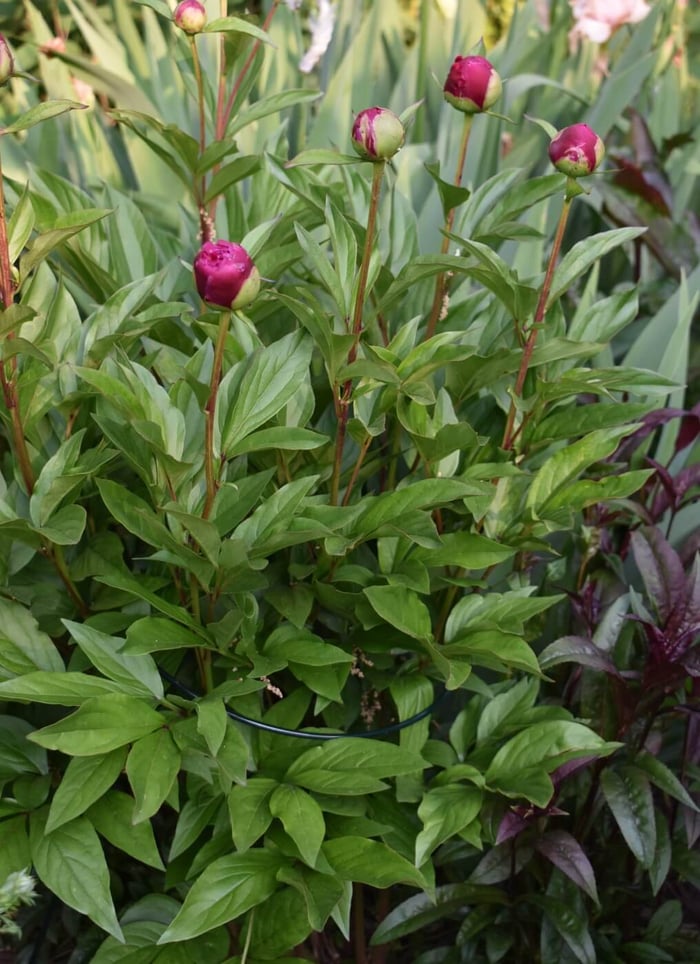
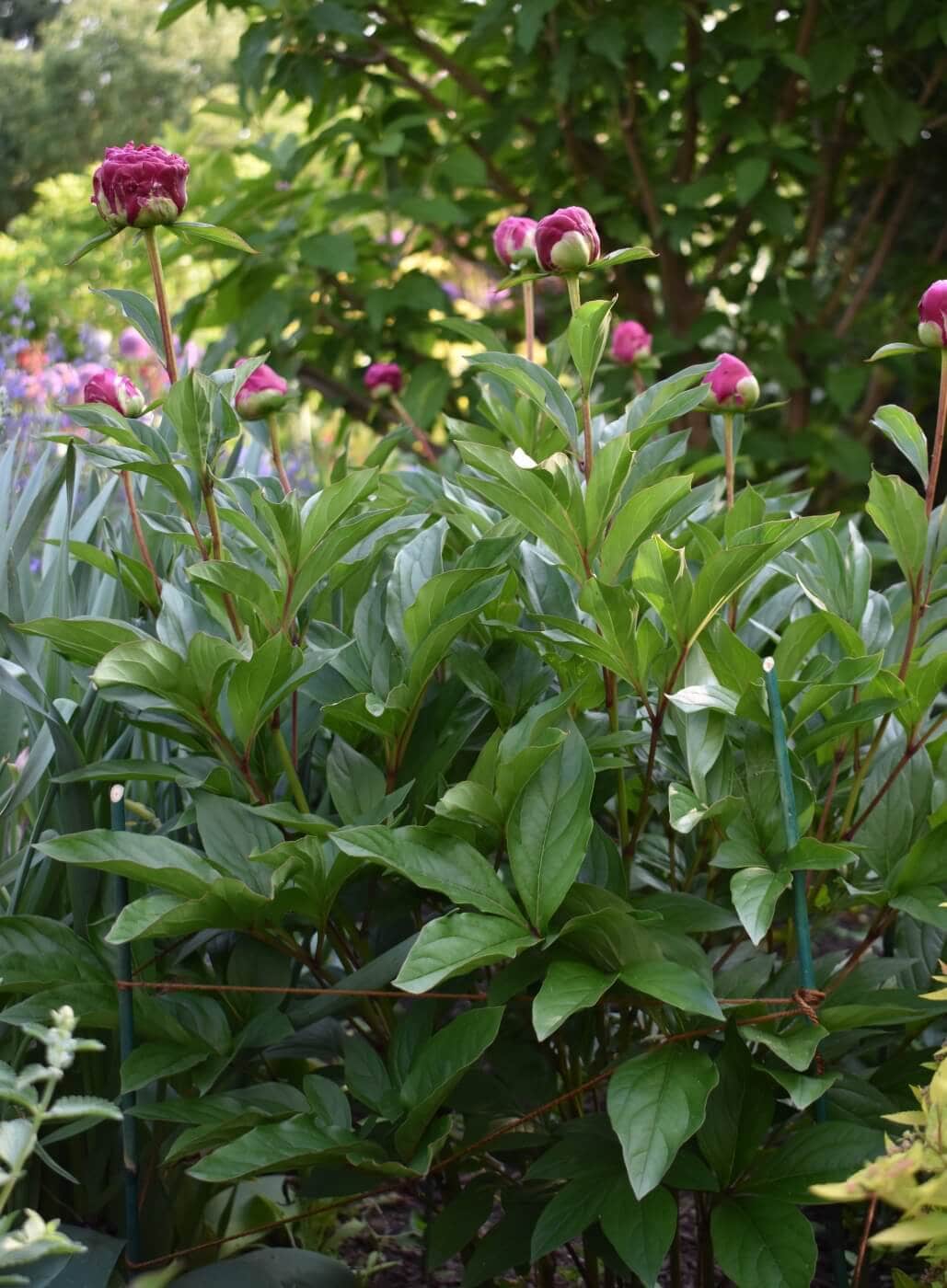
Corralling is the most cost-effective way to support peonies. Start by pushing 4 to 6 strong stakes into the ground around the plant's perimeter. If your peony is more than 3 years old, consider using metal stakes for extra support. The bigger the peony, the more support it will need. Then, use twine to create an upper and lower loop around the plant. Twist the twine around each stake, and be sure to pull the twine taut so it will support the weight of the stems.
Netting
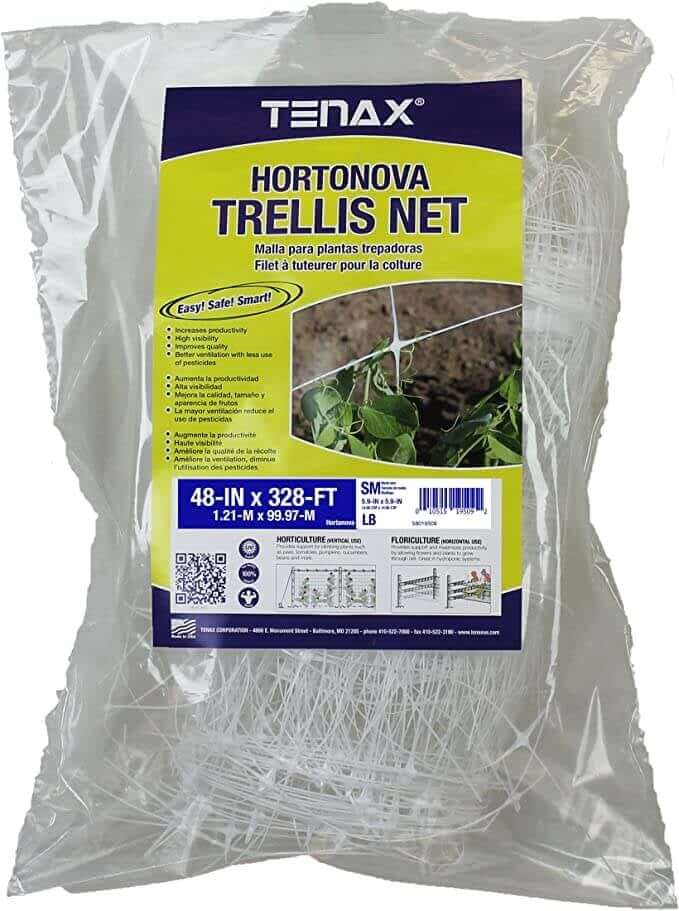
Hortonova netting is a great way to support multiple peonies that are growing in a straight row. The netting has 5" square openings, and needs to be set up early in the season, before the plants reach 12" tall. Start by placing strong metal or wood stakes around the perimeter of the peony row every 4-8 feet. Then place the netting over the stakes, suspending it horizontally over the peony plants, 18-20 inches above the ground. Make sure the netting is pulled tight. Loose netting is useless. The plants will grow up through the netting and will be supported by the gentle yet strong plastic squares.
Shop our selection of peonies HERE.
Watch our peony videos HERE.
Read about using peonies as cut flowers HERE.