We live in a world of instant gratification. Fast food. Fast fashion. And dare I say, fast gardening. We can run to the local big box store and get huge shrubs to plop into our gardens. Companies will bring 20-foot trees to our doorsteps. And sharing carefully collected flower seeds is trumped by aisles of grab and go annuals. There’s nothing wrong with fast gardening. However, I can’t help but wonder if gardening has turned from a verb to a noun. Has creating the picture-perfect garden become more important than the therapeutic act of gardening itself? Do we miss a deeper connection with nature when we skip the understanding, nurturing, waiting, and watching required to take a plant from infancy to maturity?
I think it’s time to hit the “like” button on the act of gardening rather than the garden itself. Grafting trees, propagating plants, hybridizing flowers, and planting bare root perennials are some of the most rewarding gardening experiences. Perhaps you could say it’s time to get back to our roots. Let’s start with bare roots and go from there.
I distinctly remember the first bare root perennial I ever planted. It was an astilbe called ‘Mighty Pip,’ with pink feathery blooms and silky fernlike foliage. I took one look at the twisted roots and sighed with confusion. Which way was up? Is this flat part the side or the bottom? Should I soak it? What if I soak it too long? A million questions ran through my head, and I’m embarrassed to say after planting nine of those roots I had no idea if they were sideways, upside down, or far too deep.
Over time and with experience, I’ve turned from a scared bare root gardener to a passionate lover of growing perennials from bare roots. Not only is it a gratifying experience to nurture a root from dormancy to flower, but it’s also a cost-effective way to acquire lots of plants. Additionally, bare root perennials establish themselves quicker than container plants. 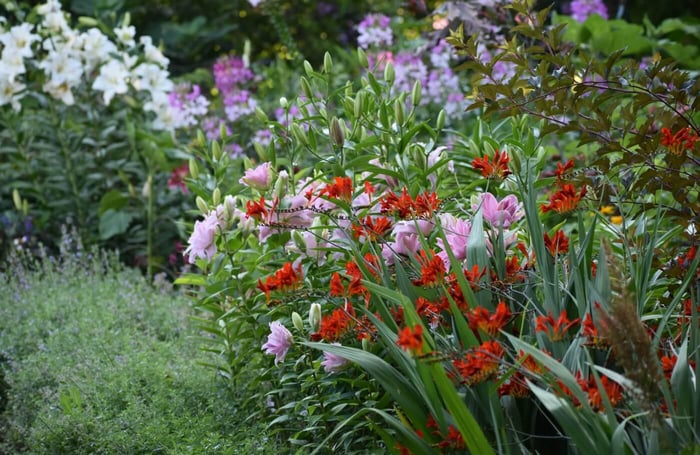
What is a Bare Root Perennial?
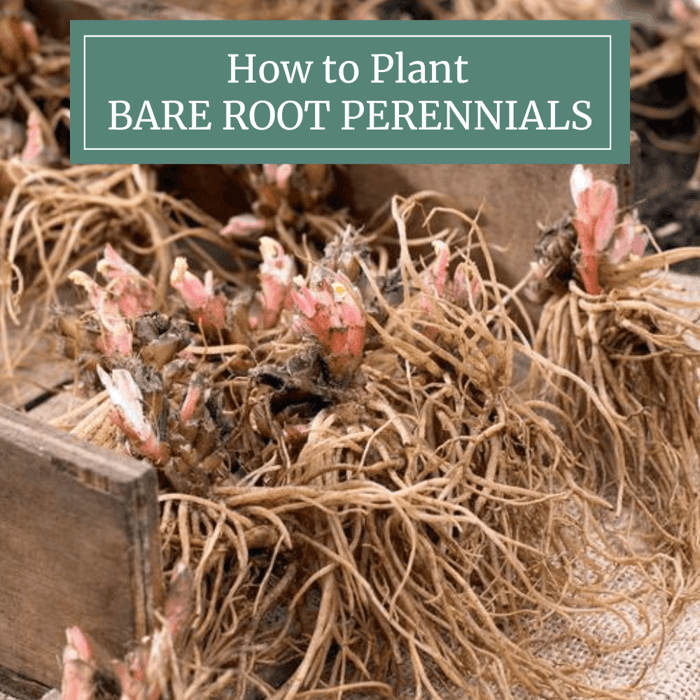
Bare root perennials are sold and shipped without any soil around the roots. When you order these plants, they're usually housed in a bag filled with peat moss or sawdust to keep them moist. In most cases, bare root plants are shipped when they're dormant or just beginning to emerge from winter dormancy. Depending on your weather, bare roots can be planted directly into the garden, into a holding bed, or started inside in pots. The important thing is to plant them into some kind of soil as soon as possible. 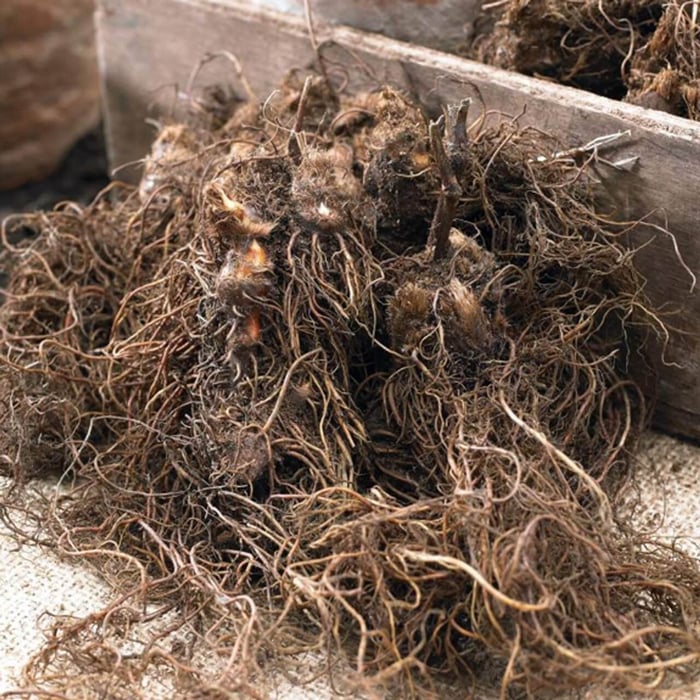
How Deep Do I Plant a Bare Root Perennial?
Generally, bare root perennials should be planted with the crown (where the roots meet the stem) at or just slightly below the soil surface. There are some exceptions to this rule. For example, clematis should be planted with the crown 2 inches below the soil surface. Rhizomes and roots with eyes may differ as well. However, if your bare root has a fleshy, fibrous, or long tap root (ex. Hosta, Daylily, Phlox, Bleeding Heart, Astilbe, Lily-of-the-Valley) it most likely should be planted with the crown even with the soil surface. Check the bag for any exceptions to this rule.
Planting Bare Roots Directly into the Garden
If the ground is workable, you can plant bare roots directly into the garden. Start by loosening the soil to help the roots grow more easily.
For fleshy and fibrous root systems, dig a hole that is several inches wider and the same depth as the roots. Mound up the soil in the center of the hole and set the roots on top, spreading them evenly around the mound. Then backfill with soil, firm around the roots lightly, and water in well.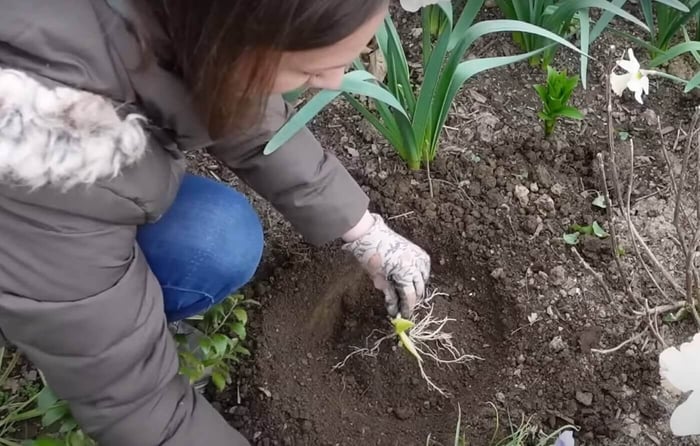
For plants with long tap roots dig a wide hole the same depth as the root system. Then place the root into the hole, backfill with soil, firm lightly around the roots, and water in well.
For all root systems, be sure to adjust the planting depth so that after the hole has been backfilled, the crown of the plant is even with or just slightly under the soil surface. 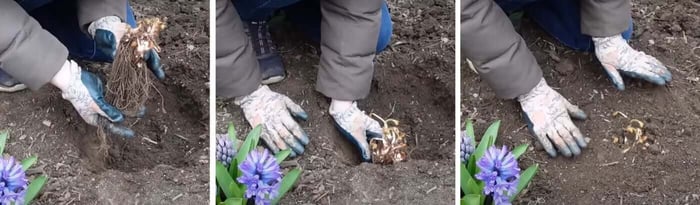
Planting Bare Roots Inside in Pots
If you want to give your new perennials a little extra TLC, you can get them started in pots. This way they won’t need to compete with other plants, and it will be easier for you to control light and moisture. If you garden in the north, it's also a good way to get your plants growing while the weather warms up.
Choose a pot that is large enough to house the roots, but not so big that the root system will be swimming in moist potting soil. Make sure to select a pot with drainage holes and fill it halfway with pre-moistened potting soil. Add the plant and fill in around the roots with more potting soil. Take care to keep the crown right at the soil level (if the crown is too deep it may rot). 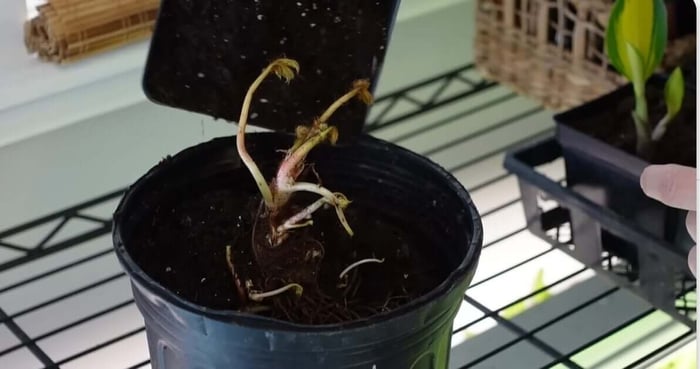
Then place the pots under grow lights or near a sunny window. Water sparingly until the plants have several sets of new leaves and then water as normal. When it's time to move the plants outdoors, place the pots in a sheltered location where they will be shielded from hot sun, wind and rain. Once the plants have acclimated (give them a week or two) they can be planted into the garden. You may also continue growing them in pots and transplant them anytime during the summer or fall.
Planting Bare Roots into a Holding Bed
Another option is to plant your bare roots into a holding bed that's reserved for young plants. A raised bed is ideal for this. Follow the planting instructions above, keeping the crown of the plant at soil level. Water sparingly until the plants are in active growth, then water as often as necessary. These plants may be relocated to garden beds at any time during the growing season, or they can be left in the bed until fall or the following spring.
Shop our wide selection of bare root perennials HERE.